
Car Starting Problem in Rainy Season: Causes and Fixes
Quick Answer
A car starting problem in rainy season often happens when moisture affects ignition components, electrical connections, or an already weak battery system. Start by checking whether the engine cranks, clicks, or stays silent. Inspect accessible parts safely, and never restart an engine that may have taken in floodwater.
- Normal cranking without starting can indicate an ignition or fuel problem.
- Slow cranking or clicking can point to battery, cable, or starter trouble.
- Wet ignition coils, damaged insulation, and corroded connectors deserve inspection.
- Floodwater exposure requires professional inspection before restarting.
Your car starts normally on dry days, but heavy rain leaves you stranded. Sometimes the engine cranks without firing, while other times the dashboard lights flicker or nothing happens.
Rain-related starting problems can have several causes. Understanding the symptoms helps you identify safe checks, avoid unnecessary repairs, and recognize when professional help is needed.
In this article
- Why rain affects starting
- What starting symptoms mean
- Common rainy-season causes
- Safe troubleshooting steps
- Battery problems versus moisture
- Floodwater and engine damage
- Prevention and maintenance
- When to contact a mechanic
- Frequently asked questions
Why Does Rain Cause Car Starting Problems?
Rain can expose weaknesses in ignition parts, electrical wiring, battery connections, and protective seals. A properly maintained vehicle should normally start in wet weather without difficulty.
When starting problems appear only during rain, moisture intrusion becomes an important diagnostic clue. However, the weather alone does not prove that water caused the failure.
How moisture affects the ignition system
Moisture can interfere with the high-voltage electrical path that allows spark plugs to ignite fuel in gasoline engines. Damaged insulation makes this problem more likely.
An ignition coil produces the voltage needed to create a spark. If its housing or electrical insulation deteriorates, damp conditions may expose the weakness.
Older vehicles may also have distributors and spark plug wires that become vulnerable to moisture. The car manufacturer Daihatsu discusses these rain-related ignition problems in its maintenance guidance.
Why electrical connections matter
Water entering an already damaged connector can interfere with electrical signals or power delivery. Corrosion can also increase resistance in important circuits.
Engine sensors, relays, ignition controls, and ground connections depend on reliable electrical contact. A poor connection may cause intermittent faults that appear during damp weather.
Why the battery may appear weaker during rain
Rain does not automatically drain a healthy car battery. However, headlights, windshield wipers, and other electrical accessories increase demand while driving.
A weak battery or poor charging system may struggle to support that demand. Corroded terminals or loose cables can make an existing problem more noticeable.
What Do Your Car Starting Symptoms Mean?
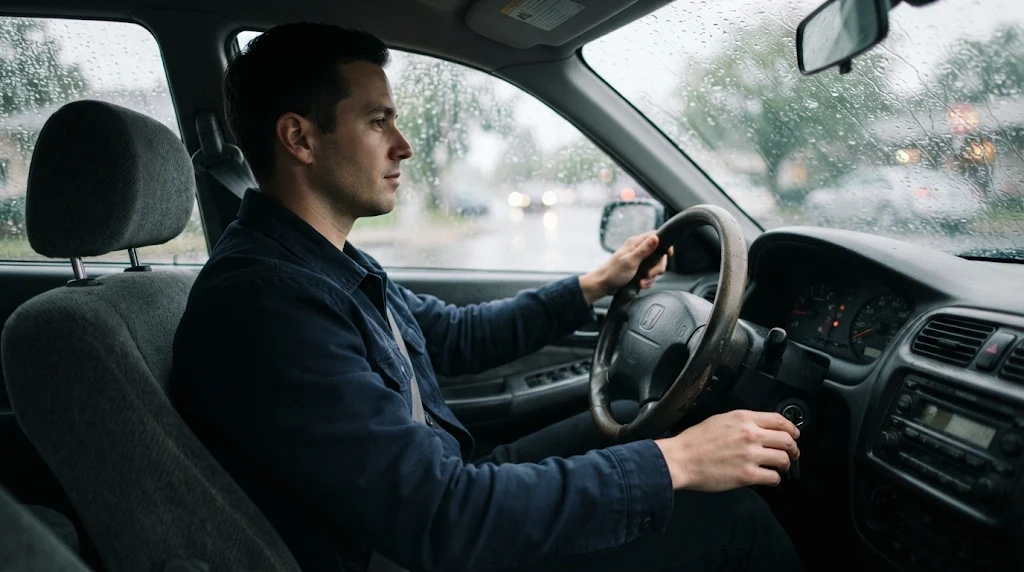
The sound and behavior of your car during a starting attempt provide valuable clues. First determine whether the starter turns the engine.
The following table compares common symptoms, possible causes, and sensible first checks.
| Symptom | Possible Cause | First Check |
|---|---|---|
| Rapid clicking | Weak battery or poor cable connection | Battery condition and terminals |
| Slow cranking | Battery, cable, or starter trouble | Electrical supply and starter circuit |
| Normal crank, no start | Ignition, fuel, or sensor fault | Visible moisture and fault codes |
| Starts, then stalls | Ignition, electrical, or fuel fault | Warning lights and rough running |
| No start after flooding | Possible water intrusion or engine damage | Stop starting attempts and request inspection |
These symptoms help narrow the search, but they cannot identify a failed component without further testing.
What if the engine cranks but will not start?
Normal cranking means the starter is turning the engine, but the engine is not running independently. Ignition, fuel delivery, and engine-control faults remain possible.
In wet weather, inspect ignition-related symptoms first. If the engine ran poorly before failing, that information can help a mechanic identify a misfire or intermittent electrical fault.
What if the car only makes clicking sounds?
Clicking without normal cranking often suggests insufficient electrical power or a starter-circuit problem. Check the battery and cable connections before assuming rain damaged the engine.
Dim headlights and weak dashboard illumination strengthen the case for an electrical supply issue. A battery test is still needed to confirm the cause.
Common Causes of Car Starting Problems in Rainy Season
Rain-related starting failures often involve components that have worn seals, damaged insulation, or poor electrical connections. The following causes deserve attention based on the symptoms.
1. Moisture around ignition coils
Ignition coils can become unreliable when damaged housings or seals allow moisture to interfere with electrical insulation. The engine may crank normally but fail to start.
Other warning signs include rough idling, hesitation, or a misfire during damp weather. A mechanic can inspect the coils and test the ignition system.
2. Damaged spark plug wires or boots
Damaged spark plug wires or protective boots can allow ignition voltage to escape instead of reaching the spark plug. Wet conditions may make this weakness more noticeable.
Older gasoline vehicles with separate plug wires may be especially susceptible. Modern coil-on-plug designs still depend on sound insulation and properly sealed connections.
3. Moisture inside a distributor cap
A wet distributor cap can interfere with spark distribution in vehicles equipped with this ignition design. Cracks, worn seals, or contamination can make moisture intrusion more likely.
Many modern gasoline engines do not use distributors. Check your vehicle’s ignition layout before assuming this component exists.
4. Weak battery or corroded terminals
A weak battery may fail to provide enough current for reliable starting. Loose or corroded battery connections can produce similar symptoms.
Look for visible corrosion, damaged cables, or loose clamps with the engine switched off. Do not touch exposed damaged wiring or attempt repairs beyond your experience.
The AAA starting-problem guide explains how batteries, starters, spark plugs, and electrical faults can prevent an engine from starting.
5. Water entering electrical connectors
Water intrusion can disturb connectors used by engine sensors, relays, and control modules. The problem may appear only during rain and disappear after drying.
Damaged connector seals, cracked insulation, or exposed wiring can increase vulnerability. Visible corrosion or standing water in electrical housings requires proper inspection.
6. Poor engine ground connections
Engine ground cables provide an electrical return path between the battery, engine, and vehicle body. Loose or corroded connections may reduce the power available to important systems.
Ground faults can cause intermittent starting, flickering lights, or other electrical symptoms. A technician can perform a voltage-drop test to identify excessive resistance.
7. Water entering the air intake
Water entering the engine intake is a separate and more dangerous problem than damp ignition parts. Deep standing water can expose the engine to internal damage.
Water cannot compress like the normal air-fuel charge inside a cylinder. If enough enters a running engine, internal parts may suffer severe damage.
A vehicle that stalled in floodwater should not be restarted to see whether it still works.
How to Fix a Car That Will Not Start in Rain
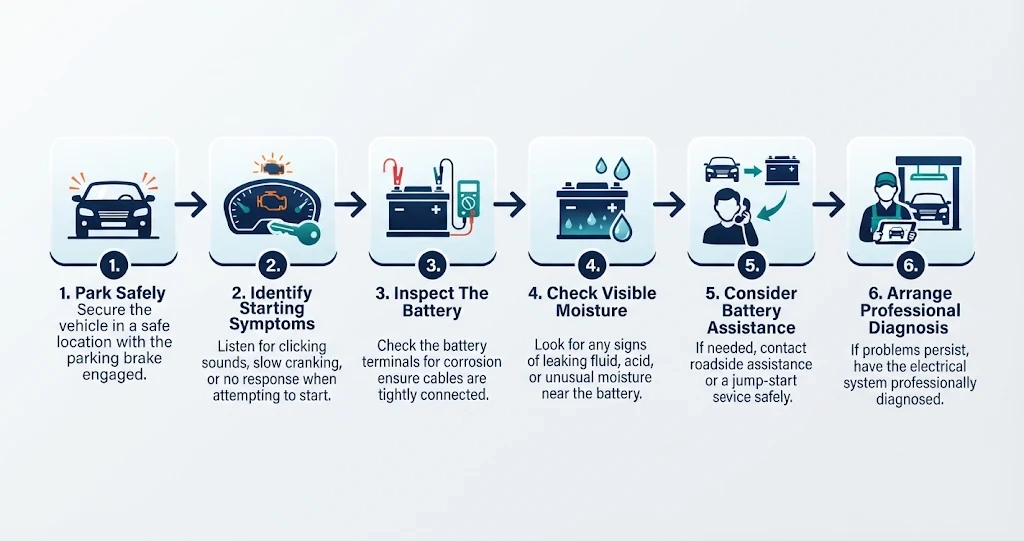
Safe troubleshooting begins with the vehicle’s location, visible condition, and starting symptoms. Do not start by replacing parts or making repeated starting attempts.
Use the following process when the car has not been submerged or driven through deep water.
Step 1
Park safely and switch off accessories
Keep the vehicle in Park or Neutral with the parking brake applied. Turn off unnecessary electrical accessories and assess the surrounding conditions.
Step 2
Identify the starting symptom
Note whether the engine cranks normally, turns slowly, clicks, or remains silent. Stop if cranking sounds abnormal or damage is suspected.
Step 3
Inspect the battery area visually
With the engine off, look for loose clamps, corrosion, damaged cables, or water intrusion. Avoid touching damaged electrical parts.
Step 4
Look for visible moisture
Inspect accessible ignition covers, wiring, and connector areas without dismantling components. Do not touch ignition parts while the engine is running or cranking.
Step 5
Consider battery assistance when appropriate
A jump-start may help a discharged battery. Follow your vehicle manual and approved equipment instructions, or request roadside assistance.
Step 6
Arrange professional diagnosis if starting fails
A mechanic can test battery condition, ignition performance, wiring, sensors, and fault codes. Describe the weather and exact symptoms.
A successful restart does not confirm that the underlying problem has disappeared. Moisture-sensitive failures may return during another wet drive.
Should you dry wet ignition components?
Accessible surface moisture may be removable with a clean, dry cloth after the vehicle has been switched off. Only handle components your owner’s manual identifies as safe to access.
Avoid removing high-voltage ignition parts, spraying unknown chemicals, or applying direct heat. Damaged insulation and internal moisture require more than surface drying.
Should you keep trying to start the engine?
Repeated cranking can strain the starter and discharge the battery without solving the cause. Stop after unsuccessful attempts and investigate the symptoms.
If you suspect floodwater entered the intake, do not crank the engine again. Have the vehicle inspected instead.
Is It a Weak Battery or a Moisture Problem?
Battery faults usually affect how strongly the engine cranks, while ignition moisture can prevent combustion despite normal cranking. However, either problem can produce overlapping symptoms.
Pay attention to the difference between electrical power and engine ignition. Headlights can illuminate even when the battery cannot supply sufficient current to the starter.
Clues that favor battery or connection trouble
- The starter turns slowly or produces repeated clicking.
- The lights dim sharply during starting attempts.
- Battery terminals show corrosion or loose connections.
- The engine starts after a correctly performed jump-start.
A jump-start result is a clue rather than a complete diagnosis. Battery, cable, and charging-system tests can identify the underlying electrical weakness.
Clues that favor ignition moisture
- The starter turns at normal speed, but the engine does not fire.
- The engine runs roughly during wet weather.
- The fault appears after heavy rain or washing.
- The problem disappears after drying but later returns.
These patterns support inspecting ignition insulation and electrical connectors. They do not prove that a particular coil, spark plug, or sensor has failed.
What If the Car Will Not Start After Floodwater?
A car exposed to deep floodwater requires a different approach from one affected by ordinary rain. Restarting may cause additional engine or electrical damage.
Water may enter the intake, cabin, connectors, control modules, or other vulnerable areas. Damage may not be visible from outside the vehicle.
Warning
Restarting a flood-exposed engine can worsen internal damage. Leave it switched off, move to safety, and arrange professional inspection.
AAA advises against starting a flooded vehicle and recommends inspection before driving. See its flood-damaged vehicle guidance for additional precautions.
What should you do if the engine stalls in water?
An engine that stops while crossing deep water should remain switched off. Do not attempt another start to check whether the problem has cleared.
Move to a safe location if conditions allow and contact roadside assistance. Never enter floodwater to inspect the engine or retrieve belongings when conditions are unsafe.
Can water damage electrical parts without entering the engine?
Floodwater can affect electrical connectors, wiring, and control units even without entering the engine cylinders. Some faults may become visible only after the vehicle dries.
Corrosion and electrical damage can develop in concealed areas. A qualified technician should assess flood exposure before the car returns to service.
How to Prevent Car Starting Problems During Rain
Preventing wet-weather starting failures means maintaining ignition insulation, electrical connections, battery condition, and water seals. Regular inspection is more reliable than waiting for components to fail.
Inspect ignition parts during routine service
Ask a mechanic to inspect ignition coils, plug boots, and spark plug wires where fitted. Cracked insulation and deteriorated seals can contribute to wet-weather misfires.
Replace worn components according to the vehicle manufacturer’s instructions and actual condition. Do not replace ignition parts simply because they became wet externally.
Keep battery connections in good condition
Battery terminals and ground connections should be secure and free from harmful corrosion. A battery and charging-system test can reveal a weakness before starting becomes unreliable.
If you often hear slow cranking or clicking, investigate the electrical supply. A portable jump starter may provide temporary assistance when a discharged battery is the cause.
Check protective seals and covers
Engine-bay covers, connector seals, and electrical housings help limit water exposure. Missing covers or damaged seals may allow moisture to reach sensitive components.
Have broken protective parts repaired instead of wrapping important electrical components in improvised materials. Unapproved coverings can create new heat or service problems.
Avoid deep standing water
Avoid driving through flooded roads because the depth and road condition may be difficult to judge. Water can reach the intake or damage electrical systems.
Choose a safer route instead of attempting to cross a flooded section. Do not assume a vehicle is safe because another driver crossed successfully.
Keep a record of wet-weather failures
Record what happened when the car failed to start. Useful details include rainfall, starting sounds, warning lights, rough running, and whether the vehicle was recently washed.
Such information helps a mechanic reproduce intermittent faults. It can also prevent unnecessary replacement of parts unrelated to the actual problem.
When Should You Contact a Mechanic?
Professional diagnosis is needed when starting problems repeat, electrical components show damage, or ordinary checks do not identify the cause. Floodwater exposure requires particular caution.
Request assistance if the engine repeatedly misfires, the starter makes unusual noises, or warning lights suggest an electrical fault.
What should the mechanic check?
A technician can use diagnostic equipment and electrical tests to identify the affected circuit. The inspection should follow your vehicle’s specific symptoms and service procedures.
- Battery condition and charging-system performance
- Battery cables and engine ground connections
- Ignition coils, plug boots, and spark plugs
- Wiring, connectors, relays, and protective seals
- Engine-control fault codes and sensor signals
- Possible water intrusion after heavy flooding
Ask for the failed component or test result before approving major repairs. Rain-related symptoms alone do not justify replacing the battery, starter, or ignition system.
Can you drive after the car starts again?
Driving may be possible if the car starts normally and shows no signs of flooding, misfires, or electrical malfunction. However, an unexplained failure still requires attention.
If the engine runs roughly, repeatedly stalls, or displays serious warnings, arrange inspection instead of continuing the trip. A temporary restart does not establish roadworthiness.
Portable Jump Starter
A portable jump starter can provide battery assistance when your car has a discharged starting battery and jump-starting is appropriate.
Frequently Asked Questions
Can a parked car have starting problems after rain?
A parked car can develop starting problems after rain if moisture enters vulnerable electrical or ignition components. Water intrusion does not require the vehicle to be moving.
Damaged seals or exposed wiring may allow moisture to affect sensitive areas. A recurring failure after overnight rain deserves inspection.
Can washing the engine cause starting problems?
Engine washing can cause starting problems when water reaches vulnerable ignition components, connectors, or electrical housings. High-pressure cleaning may increase the chance of intrusion.
Follow the vehicle manufacturer’s cleaning instructions and avoid spraying sensitive electrical equipment. If problems appear afterward, professional diagnosis may be needed.
Will replacing spark plugs fix rainy-weather starting problems?
Replacing spark plugs can solve some starting problems when the existing plugs are worn, damaged, or unable to provide reliable ignition. However, moisture-related failures may originate elsewhere.
Cracked coils, poor connectors, or damaged ignition boots will not necessarily improve with new plugs. Diagnose the failed part before replacement.
Can rain affect a diesel car starting system?
Rain can affect diesel starting systems through damaged wiring, electrical connectors, battery connections, or engine-control components. Diesel engines do not use gasoline-style spark ignition.
Some diesel engines also depend on glow plugs for cold starting assistance. Their diagnostic process differs from gasoline ignition troubleshooting.
Does a check engine light identify water damage?
A check engine light may indicate a fault associated with misfires, sensors, or engine control, but it does not directly prove water damage.
Diagnostic trouble codes can help a mechanic locate the affected system. Further testing is needed to distinguish moisture intrusion from unrelated failures.
Is a car fixed if it starts after drying?
A car that starts after drying may still have damaged insulation, worn seals, or corroded connectors. Drying can remove a temporary symptom without repairing the cause.
If the problem returns during another rainstorm, arrange an inspection. Repeated wet-weather failures are useful evidence of an unresolved fault.
Conclusion
A car starting problem in rainy season often points to moisture-sensitive ignition parts or an existing electrical weakness. Use the starting symptoms to guide safe checks, and have persistent faults diagnosed professionally.
If the vehicle encountered deep floodwater, do not restart it before inspection.

Alex Carter is an automotive content writer at VastAutoParts, focusing on car parts, vehicle troubleshooting, automotive tools, product research, and practical car care guides.