
Diesel Car Starting Problems: Causes and Fixes Guide
Quick Answer
Diesel car starting problems usually come from a weak electrical supply, poor fuel delivery, failed cold-start heating, or an engine control fault. First, notice whether the engine does not crank, cranks slowly, or turns normally without starting. That single clue helps you check the right system instead of replacing parts at random.
- No crank: inspect the battery, connections, and starter circuit.
- Normal cranking without starting: investigate fuel supply and engine control.
- Cold-only difficulty: check glow plugs, battery condition, and winter fuel.
- Starts then stalls: look for fuel restriction, air entry, or control faults.
A diesel that refuses to start can leave you guessing between a battery problem and an expensive engine repair. This guide helps drivers identify the symptom, make safe checks, and understand which tests belong in a workshop. You do not need to dismantle the fuel system to narrow down the cause.
In this article
- Identify the starting symptom
- Find causes of no cranking
- Check an engine that cranks but will not start
- Understand cold-start problems
- Investigate hot-start difficulty
- Diagnose an engine that starts then stalls
- Interpret smoke and sounds
- Follow a safe troubleshooting sequence
- Know which workshop tests matter
- Avoid damaging mistakes
- Prevent repeat starting trouble
- Know when to stop
- Frequently asked questions
- Conclusion
What Kind of Diesel Starting Problem Do You Have?
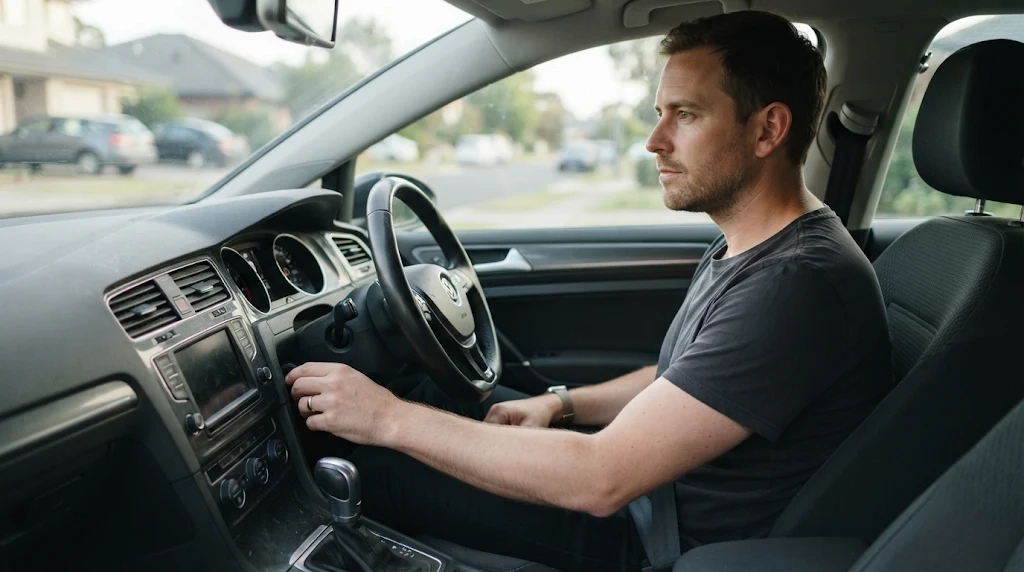
Diesel starting failures fall into different groups, and each group points toward a different system. Listen to the starter and watch how the engine responds before checking individual parts.
The table compares common symptoms with the first areas worth investigating.
| Starting symptom | Possible causes | First check |
|---|---|---|
| No crank or clicking | Battery, connections, starter, start authorization | Battery terminals and warning messages |
| Slow crank | Weak battery, resistance in cables, worn starter | Battery load test and cable condition |
| Normal crank, no start | Fuel restriction, low injection pressure, sensor fault | Fuel level, filter warnings, diagnostic codes |
| Cold-only hard start | Glow plug system, battery, cold-weather fuel | Preheat indicator and cranking speed |
| Starts, then stalls | Interrupted fuel feed, air entry, control issue | Fuel history and dashboard warnings |
Normal cranking does not prove the battery is perfect. A voltage drop can still disrupt diesel injection electronics while the starter turns.
Why Does a Diesel Car Not Crank or Crank Slowly?
A diesel that will not crank often has a battery, connection, starter, or start-permission problem. These faults must be separated from fuel and combustion problems.
Battery and cable problems
A weak battery may produce rapid clicks, dim dashboard lights, or a slow turning sound. Dirty terminals and a poor ground connection can create similar symptoms.
Check for loose or corroded connections without placing tools across battery terminals. A battery load test gives more useful information than judging charge from dashboard lights alone.
Starter and electrical control faults
A worn starter motor or faulty starter circuit can prevent the engine from turning even with a charged battery. A single heavy click is one possible clue, not a final diagnosis.
Some vehicles also block cranking when they cannot confirm the correct key or transmission position. Check the dashboard for a security message and follow the owner’s manual.
Why Does a Diesel Crank but Refuse to Start?
A diesel that cranks normally but will not fire may lack adequate fuel pressure, proper injection control, or enough combustion heat. Identify the missing condition through checks rather than guesswork.
Restricted fuel supply or air in the system
A clogged fuel filter can restrict the fuel reaching the high-pressure pump. Air entering through a poorly sealed filter housing or fuel line can also interrupt delivery.
Delphi explains why checking the filter and low-pressure supply matters in its fuel filter troubleshooting guidance. An apparently healthy pump cannot overcome every supply restriction.
Think about what changed before the failure. A recent filter replacement, an empty tank, or an unexpected stall can help identify an air or fuel delivery problem.
Insufficient injection pressure
Common rail diesel engines use pressurized fuel to operate their injectors. Low pump output, excessive injector return leakage, or a control fault can prevent the pressure needed for starting.
Pressure requirements vary by engine and operating conditions. A workshop should compare live readings with the manufacturer’s specifications before replacing an injection pump or injector.
Missing engine speed or timing information
The engine control unit needs valid sensor signals to control injection. A crankshaft or camshaft sensor fault can interfere with injection timing or permission to start.
A sensor-related fault may appear suddenly or intermittently. Diagnostic codes and live data help distinguish it from a fuel supply problem.
Why Are Diesel Cars Hard to Start in Cold Weather?
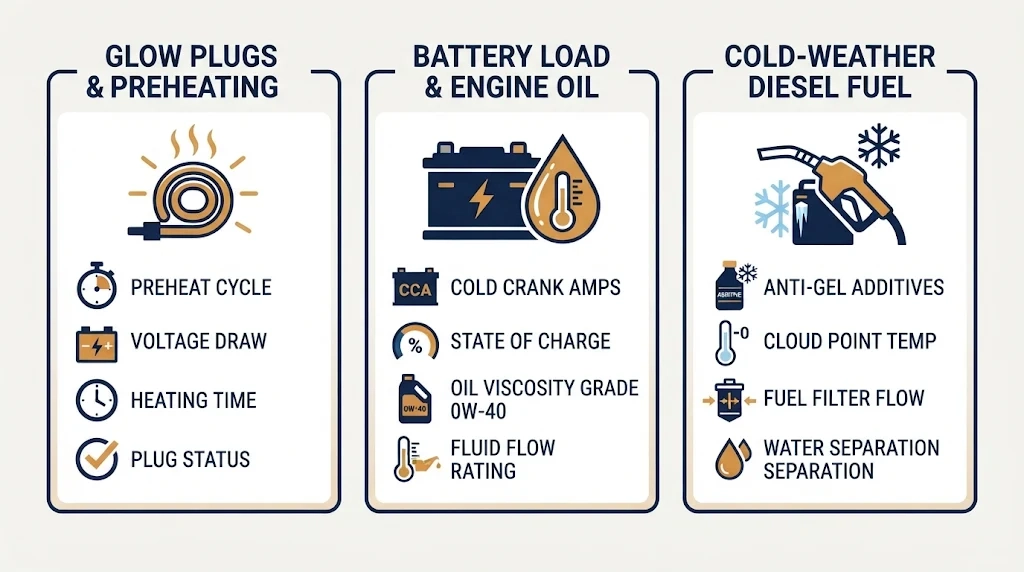
Cold temperatures can expose weak batteries, faulty preheating, thick engine oil, and fuel flow problems. A cold-only failure does not automatically mean the glow plugs are bad.
Glow plugs and the preheating system
Glow plugs are electric heaters that help diesel fuel ignite during cold starts. A failed plug, control module, relay, or wiring circuit can delay starting.
Cold starting may also produce rough running or white exhaust smoke when combustion is incomplete. See the RAC’s glow plug explanation for the signs of a failing system.
On vehicles with a preheat indicator, follow the owner’s manual before cranking. Do not assume that a glowing dashboard symbol proves each plug is working.
Battery load, oil, and diesel fuel
Cold weather reduces battery performance while thicker oil can increase the effort needed to turn the engine. A marginal battery may therefore fail only on cold mornings.
In freezing conditions, unsuitable diesel fuel can form wax crystals and restrict flow through the filter. Use fuel and engine oil approved for your vehicle and local temperatures.
A working block heater may help where the manufacturer provides one. Heating a vehicle with an open flame or improvised electrical device is unsafe.
Why Is a Diesel Hard to Start When Warm?
Warm-start problems often call for checks of fuel pressure, injection control, and electrical signals. Glow plugs should not be replaced solely because the engine hesitates while hot.
An injector with excess return leakage may keep rail pressure from reaching the required level during cranking. A failing sensor or weak starter can also behave differently once heated.
Record whether the car restarts after a short stop, a long drive, or a brief cooling period. That pattern can help a technician reproduce an intermittent fault.
A workshop may need to compare commanded and actual rail pressure during a warm restart. The correct interpretation depends on the engine design.
Why Does a Diesel Start and Then Stall?
A diesel that starts briefly and stalls may be losing fuel delivery or an electronic permission needed to keep running. Treat this differently from an engine that never fires.
Fuel starvation can arise from a restricted filter, damaged supply line, or air entering the low-pressure circuit. The engine may start on available fuel and stop when delivery cannot continue.
An intermittent electrical fault may also interrupt injection. Note whether a warning light appears at the same moment as the stall.
Do not keep restarting a car that repeatedly stalls in traffic. Arrange a safe inspection because losing power in motion creates a driving hazard.
What Do Exhaust Smoke and Starting Noises Mean?
Exhaust smoke and starting noises provide clues, but neither identifies one failed component on its own. Observe the symptom without placing yourself near a moving engine or exhaust outlet.
White smoke during difficult starting
Persistent white smoke may indicate fuel passing through without burning properly. Poor preheating, low compression, and injector faults are among the possibilities.
A small amount of condensation vapor in cold weather is different from continuing white smoke. Sweet-smelling smoke or coolant loss requires prompt inspection for a cooling-system fault.
Black smoke or no visible smoke
Black smoke can point to incomplete combustion involving fuel delivery or available air. The cause cannot be identified by color alone.
No visible smoke during cranking can suggest that little fuel is reaching combustion chambers. Modern exhaust controls can also hide smoke, so this clue is not conclusive.
Clicking, slow turning, or unusual knocks
Rapid clicking commonly leads to battery and connection checks, while slow cranking points toward the starting circuit. A harsh mechanical knock requires immediate attention.
Stop cranking if the engine makes a new grinding or heavy knocking sound. Continuing can turn a repairable starting fault into mechanical damage.
How Can You Troubleshoot Diesel Starting Problems Safely?
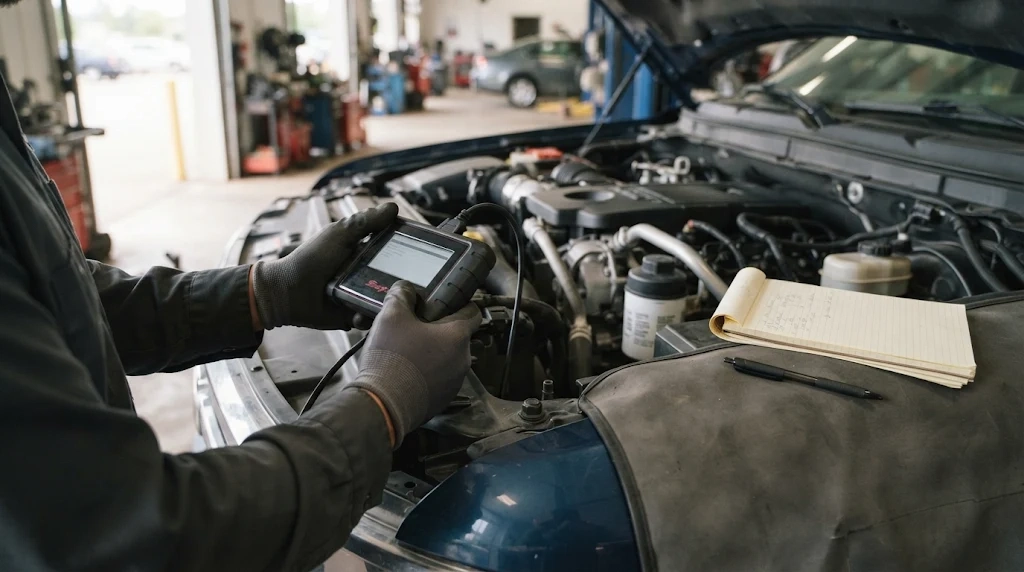
Check simple symptoms and accessible systems first, then move to diagnostic testing. This order reduces unnecessary part replacement and limits the risk of damaging fuel equipment.
- Identify the starting behavior. Note whether there is silence, clicking, slow cranking, normal cranking, or a brief start followed by stalling.
- Check the fuel situation. Confirm the gauge reading, look for fuel warnings, and recall any recent refueling or filter service.
- Observe the electrical system. Look for dim lights, loose visible battery connections, security warnings, and an unusual starter sound.
- Follow the cold-start procedure. Use the manufacturer’s preheat instructions and avoid repeated long cranking attempts.
- Check for visible damage. From a safe position, look for obvious leaks, damaged wiring, or disconnected accessible hoses.
- Read diagnostic trouble codes. An OBD2 scanner may reveal useful engine-control faults, although generic scanners cannot access every diesel system.
- Arrange targeted testing. If basic checks do not explain the fault, request battery, fuel pressure, sensor, and combustion tests as appropriate.
Keep notes about outside temperature, engine temperature, warning lights, fuel level, and recent service. These details often make intermittent faults easier to reproduce.
Warning
High-pressure diesel fuel can penetrate skin and cause severe injury. Never loosen common rail injector pipes to check pressure or search for leaks.
What Should a Mechanic Test Before Replacing Parts?
A mechanic should test the system indicated by the symptoms instead of replacing injectors, pumps, or glow plugs by assumption. Several faults can produce the same no-start condition.
Starting and charging system tests
A battery load test and voltage-drop checks can reveal weak power delivery. Starter current and cranking speed help determine whether the engine is turning fast enough.
Fuel pressure and injector tests
Diagnostic equipment can compare fuel rail pressure with the engine’s expected starting conditions. Low-pressure supply testing and injector return-flow checks may locate leaks or restrictions.
Common rail systems require specialized tools and safe procedures. Even an engine fault code pointing toward pressure does not prove the pump itself has failed.
Sensor, preheating, and mechanical tests
Live data can show whether the control unit recognizes engine speed and temperature correctly. Glow plug electrical tests can distinguish failed heating elements from a wiring or control fault.
If fuel and electrical checks pass, a compression test may be appropriate. Low compression can prevent enough heat from developing for reliable diesel ignition.
Which Starting Mistakes Can Make the Problem Worse?
Repeated cranking, unapproved starting chemicals, and careless fuel-system work can make diesel starting problems more expensive. Avoid shortcuts until the fault is known.
- Do not continue long cranking attempts until the battery and starter overheat.
- Do not spray ether or starting fluid into a diesel intake without explicit manufacturer approval.
- Do not replace all injectors because one code mentions fuel pressure.
- Do not open high-pressure fuel pipes or inspect leaks with bare hands.
- Do not ignore a fresh fuel leak, strong fuel smell, or unusual engine noise.
- Do not keep trying to start a vehicle after discovering the wrong fuel in its tank.
If gasoline was added to a diesel car, leave the ignition off and arrange fuel recovery. The AA’s wrong fuel guidance explains why starting can spread contamination and damage fuel equipment.
How Can You Prevent Diesel Starting Problems?
Reliable diesel starting depends on good battery condition, clean fuel delivery, and maintenance suited to the vehicle. Preventive care cannot stop every sensor fault, but it reduces avoidable failures.
- Follow the manufacturer’s fuel filter replacement schedule and correct priming procedure.
- Have the battery and charging system checked when cranking becomes sluggish.
- Use the approved engine oil grade and appropriate seasonal diesel fuel.
- Investigate fuel leaks, water-in-fuel warnings, and persistent hard starts early.
- Keep service records so the next technician can spot recurring patterns.
After a repair, check that the original symptom has disappeared under the conditions that caused it. A successful warm start does not prove a cold-start issue is fixed.
When Should You Stop Trying and Call a Mechanic?
Stop attempting to start your diesel when there is a fuel leak, abnormal mechanical noise, electrical overheating, or repeated failure after basic checks. Continuing may damage components or create a safety hazard.
Professional help is also appropriate when the engine turns normally but needs rail-pressure, injector, sensor, or compression testing. Those checks require tools and vehicle-specific specifications.
Tell the technician exactly what the engine does, not just that it will not start. Include the last successful start, recent maintenance, warning lights, and whether the problem changes with temperature.
OBD2 Scanner
An OBD2 scanner can help read supported engine fault codes before you arrange a more detailed diagnosis.
Frequently Asked Questions
Can a diesel start with one bad glow plug?
A diesel engine may start with one faulty glow plug, especially when conditions are warm and the remaining cylinders ignite normally. Cold starts can become slower or rougher. Testing the full preheating circuit is more useful than assuming one plug caused every symptom.
Why do dashboard lights work but the engine will not crank?
Dashboard lights can operate even when the battery cannot supply enough current to turn a diesel engine. A poor cable connection can produce the same effect. Battery testing, voltage-drop checks, and starter inspection help separate those faults without guessing which component needs replacement.
Can an immobilizer stop a diesel engine from starting?
A vehicle immobilizer can prevent a diesel engine from starting when it does not recognize the authorized key. Some vehicles block cranking, while others inhibit injection. Check key-related warning messages and use the vehicle’s specified key troubleshooting procedure before replacing parts.
Can the wrong engine oil cause difficult diesel starts?
Engine oil that is too thick for the operating temperature can increase cranking resistance during cold starts. The effect becomes more noticeable with a marginal battery. Choose the viscosity and specification listed by the vehicle manufacturer rather than guessing from climate alone.
Does a diesel fuel filter need priming after replacement?
Some diesel fuel systems require a specified priming or bleeding process after a fuel filter is replaced. Other systems handle priming through an electric pump or service routine. Follow the model-specific procedure because trapped air can prevent proper starting even after correct filter installation.
Will clearing fault codes fix a diesel no-start?
Clearing diagnostic trouble codes does not repair the underlying reason a diesel engine cannot start. The same fault may return when the control unit detects it again. Record the codes and relevant live data before clearing anything for testing or further diagnosis.
Conclusion
Diesel car starting problems are easier to diagnose when you first separate no-crank, slow-crank, and cranks-but-will-not-start symptoms. Check the battery and visible fuel clues safely, then request targeted testing if the cause remains unclear. Stop immediately if you find a fuel leak or hear damaging mechanical noises.

Alex Carter is an automotive content writer at VastAutoParts, focusing on car parts, vehicle troubleshooting, automotive tools, product research, and practical car care guides.