
Why Does My Car Crank but Not Fire Up? Fixes to Try
Quick Answer
If your car cranks but does not fire up, the starter is turning the engine, but combustion is not beginning. Common causes include missing fuel, weak or absent ignition spark, faulty engine sensors, incorrect timing, and low compression. Start with simple checks before replacing any parts.
- Confirm that the engine cranks at its normal speed.
- Check the fuel level, warning lights, and security indicator.
- Inspect battery connections and relevant fuses.
- Read diagnostic trouble codes before replacing components.
- Have fuel pressure, spark, and compression tested if basic checks reveal nothing.
You turn the key, hear your engine spinning, and expect it to start. Instead, the engine keeps cranking without running.
If you are asking, “Why does my car crank but not fire up?” the answer depends on what the engine is missing. This guide explains the likely causes, useful warning signs, and safe troubleshooting steps.
In this article
- What cranking without starting means
- Common causes of a crank-no-start
- What to check first
- What cranking sounds reveal
- How to recognize fuel problems
- How to recognize ignition problems
- How an OBD2 scanner helps
- Hot, cold, and intermittent problems
- Mistakes to avoid
- When to call a mechanic
- Frequently asked questions
- Conclusion
What Does It Mean When Your Car Cranks but Won’t Start?
A car that cranks but will not start has an engine that rotates without beginning to run under its own power.
The starter motor uses battery power to turn the crankshaft. However, engine rotation alone does not produce the controlled combustion needed to keep the engine running.
A gasoline engine generally needs the following conditions:
- Fuel: Enough gasoline must reach the cylinders.
- Air: The engine needs a suitable air supply.
- Spark: The ignition system must ignite the air-fuel mixture.
- Compression: Cylinders must compress the mixture enough for combustion.
- Correct timing: Engine valves, ignition, and fuel delivery must work together.
Diesel engines use compression ignition rather than spark plugs. Their starting problems can involve fuel pressure, injection control, compression, and cold-start systems.
Is Cranking the Same as Starting?
Cranking means the starter is rotating the engine, while starting means the engine begins running independently.
A clicking noise without engine rotation is a different problem. That symptom points more directly toward the battery, starting circuit, or starter motor.
When the engine cranks at a normal speed, the starter has completed its main job. Diagnosis should then focus on the systems that allow combustion.
Why Does a Car Crank but Never Fire Up?
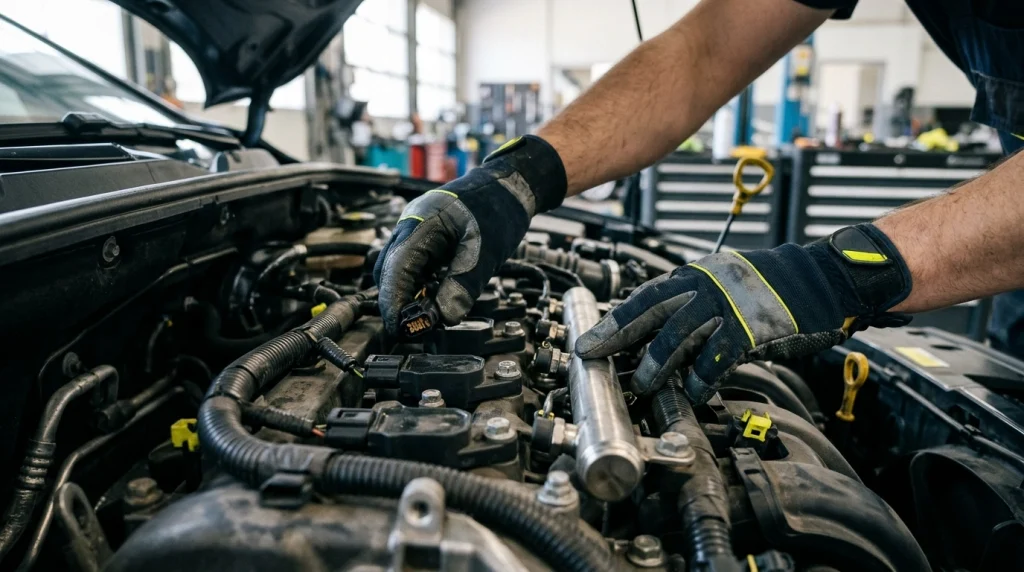
A car may crank without firing because fuel, ignition, timing, compression, or electronic engine control is not working correctly.
Several failures create nearly identical symptoms. Checking each system helps avoid replacing working parts.
1. Fuel Is Not Reaching the Engine
Insufficient fuel delivery can prevent an engine from starting even when the starter turns normally.
Possible causes include an empty fuel tank, failed fuel pump, blocked fuel filter, damaged wiring, or faulty fuel injectors.
The fuel pump sends fuel toward the engine. On fuel-injected vehicles, the injectors deliver controlled amounts into the engine’s intake or cylinders.
A pump that runs may still deliver insufficient pressure. A technician can distinguish electrical faults from fuel delivery faults through proper testing.
AAA identifies several fuel-related starting causes in its car starting problems guide.
2. Spark Plugs or Ignition Coils Are Faulty
Faulty ignition components can prevent gasoline from igniting inside the cylinders.
Spark plugs create the electrical spark needed for combustion. Ignition coils supply the high voltage that makes the spark possible.
Worn spark plugs, failed coils, damaged connectors, or missing ignition power can interfere with starting.
Common warning signs before complete failure include:
- Engine misfires during acceleration.
- Rough idling or uneven running.
- Hesitation while driving.
- Difficulty starting after parking.
- A check engine warning light.
These symptoms can also have other causes. Testing is necessary before replacing ignition components.
3. The Crankshaft Position Sensor Is Failing
A faulty crankshaft position sensor can prevent the engine computer from recognizing crankshaft position and speed.
The crankshaft position sensor, or CKP sensor, supplies information used for ignition and fuel-injection control.
Without a usable signal, some engine management systems cannot coordinate starting correctly. Related wiring faults may create the same problem.
Delphi explains the sensor’s role and testing methods in its crankshaft sensor testing guide.
Similar starting symptoms can involve a camshaft position sensor. That sensor monitors camshaft position and helps the computer coordinate engine operation.
4. Engine Timing or Compression Is Incorrect
Incorrect valve timing or insufficient cylinder compression can prevent combustion even when fuel and ignition systems appear functional.
A timing belt or chain keeps the crankshaft and camshaft synchronized. A slipped or broken timing component can disrupt that relationship.
Low compression may also result from damaged valves, piston rings, or other internal engine faults.
An engine that suddenly cranks much faster than normal may have a compression or timing problem. Stop attempting to start it until the cause is checked.
5. The Engine Computer or Security System Blocks Starting
Some vehicles can crank without starting when their engine computer or immobilizer does not authorize normal engine operation.
An immobilizer is an anti-theft system that checks whether the vehicle recognizes an authorized key.
Depending on the vehicle, an authorization fault may disable fuel injection or ignition. A flashing security warning can provide a useful clue.
Other electrical causes include failed engine-control relays, damaged wiring, poor grounds, and loss of power to important control modules.
What Should You Check First When the Engine Won’t Fire?
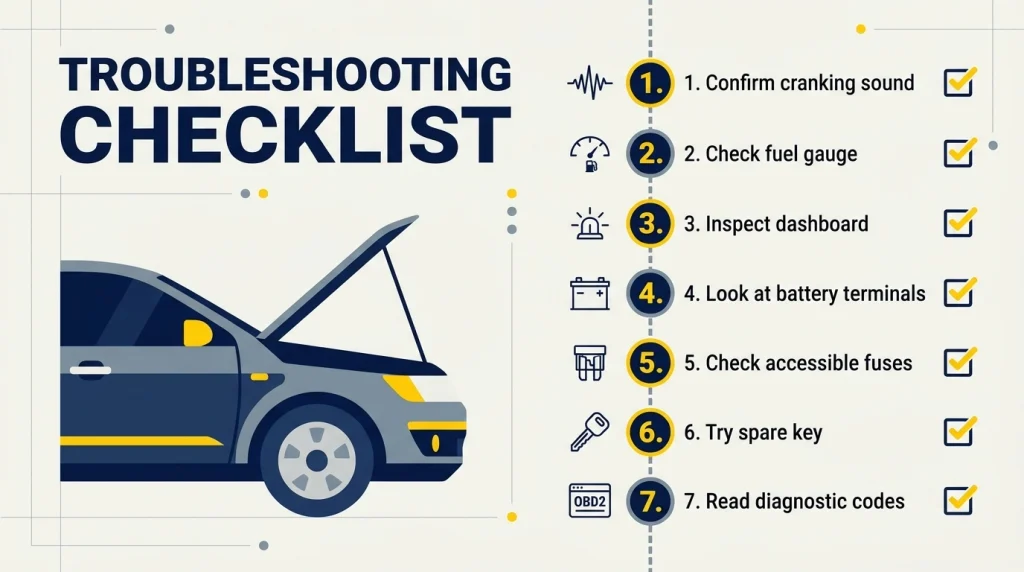
Begin with simple observations and checks that do not require opening the fuel system or handling high-voltage ignition parts.
Use the following order to narrow down the fault safely.
- Confirm the cranking sound. Listen for normal, slow, or unusually fast rotation. Different sounds suggest different diagnostic directions.
- Check the fuel gauge. Make sure there is enough fuel. A faulty gauge can sometimes display an inaccurate level.
- Inspect the dashboard. Look for engine, battery, and security warnings. Note unusual indicators before switching the ignition off.
- Look at the battery terminals. Check for visible corrosion or loose connections with the ignition off. Avoid touching damaged electrical components.
- Check accessible fuses. Use the owner’s manual to identify relevant engine-control and fuel-pump circuits. Never replace a fuse with a higher-rated one.
- Try an authorized spare key. If a security warning appears, another programmed key may help identify a recognition problem.
- Read diagnostic codes. Record stored and pending fault codes before clearing anything or disconnecting the battery.
If these checks reveal nothing, the next stage involves testing fuel pressure, ignition spark, sensor signals, and compression.
What Can the Cranking Sound Tell You?
Cranking speed and sound help distinguish starting-circuit faults from problems involving combustion or engine mechanics.
The following table compares common starting sounds and their possible meanings.
| What You Hear | Possible Cause | Next Check |
|---|---|---|
| Normal cranking | Fuel, ignition, sensor, or timing fault | Check fuel, codes, and warning lights |
| Slow cranking | Weak battery, cable, or starter fault | Test the battery and connections |
| Unusually fast cranking | Possible compression or timing fault | Stop cranking and request inspection |
| Clicking without rotation | Battery or starter circuit problem | Check battery and starter circuit |
| Engine catches, then dies | Fuel control, air, or security issue | Check warning lights and codes |
Normal cranking without ignition usually shifts attention away from the starter and toward engine operation. Sound alone cannot identify a failed component.
How Can You Tell if Your Car Is Not Getting Fuel?
A fuel delivery fault is possible when the engine cranks normally but does not receive enough fuel to begin combustion.
Some electric fuel pumps make a brief humming sound when the ignition is switched on. You may hear it near the rear of the vehicle.
However, not all vehicles run the pump audibly at key-on. Silence alone does not prove the pump has failed.
Can a Fuel Pump Run but Still Be Bad?
A running fuel pump can still fail to provide the pressure or volume required for starting.
Clogged filters, damaged lines, weak pumps, faulty regulators, or injector problems may reduce fuel delivery.
A technician can use vehicle-specific specifications to test fuel pressure and related electrical circuits.
Do not loosen fuel lines to check for gasoline. Pressurized fuel can create a fire and injury hazard.
How Can You Tell if Your Car Has No Spark?
Missing ignition spark can prevent a gasoline engine from firing even when fuel reaches the cylinders.
A trained technician can use a suitable spark tester to check ignition output. The result helps distinguish ignition problems from other starting faults.
Modern engines may use individual ignition coils mounted directly over the spark plugs. Their testing procedures differ from older distributor-based ignition systems.
If spark is missing, possible faults include:
- Failed ignition coil or ignition module.
- Damaged ignition wiring or connectors.
- Missing crankshaft or camshaft sensor signals.
- Blown ignition-system fuse.
- Faulty engine-control power or ground connections.
A missing spark does not automatically mean every spark plug needs replacement. Confirm the cause before buying parts.
Ignition components can produce dangerous electrical voltage. Avoid touching spark plugs, coils, or ignition wires while the engine is cranking.
Can an OBD2 Scanner Find a Crank-No-Start Problem?
An OBD2 scanner can reveal diagnostic trouble codes and engine data that help narrow down a crank-no-start condition.
OBD2 means onboard diagnostics. The system allows compatible scan tools to communicate with vehicle control modules and retrieve fault information.
Some scanners display live engine speed while the starter rotates the engine. Missing or abnormal readings can direct attention toward sensor circuits.
However, a code identifies a detected condition, not necessarily the part that needs replacement.
What if the Scanner Shows No Fault Codes?
A car can crank without starting even when a basic scanner displays no stored trouble codes.
Mechanical faults, fuel pressure problems, and some intermittent electrical failures may not trigger a code immediately.
More advanced diagnostic tools may be needed to examine live sensor information and vehicle-specific control systems.
ALLDATA describes an efficient testing order in its no-start diagnostic guide.
Why Does My Car Fail to Start Only Hot or Cold?
Starting problems that depend on engine temperature may involve temperature-sensitive electronics, fuel delivery, or incorrect engine management inputs.
Pay attention to the conditions when the failure occurs. A pattern can help a technician reproduce the problem.
Why Does My Car Crank but Not Start When Hot?
A warm-engine no-start can involve an intermittent sensor fault, electrical connection problem, or fuel system issue.
Some failing electrical components behave differently when hot. A crankshaft position sensor or related wiring may stop providing reliable signals under certain conditions.
Heat-related starting trouble does not confirm a particular faulty sensor. Testing during the failure is more useful than guessing.
Why Does My Car Crank but Not Start When Cold?
Cold-start trouble can involve a weak battery, fuel delivery problems, ignition faults, or incorrect temperature information.
The engine computer uses temperature information to manage fueling during startup. Incorrect sensor readings may produce an unsuitable starting mixture.
Diesel vehicles may also have problems with glow plugs or other cold-start equipment.
Why Does My Car Start After Several Attempts?
Repeated-start success may indicate an intermittent electrical fault, delayed fuel pressure buildup, or another condition that changes between attempts.
For example, a weak fuel delivery system may behave differently after another ignition cycle. However, this pattern does not prove the fuel pump is faulty.
Record whether the engine starts after resting, after warming up, or after turning the ignition on again.
What Mistakes Should You Avoid When Your Car Won’t Start?
The main mistakes are repeated excessive cranking, replacing parts without testing, and performing unsafe fuel or ignition checks.
A starting problem becomes harder to diagnose when useful evidence disappears or additional faults develop.
Can Repeated Cranking Damage the Vehicle?
Repeated long starting attempts can overheat the starter and discharge the battery.
Follow the vehicle manufacturer’s recommended starting procedure. If the engine refuses to start, stop and investigate instead of cranking continuously.
Warning
Strong fuel odors, smoke, unusual mechanical noises, or suspected timing damage can signal serious hazards. Stop cranking and arrange a professional inspection.
Should You Replace the Fuel Pump Immediately?
Replacing a fuel pump without testing may waste money and leave the actual problem unresolved.
A defective fuse, relay, connector, or control signal can prevent a working pump from operating. Low fuel pressure can also have other causes.
Confirm electrical power, ground, and fuel delivery before replacing major components.
Should You Use Starting Fluid?
Starting fluid is not a suitable first troubleshooting step for an inexperienced vehicle owner.
Improper application creates fire and engine damage risks. Some intake systems and engines are unsuitable for this approach.
Use manufacturer-approved diagnostic methods and leave fuel-introduction tests to qualified technicians.
When Should You Stop Trying and Call a Mechanic?
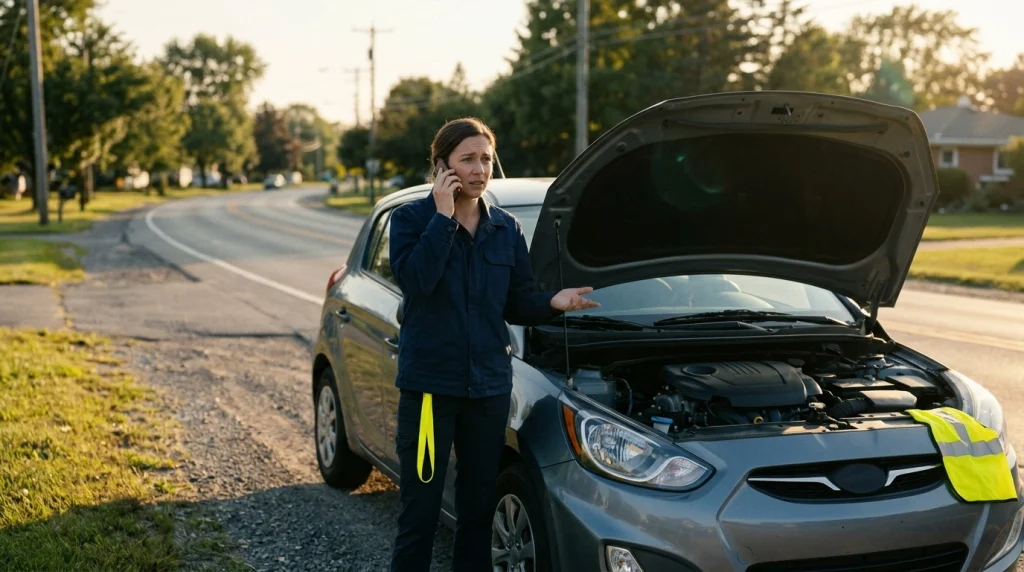
Professional diagnosis is appropriate when basic checks fail or the symptoms suggest electrical, fuel-system, or internal engine damage.
Call a mechanic or roadside assistance when:
- The engine makes unusual mechanical noises.
- Cranking suddenly becomes much faster than normal.
- You notice smoke, leaking fuel, or a strong fuel smell.
- The vehicle has stalled repeatedly while driving.
- Electrical warnings or security faults remain unresolved.
- The engine has fuel and ignition signals but still will not start.
A technician may use fuel pressure equipment, spark testers, an OBD2 scanner, and compression testing tools. Each test targets a different possible fault.
What Information Should You Tell the Mechanic?
Tell the mechanic exactly how the engine behaves and which conditions make the starting problem appear.
Useful details include the vehicle’s make, model, engine type, cranking speed, warning lights, and diagnostic codes.
Also mention any work completed before the problem began. Recent repairs, battery disconnections, or wiring changes may provide relevant clues.
Clear observations help the technician choose appropriate tests without guessing which component failed.
OBD2 Code Scanner
An OBD2 code scanner can help retrieve fault codes and compatible engine data before you decide which system needs further testing.
Frequently Asked Questions
Can a weak battery still crank the engine normally?
A weak battery can sometimes rotate an engine while providing insufficient voltage for reliable operation of its electronic systems. Normal-sounding cranking makes a severe battery fault less likely, but does not completely eliminate it. A battery load test can help determine whether battery power is contributing to the problem.
Can a bad alternator cause a crank-no-start condition?
A bad alternator can contribute to a starting failure by leaving the battery insufficiently charged. However, the alternator normally charges the battery while the engine runs. If the engine cranks normally but never fires, fuel delivery, ignition, and engine controls also deserve attention.
Can rain make my car crank without starting?
Rain-related starting failures can occur when moisture interferes with damaged ignition components, wiring connections, or electrical control circuits. The connection is more suspicious when the symptoms consistently appear during wet weather. An inspection should focus on damaged seals, connectors, and ignition components rather than replacing parts at random.
Can a loose gas cap stop the engine starting?
A loose gas cap generally does not prevent a gasoline engine from starting because the cap is not responsible for normal ignition. A damaged cap can contribute to evaporative-emissions faults on some vehicles. Persistent crank-no-start symptoms call for checks of fuel delivery and other engine systems.
Can contaminated gasoline prevent my car from starting?
Contaminated gasoline can cause starting trouble when water or unsuitable fuel interferes with normal combustion and fuel system operation. The problem may appear after refueling, but that timing alone does not prove contamination. If contamination is suspected, a professional should inspect the fuel safely.
Will disconnecting the battery fix a no-start problem?
Disconnecting the battery generally will not repair a failed fuel pump, ignition component, sensor, or mechanical engine fault. It may also erase diagnostic information that could help identify the problem. Read and record available fault codes before considering any manufacturer-approved reset procedure.
Conclusion
If you wonder why your car cranks but does not fire up, the cause usually lies in fuel delivery, ignition, engine control, timing, or compression. Check fuel, warnings, connections, and diagnostic codes first. If the engine still refuses to start, arrange testing rather than replacing parts without evidence.

Alex Carter is an automotive content writer at VastAutoParts, focusing on car parts, vehicle troubleshooting, automotive tools, product research, and practical car care guides.