
Why Does It Take Multiple Tries to Start My Car? Causes
Quick Answer
Why does it take multiple tries to start my car? A weak battery, loose connection, delayed fuel pressure, or intermittent starter fault can cause the first attempt to fail. The engine may lack steady electrical power, fuel, or ignition at startup. The sound during each attempt helps narrow the cause.
- Slow cranking or rapid clicking suggests a battery or cable problem.
- Normal cranking without starting points toward fuel, spark, or engine controls.
- A single click or silence can indicate a starter or start-control fault.
- Starting on the second try is a clue, not a diagnosis.
Turning the key repeatedly before your engine starts is frustrating, especially when the car runs normally afterward. The useful question is not just how many tries it takes, but what happens on the failed attempt. This guide helps you recognize the pattern, make safe checks, and decide which test comes next.
In this article
- What the starting sounds mean
- Common causes of repeated starting
- Why the second attempt works
- Problems after sitting overnight
- Problems with a warm engine
- Checks you can make safely
- Battery problems versus fuel problems
- Tests a mechanic should perform
- When to stop trying
- Preventing repeat starting problems
- Frequently asked questions
- Conclusion
What Does It Mean When a Car Takes Several Tries to Start?
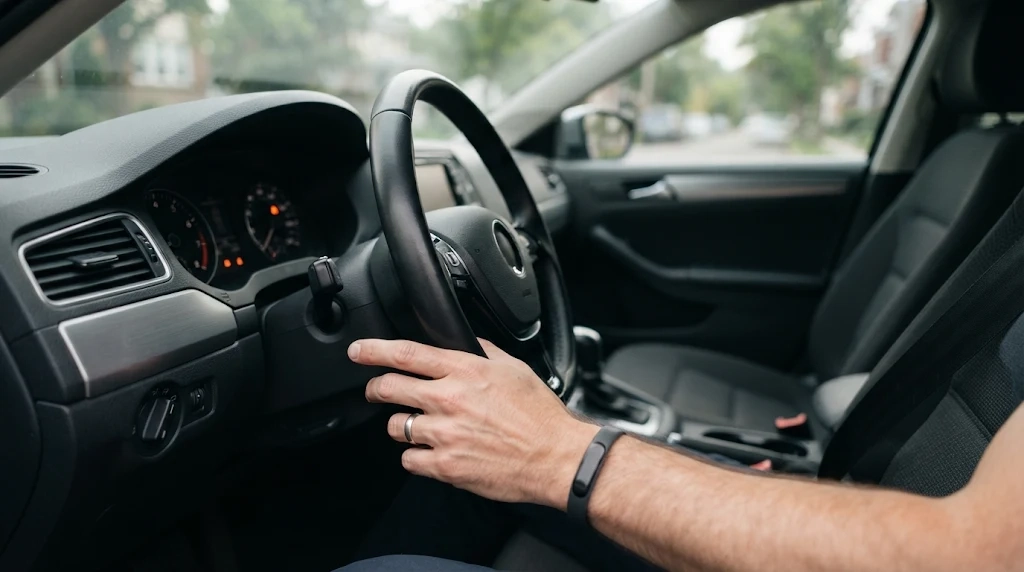
A car that needs several starting attempts has an intermittent problem with cranking, combustion, or the system that allows starting. The failed attempt often tells you which system deserves attention first.
Cranking means the starter motor is spinning the engine. Firing means the engine begins running under its own power. A car can crank normally without firing, and those symptoms call for different checks.
The following table connects common sounds and behavior with useful starting points for diagnosis.
| What you notice | Possible cause | Useful next check |
|---|---|---|
| Rapid clicking | Low battery power or poor cable contact | Battery and terminal inspection |
| Single click, no crank | Starter circuit or insufficient current | Starter circuit and battery testing |
| Slow engine turnover | Weak battery, cables, or starter | Battery load and voltage-drop tests |
| Normal crank, delayed start | Fuel delivery, ignition, or sensor fault | Scan data and fuel pressure |
| Starts, then stalls | Fuel, air, or security control problem | Warning lights and fault scan |
The most useful first distinction is whether the engine turns normally. A smooth crank that fails to fire does not automatically mean the battery is bad.
Why Does My Car Need Multiple Attempts to Start?
Repeated starting attempts usually mean one starting system works inconsistently rather than failing completely. The main suspects are electrical supply, starter operation, fuel delivery, ignition, and engine control signals.
Can a weak battery or dirty terminal cause repeated attempts?
A weak battery or loose terminal can reduce the current available to the starter motor. The engine may turn slowly, click, or respond differently on each attempt.
Battery terminals sometimes collect corrosion that interferes with electrical contact. A poor engine ground can cause similar symptoms even when the battery itself is charged.
Look for dimming lights, changing crank speed, and visible corrosion without touching damaged wiring. AAA’s starting problem guide covers battery, starter, and electrical clues.
Can fuel pressure drop while the car is parked?
Fuel pressure can fall after shutdown if a component fails to retain pressure as intended. The first attempt may then take longer while the system rebuilds pressure.
A worn fuel pump, leaking injector, or fuel-pressure control fault can create similar symptoms. Different fuel systems operate differently, so the starting pattern alone cannot identify the failed part.
A technician can compare pressure at startup with the vehicle maker’s specifications. Replacing a pump without confirming delivery and pressure may leave the original problem unresolved.
Can the starter or ignition switch work only sometimes?
An intermittent starter motor, relay, or start-control circuit may operate on one attempt and fail on another. These faults commonly produce silence or a click instead of normal engine cranking.
The ignition switch and push-button start controls also send requests to the starting system. An automatic transmission’s park or neutral switch can prevent cranking when its signal is unreliable.
Can spark plugs, coils, or sensors delay ignition?
Worn spark plugs and failing ignition coils can make it harder for a gasoline engine to ignite its fuel mixture. Rough running or misfiring after startup provides another clue.
The crankshaft position sensor reports engine speed and position to the engine computer. An intermittent signal can disrupt spark or fuel injection timing during a start attempt.
A camshaft sensor, engine temperature sensor, or wiring fault can also affect starting. These faults need testing, since several produce similar symptoms.
Could air control or the security system be involved?
Incorrect air or fuel control can make an engine crank without starting promptly. A dirty throttle body, intake leak, or faulty sensor may contribute, depending on the engine design.
Some vehicles also disable starting when the immobilizer cannot recognize the key. Watch for a security indicator that flashes or stays on unexpectedly.
Why Does My Car Start on the Second or Third Try?
A car that starts on the second attempt may have a condition that changes between tries. That change may involve fuel pressure, electrical contact, or a start-control signal.
If the starter spins normally both times, fuel pressure deserves investigation. AutoZone’s hard-start guidance identifies low fuel pressure among the possible causes of extended starting.
If the first turn produces a click but the next turns the engine, the starter circuit is another possibility. An intermittent battery connection can behave the same way.
A successful second try does not prove the first attempt charged the battery. The correct diagnosis depends on what the engine did during both attempts.
Tip
Record a short audio or video clip of the failed attempt from inside the parked vehicle. The sound can help a mechanic distinguish clicking from normal cranking.
Why Is My Car Hard to Start After Sitting Overnight?
A car that starts poorly after sitting may have low battery reserve, falling fuel pressure, or an issue that appears when the engine is cold. The pattern is useful because it narrows the test conditions.
A battery can lose charge while parked, particularly when an electrical load remains active. Cold conditions can also make a weak battery’s limited starting power more noticeable.
When cranking speed remains strong, a pressure-retention issue may be worth checking. The fuel pump may need additional time to supply the engine after the vehicle has been parked.
Temperature-related sensor readings can affect the fuel mixture needed for starting. A mechanic can compare the displayed coolant temperature with the actual cold-engine conditions.
Note whether the problem happens only after a long stop or after every stop. Consistent notes are more useful than replacing parts based on a single morning.
Why Does My Car Struggle to Restart When Hot?
Warm-engine starting problems may come from heat-sensitive electrical components, fuel delivery, or incorrect engine sensor readings. The cause can differ from a cold-start fault.
A starter motor or electrical connection can misbehave after heat builds up. Compare how quickly the engine cranks when hot and when cold.
If the starter turns normally but the engine will not fire, look beyond the starter. A sensor signal fault, fuel-pressure issue, or incorrect fuel mixture may be involved.
Tell the mechanic whether the problem follows a short fuel stop or a longer drive. A diagnostic test should reproduce the hot-start condition rather than check only a cool engine.
What Can You Check Before Replacing Any Parts?
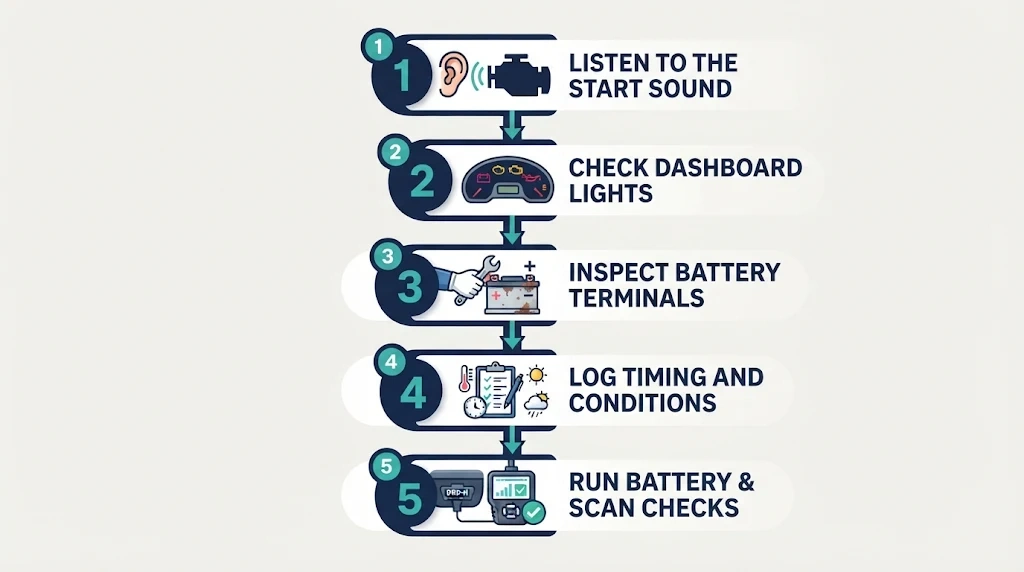
Start with observations and basic checks that do not expose you to moving parts, high voltage, or pressurized fuel. Record the exact symptom before buying components.
Step 1
Listen during the first attempt
Identify silence, clicking, slow turnover, or normal cranking without ignition. Compare the sound with the successful attempt.
Step 2
Check lights and warning indicators
Notice dim dashboard lights, a battery warning, or a security indicator. Note which lights remain after the engine starts.
Step 3
Inspect the battery visually
With the engine off, look for loose clamps, corrosion, swelling, or damaged cables. Do not handle a cracked or leaking battery.
Step 4
Write down when the fault appears
Record whether the engine is hot, cold, or parked for a long period. Include fuel level and any recent repairs.
Step 5
Arrange a battery and fault-code check
A battery tester can help assess battery condition. An OBD2 scan tool reads stored diagnostic codes, but codes are only clues.
Do not disconnect fuel lines or touch ignition components while attempting these checks. Follow your owner’s manual for any battery handling or jump-start procedure.
A battery tester is useful when the engine cranks slowly or the lights dim. A reading alone still may not reveal a cable problem or a failing starter.
How Can You Tell a Battery Problem From a Fuel Problem?
Battery and fuel problems often differ in how the engine cranks. A weak battery typically affects cranking speed, while fuel problems may allow normal cranking without ignition.
These patterns help guide testing, but neither one proves the cause by itself.
| Clue | Battery or cable issue | Fuel delivery issue |
|---|---|---|
| Cranking speed | Often slow or inconsistent | Often normal |
| Dashboard lights | May dim during cranking | May remain steady |
| Second attempt | Can improve if contact is intermittent | Can improve when pressure builds |
| Confirmation | Battery and cable tests | Pressure and pump circuit tests |
Choose the test based on the crank behavior, not the number of tries. A weak battery can coexist with a separate fuel problem.
What Should a Mechanic Test for a Hard-Starting Car?
A mechanic should test the system that matches the failed starting attempt. Accurate diagnosis begins by recreating the symptom and measuring what changes.
- Battery condition: Test starting capacity and charging performance.
- Cables and grounds: Measure voltage loss through electrical connections while cranking.
- Starter circuit: Verify the start command, relay operation, and motor current when appropriate.
- Fuel delivery: Check pressure, pressure retention, and pump electrical operation against vehicle specifications.
- Engine signals: Review fault codes, live sensor readings, and cranking speed data.
- Ignition and mechanical condition: Investigate spark, compression, or timing when earlier tests do not explain the problem.
A fuel pump can behave intermittently even when a basic pressure check appears acceptable. Delphi’s fuel pump diagnostic guide explains why electrical waveform testing can reveal some faults.
Ask for the test result that supports a proposed repair. A fault code points toward a circuit or system, but does not prove a specific component has failed.
When Should You Stop Trying to Start Your Car?
Stop repeated starting attempts when there are signs of overheating, fuel leakage, smoke, or unusual mechanical noise. Continuing can create safety risks or additional damage.
Cranking also heats the starter and drains the battery. Follow the starting limits in your owner’s manual instead of holding the starter engaged continuously.
Warning
A strong gasoline smell, visible smoke, or grinding during starting can signal a serious fault. Stop cranking and arrange professional assistance.
Do not attempt a jump-start if the battery is swollen, cracked, or leaking. Keep clear of any moving engine parts, and never investigate a suspected fuel leak with an open flame.
If the engine starts but stalls in traffic or loses power while driving, avoid using it until the fault is assessed. Roadside assistance may be safer than driving to a shop.
How Can You Prevent Repeated Starting Problems?
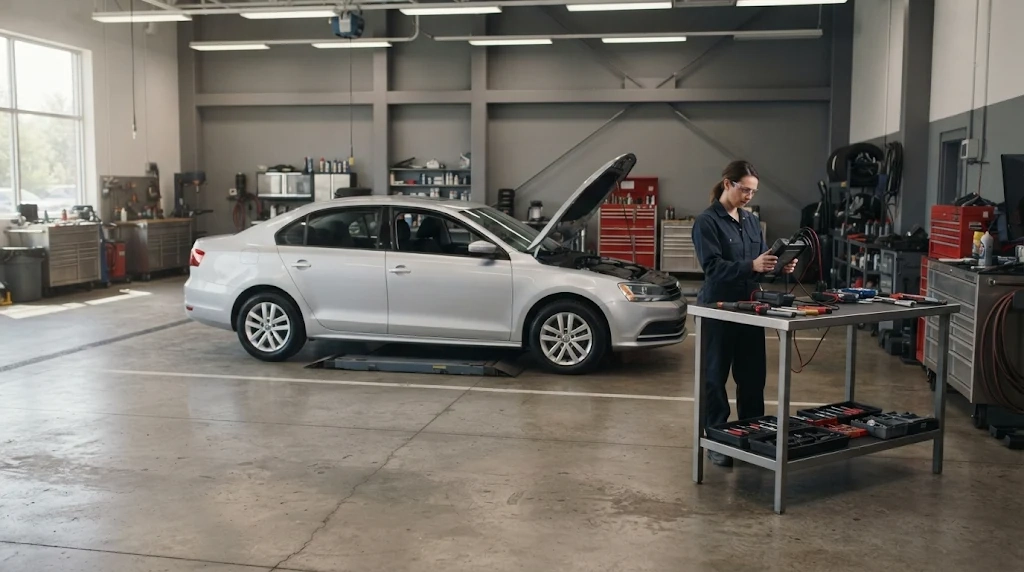
Regular inspection and early diagnosis reduce the chance that an intermittent starting fault becomes a complete no-start. Prevention begins with the systems that show symptoms.
- Have the battery and charging system checked when cranking slows.
- Keep battery connections secure and free from damage.
- Follow the vehicle’s specified spark plug maintenance schedule.
- Investigate recurring warning lights and rough starting promptly.
- Use the recommended fuel and keep up with scheduled service.
A part should be replaced when testing or the maintenance schedule supports that decision. Installing several untested parts can increase costs without fixing the reason for repeated starts.
Battery Tester
A battery tester can help you check battery condition when slow cranking is part of the starting problem.
Frequently Asked Questions
Can a weak key fob battery stop the car starting?
A weak key fob battery can prevent some push-button vehicles from recognizing the key and allowing a start. Many vehicles provide a backup recognition procedure in the owner’s manual. Try that method before replacing engine parts.
Why does my car start only when in neutral?
A car that starts in neutral but not park may have a gear-position or start-interlock issue. The vehicle needs to recognize a permitted transmission position before cranking. Have the selector and related switch checked rather than bypassing the safety system.
Can a failing fuel pump be quiet at startup?
A failing fuel pump may produce no obvious sound change that a driver can hear from the cabin. Pump noise alone does not confirm good fuel flow or pressure. A technician should test the pump circuit and delivery under the failing conditions.
Can starting problems happen without a check engine light?
Starting problems can occur without a check engine light because some faults do not trigger a visible warning. Mechanical wear, poor connections, and intermittent pressure loss may need separate tests. A clean code scan does not replace physical diagnosis.
Should I press the gas pedal when starting my car?
Most fuel-injected gasoline vehicles are designed to start without pressing the accelerator pedal. Pumping the pedal usually does not fix weak battery power or a fuel-pressure problem. Follow your owner’s manual if it describes a special starting procedure.
Is starting fluid a safe way to diagnose hard starting?
Starting fluid is not a suitable first troubleshooting step for an unfamiliar vehicle or an untrained driver. Improper use can create fire or engine-damage risks. A professional should diagnose fuel and ignition faults with equipment suited to the engine.
Conclusion
If you are asking why it takes multiple tries to start your car, the key clue is how the engine behaves during the failed attempt. Check battery and cable condition when cranking is weak. If cranking is normal, request fuel, ignition, and sensor testing before replacing parts.

Alex Carter is an automotive content writer at VastAutoParts, focusing on car parts, vehicle troubleshooting, automotive tools, product research, and practical car care guides.