
Failing Starter Motor Symptoms: Signs and Safe Checks
Quick Answer
A failing starter motor often causes a single click without cranking, slow cranking despite a healthy battery, grinding, or whirring without engine movement. Some vehicles start only after several attempts. These symptoms are clues, not proof. Weak batteries, corroded cables, and faulty starter controls can cause similar problems.
- One solid click with no crank can point to a starter or solenoid fault.
- Grinding or free-spinning may indicate a gear engagement problem.
- Slow or unreliable cranking can occur as internal parts wear.
- Test the battery and connections before replacing the starter.
Your dashboard lights come on, but the engine refuses to turn. That can signal starter trouble, yet an unnecessary replacement will not fix a poor electrical connection.
Use this guide to recognize the symptoms of a failing starter motor, compare likely causes, and decide what to check safely.
In this article
- What a starter motor does
- Main signs of a bad starter
- What different sounds suggest
- Starter versus battery faults
- Safe checks before replacement
- Other faults with similar symptoms
- Why starters fail
- When to stop cranking
- When testing or repair makes sense
- Frequently asked questions
- Conclusion
What Does a Starter Motor Do?
A starter motor uses battery power to turn the engine until it can run on its own. The engine must rotate before fuel and ignition can begin normal combustion.
When you turn the key or press the start button, the starting circuit activates a starter solenoid. This electrical switch helps move the starter’s small pinion gear into contact with the engine’s flywheel or flexplate ring gear.
The starter then spins the engine, and its drive should disengage after the engine starts. Faults can occur in the motor, solenoid, drive gear, cables, or control circuit.
The distinction matters because a car can have a healthy motor but still receive no power to operate it. Conversely, the starter can receive power and fail to turn the engine.
What Are the Main Signs of a Bad Starter Motor?
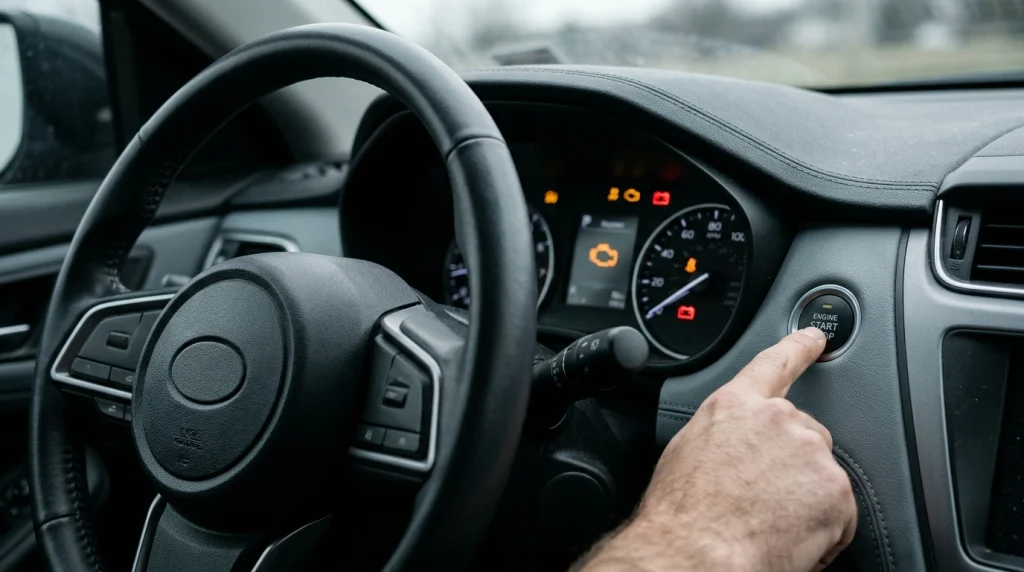
The strongest warning signs are unusual starting sounds, no engine crank, weak cranking with a tested battery, and unreliable starter engagement. Each symptom narrows the possibilities without confirming the failed part.
One Solid Click but No Engine Crank
A single click followed by silence can mean the solenoid moves but the starter motor does not turn. Worn solenoid contacts, a faulty motor, or inadequate power at the starter may cause this pattern.
The click might come from a relay rather than the starter itself. A weak battery or high-resistance cable can also produce a single click, so sound alone cannot establish the cause.
If the battery passes a load test and the connections are sound, starter testing becomes a sensible next step. A technician can verify whether the motor receives the required voltage.
Dashboard Lights Work but the Engine Does Not Turn
Working lights with no engine crank can indicate a starter problem, but they do not prove the battery is healthy. Lights need much less current than an engine starter.
Notice whether the lights stay steady, dim sharply, or disappear when you request a start. That behavior helps distinguish a low-power condition from a motor that fails to engage.
Other possible causes include a starter relay, ignition switch, or transmission safety switch. Those parts can prevent the start signal from reaching the solenoid.
Slow Cranking Despite a Tested Battery
A starter may be wearing out if the engine turns sluggishly despite a charged, load-tested battery and clean connections. Worn brushes, damaged windings, or internal mechanical drag can reduce starter performance.
Slow cranking also occurs with corroded cables, poor engine grounds, and excessive engine resistance. Cold, thick oil can make normal cranking harder.
The critical clue is what remains after battery and cable problems have been ruled out. Do not judge the starter from cranking speed alone.
Grinding or Clattering While Starting
Grinding during a starting attempt suggests the starter pinion gear may not mesh correctly with the engine ring gear. Worn or damaged gear teeth can produce harsh mechanical noise.
Clattering may also come from the flywheel, flexplate, or the starter drive mechanism. Repeated attempts can worsen gear damage if the teeth are not engaging correctly.
DENSO’s starter system diagnosis guidance describes how drive faults and damaged ring gear teeth can create these symptoms. Stop attempting starts if grinding continues.
Whirring Without the Engine Turning
A fast whirring sound without engine movement can mean the starter spins but its drive does not engage the ring gear. A defective overrunning clutch or damaged gear teeth may be responsible.
This sound differs from normal engine cranking, which has a slower, rhythmic turning sound. The starter may appear electrically active while failing to transfer rotation to the engine.
Diagnosing the fault can require inspecting both the starter drive and ring gear. Replacing only the starter may not solve damage on the engine side.
The Car Starts Only After Repeated Attempts
Intermittent starting can be an early sign of failing starter contacts or worn internal motor parts. One attempt may work normally while the next produces silence or a click.
However, a loose cable, relay, or safety switch can produce the same inconsistent behavior. Note whether the engine fails to crank or cranks normally without firing.
A repeated no-crank problem points toward the starting circuit. Normal cranking without ignition points to a different engine-starting problem.
The Starter Continues Making Noise After Startup
A starter that stays engaged after the engine fires may have a sticking drive, solenoid, or control circuit. The starter should disengage when its starting job is complete.
A sustained whine, grind, or harsh mechanical sound after startup deserves prompt attention. Continued engagement can damage the starter drive and engine ring gear.
Turn the engine off safely if the noise persists, then arrange professional inspection. Do not keep driving to see whether the sound disappears.
Smoke or a Burning Smell During a Start Attempt
Smoke or a sharp electrical smell during starting can mean wiring or a starting component is overheating. This is a warning about the electrical system, not proof that the motor alone failed.
Damaged wiring, poor contacts, or repeated cranking may contribute to heat. Oil leaking onto a starter can also affect its condition and reliability.
Stop attempting to start the vehicle if you notice smoke. Seek qualified help rather than touching hot parts or electrical connections.
What Do Different Starting Sounds Suggest?
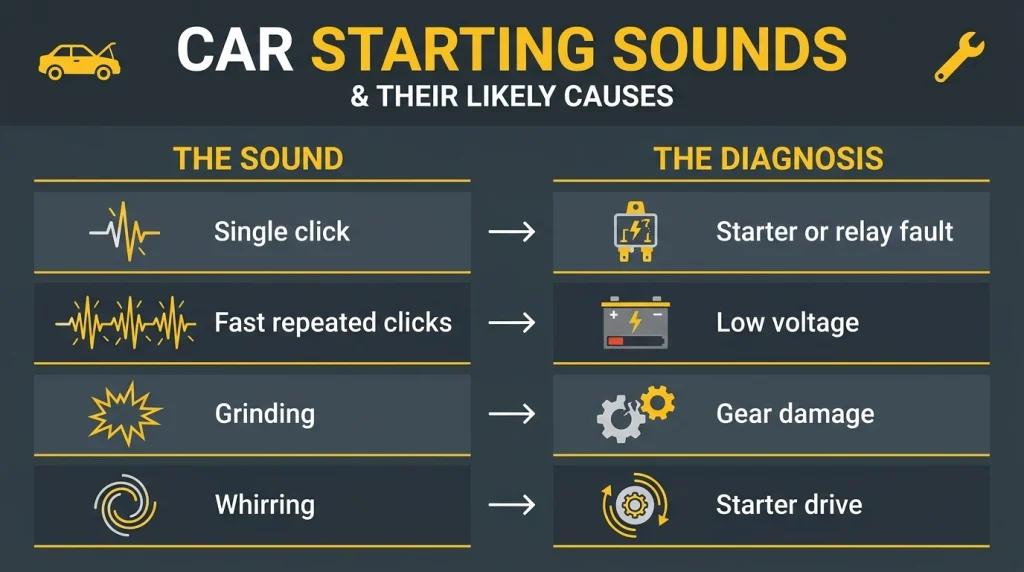
Starting sounds help select the next test, but none identifies a defective starter with certainty. Listen for the difference between one click, rapid clicks, engine cranking, and free-spinning.
The table compares common sounds with likely starting-system checks.
| Sound or behavior | Possible explanation | First check |
|---|---|---|
| Single click, no crank | Starter, solenoid, cable, or relay fault | Battery load and cable connections |
| Fast repeated clicks | Low voltage or poor electrical contact | Battery charge and terminals |
| Slow engine turning | Weak battery, resistance, or motor wear | Battery load test |
| Grinding or clattering | Gear engagement or ring gear damage | Professional mechanical inspection |
| Whirring, no engine turn | Starter drive fails to engage | Starter drive and ring gear |
| Silence and no dashboard power | Battery or main electrical supply issue | Battery terminals and state of charge |
Rapid clicking often puts the battery at the top of the check list. Grinding or whirring raises concern about mechanical engagement, while a single click needs electrical diagnosis.
How Can You Tell a Bad Starter From a Bad Battery?
A battery problem usually limits the power available for cranking, while a starter problem can prevent cranking despite adequate electrical supply. Testing matters because the symptoms overlap.
If lights fade sharply and the engine struggles to turn, check battery charge and cable condition first. If the lights appear steady and the engine does not crank, check the starter control circuit next.
Bright lights are not a substitute for a battery load test. Likewise, a starter should not be condemned merely because jump-starting fails.
A successful jump-start suggests a battery or connection issue, but it is not a final diagnosis. A failed jump-start can still result from poor jumper connections, wiring, or an unrelated fault.
For a broader symptom comparison, see AutoZone’s starter versus battery guide. A charging system check may also be needed if the battery repeatedly becomes discharged.
How Do You Check a Suspected Failing Starter?
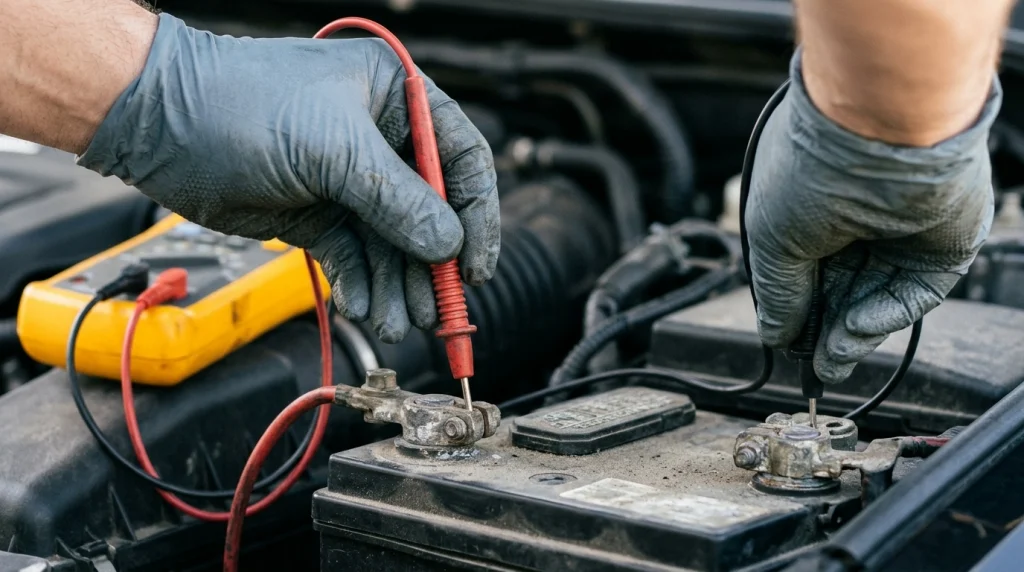
Start with safe, simple checks before arranging an electrical test of the starter. These steps can help describe the problem accurately without removing parts.
Step 1
Park safely and observe the attempt
Set the parking brake and use Park or Neutral as the vehicle requires. Note whether the engine actually cranks, clicks, or stays silent.
Step 2
Look at the battery and cables
Check for loose clamps, corrosion, damaged insulation, or a leaking battery. Do not handle a damaged battery.
Step 3
Have the battery load-tested
A load test checks whether the battery delivers power under demand. A resting voltage reading alone cannot rule out battery trouble.
Step 4
Check for a blocked start signal
Confirm the selector and clutch or brake position follow the owner’s manual. A defective safety switch or relay can prevent starter operation.
Step 5
Request a starting-circuit test
A technician can measure cable voltage drop and starter control voltage. Starter testing should follow the vehicle manufacturer’s procedure.
A digital multimeter measures voltage, but probing starter terminals can be hazardous in cramped engine bays. Leave live starter wiring tests to a trained technician unless you have the correct procedure and equipment.
A confirmed failed starter can be bench-tested after removal if needed. A passing test also means the rest of the circuit deserves attention.
What Else Can Mimic Starter Motor Failure?
Several faults outside the motor can produce the same no-crank or slow-crank complaint. The starting system works as a chain, and one weak connection can stop the process.
- Discharged battery: A weak supply can cause clicks, dim lights, or sluggish cranking.
- Corroded terminals or ground straps: Resistance limits the current reaching the starter.
- Starter relay or fuse fault: The control signal may not reach the solenoid.
- Park, Neutral, clutch, or brake switch problem: Safety controls may block starting.
- Damaged ring gear: The motor can spin but fail to rotate the engine.
- Mechanical engine resistance: An engine fault can prevent normal cranking.
There is also an important difference between no crank and cranks but will not start. If the engine turns at its normal speed, fuel, ignition, or engine management may be the issue instead.
A successful battery and cable test narrows the search, but does not prove that every electrical connection is healthy. Professional voltage-drop testing can reveal resistance hidden inside a cable or connection.
Why Does a Starter Motor Fail?
Starters can fail from electrical wear, damaged drive parts, contamination, or abnormal heat. Their internal components must handle heavy current and mechanical force during each start.
Brushes and electrical contacts can wear until current no longer flows reliably. Bearings, bushings, and drive components may also deteriorate and prevent smooth rotation or engagement.
Oil leaks, moisture, and corrosion can damage the starter or its connections. A replacement may fail again if the underlying leak or damaged engine ring gear remains unresolved.
Repeated extended cranking can overheat the motor. A jammed engine or persistent voltage problem also places extra strain on the starting system.
The goal is to identify the reason for failure, not simply install another motor. An inspection should include the battery, cables, control circuit, and mechanical engagement.
When Should You Stop Trying to Start the Car?
Stop immediately if the starter grinds, remains engaged, smokes, or produces a burning smell. Those symptoms may involve mechanical damage or overheating electrical parts.
Repeated long starting attempts can also overheat components even without visible smoke. If the engine will not crank normally, pause rather than continuously holding the key or start button.
Warning
Smoke, burning odors, or continued grinding can signal damage or overheating. Stop starting attempts and arrange safe professional assistance.
If the vehicle is parked somewhere unsafe, prioritize your location and roadside help. Do not crawl under a vehicle or reach near moving belts to investigate starter noise.
When Should You Test or Replace the Starter?
Replace a starter when proper diagnosis confirms the motor or its integrated solenoid is faulty. Similar symptoms from the battery, cable, relay, or switch require different repairs.
A technician will normally confirm battery condition, examine high-current connections, and verify the start signal. They may then perform a voltage-drop test, current test, or starter bench test.
O’Reilly Auto Parts outlines these warning signs in its starter symptoms guide. The exact test and repair procedure depends on the vehicle.
When the motor and solenoid are supplied as one assembly, replacement may involve both. Some designs allow a separate solenoid repair.
If grinding or free-spinning was present, ask the technician to inspect ring gear teeth. A damaged gear can harm a replacement starter if the original cause is left in place.
A starter that fails only intermittently can be harder to diagnose. Recording the sound and conditions during a failed attempt may help the shop reproduce the fault.
Digital Multimeter
A digital multimeter helps measure battery voltage during basic starting-system checks.
Frequently Asked Questions
Can a starter motor fail without any warning?
A starter motor can stop working without a clear warning, although some develop clicking, slow cranking, or intermittent operation first. Internal electrical contacts may stop conducting suddenly. A failure without earlier symptoms still requires battery and circuit testing before replacement.
Can a bad starter make the car stall while driving?
A bad starter normally does not stall an engine that is already running because the starter disengages after startup. A stall during driving suggests another fault, such as charging, ignition, or fuel delivery trouble. Persistent mechanical engagement is a separate problem requiring prompt attention.
Does cold weather make a weak starter act worse?
Cold conditions can reveal a marginal starter because thicker oil increases the force needed to turn the engine. Battery output may also fall in cold weather, creating similar symptoms. Test the battery and starting circuit before blaming the motor for a cold-weather no-start.
Can a starter cause problems on a push-button car?
A push-button car can have starter motor failure just like a key-start vehicle when it uses a conventional starter. The start button and control modules add other possible failure points. Check the brake or clutch input and the vehicle’s starting messages before assuming motor failure.
Is a starter solenoid different from the starter motor?
The starter solenoid is the electrical switching and engagement device, while the starter motor supplies the turning force. Many vehicles combine them into a starter assembly. A clicking solenoid does not guarantee that the motor, cables, or drive gear is healthy.
Will a new battery fix a failing starter motor?
A new battery will not repair a starter with worn contacts, damaged windings, or a faulty drive mechanism. It may improve cranking when low battery power was the real issue. Confirm the battery and connections before deciding whether the starter needs repair.
Conclusion
The symptoms of a failing starter motor include no crank, one solid click, slow cranking with a healthy battery, grinding, and free-spinning noises. Check the battery and cable condition first. If the problem continues, arrange a starting-circuit test before replacing the starter.

Alex Carter is an automotive content writer at VastAutoParts, focusing on car parts, vehicle troubleshooting, automotive tools, product research, and practical car care guides.