
What Drains a Car Battery When the Car Is Off? 7 Causes
Quick Answer
What drains a car battery when the car is off? Common causes include lights left on, plugged-in accessories, faulty electrical parts, and systems that fail to shut down. A weak battery, short drives, or a charging problem can cause the same symptom without an unusual electrical drain.
- Check cabin, trunk, and glove box lights.
- Unplug dash cameras, chargers, and other accessories.
- Have the battery and charging system tested before replacing parts.
- Ask for a key-off draw test if a charged battery keeps dying.
A car that starts normally one day but will not crank after sitting can be frustrating. The cause might be a hidden light, a device using power, or a battery that no longer holds its charge. These checks will help you narrow the problem without guessing or buying unnecessary parts.
In this article
- What uses power after shutdown?
- Common causes of battery drain
- Why a new battery can still die
- What the symptoms suggest
- Safe checks you can do
- What a parasitic draw test measures
- When the alternator is involved
- How to prevent parked battery drain
- When to get professional help
- Frequently asked questions
- Conclusion
What Uses Battery Power After You Turn the Car Off?
Some electrical use after shutdown is normal because parts of the car must remain ready while the engine is off. A clock, security system, keyless-entry receiver, and computer memory may still need a small amount of power.
This background use is called parasitic draw, meaning electrical current taken from the battery while the engine is not running. Normal standby use is different from an excessive draw that leaves too little power to start the engine.
The distinction matters because a parked car can have a dead battery without an electrical fault. All conventional car batteries slowly lose charge, and a weak battery may not tolerate normal standby demand.
NOCO explains the difference between normal standby consumption and unwanted draw in its parasitic battery drain guide. A proper diagnosis checks both the battery’s condition and the electrical load.
Common Reasons a Car Battery Drains While Parked
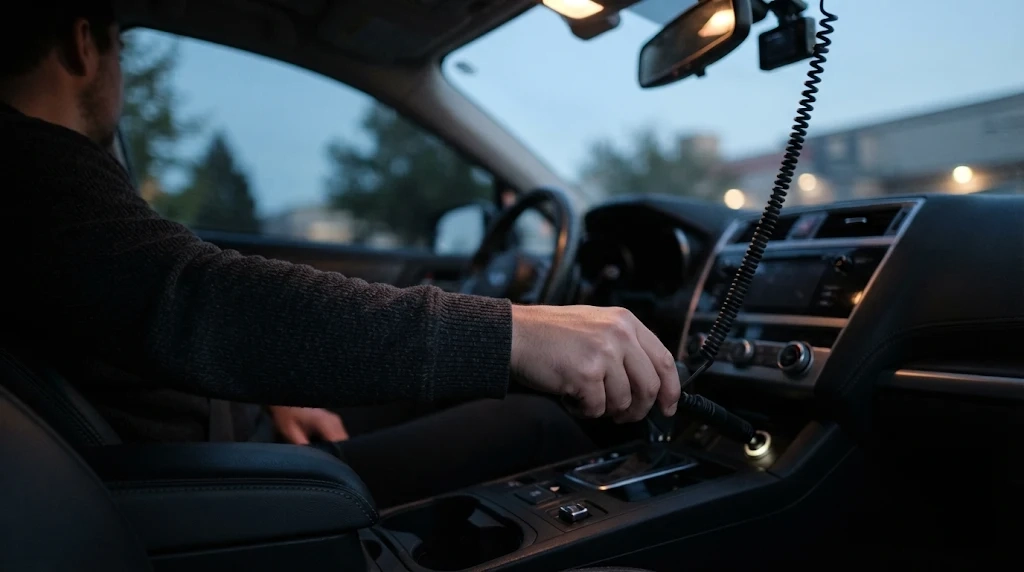
A parked car battery usually loses starting power because something keeps using electricity or the battery was already low. The following causes are worth checking before assuming a major electrical failure.
Lights That Stay On Without You Noticing
A dome light, map light, trunk lamp, glove box bulb, or vanity mirror light can remain powered after you leave. A door or hatch switch that fails to register closure may keep a lamp on.
Some lights are hidden when panels are closed, making the problem difficult to see. Look for a door-ajar warning or a lamp that stays lit longer than your vehicle’s normal delay.
Accessories Plugged Into a Live Outlet
Some cars keep a USB port or accessory socket powered after shutdown. A connected dash camera, phone charger, or other device can continue drawing electricity if the outlet stays live.
A hardwired dash camera with parking recording can also use battery power by design. Its installation and low-voltage cutoff settings determine how it behaves while the vehicle is parked.
Do not assume every plugged-in charger draws the same amount of power. First confirm whether the outlet remains active with the ignition off.
Aftermarket Audio, Alarms, and Tracking Devices
An added stereo, alarm, tracker, remote starter, or other accessory may stay energized because of its wiring or configuration. The risk is greater when a device is connected to constant battery power unnecessarily.
If trouble began after an installation, tell the technician what was added and when. That history can point to a circuit worth checking without disturbing unrelated equipment.
Relays, Switches, and Electronic Modules That Stay Awake
A sticking relay may keep power flowing to a circuit that should shut off. A control module may also fail to enter its normal low-power sleep state.
Modern vehicles can briefly wake their electronics after a door opens or a key is detected. A high reading taken immediately after shutdown does not automatically prove a fault.
Water intrusion, damaged wiring, or a faulty switch can create similar symptoms. These problems often require a wiring diagram and a repeatable electrical test.
An Aging or Damaged Battery
A battery that has lost storage capacity may struggle to start the engine after normal parked use. Internal deterioration can make it seem as though something is draining the battery unusually fast.
Slow cranking, dim lights, or frequent jump-starts make a battery test worthwhile. A swollen, leaking, or visibly damaged battery needs professional attention rather than a home charging attempt.
Short Trips and Long Periods Without Driving
Starting the engine uses battery energy, and the charging system needs time to replace it. Frequent short trips may not restore the charge used, especially with heavy electrical demand.
A car parked for long periods also loses charge through normal standby use and natural self-discharge. Neither situation proves that a hidden accessory is faulty.
Heat, Cold, and Poor Battery Connections
Heat speeds battery aging, while cold conditions make starting harder for a weak battery. These effects may reveal an existing battery problem rather than create an unusual key-off load.
Loose or corroded battery connections can prevent proper charging or starting. They can imitate a dead battery even when the real issue is a poor electrical connection.
AAA describes these distinctions in its guide to common dead battery causes.
Why Can a New Car Battery Still Die Overnight?
A new battery can die overnight if the vehicle has excessive standby draw, does not charge correctly, or has poor connections. Replacing the battery alone does not correct those problems.
A replacement battery may also arrive with insufficient charge or be unsuitable for the vehicle’s required type. Some cars have specific battery registration or charging requirements in their service instructions.
If the replacement battery fails again, avoid buying another one without testing the system. Ask the shop to verify the battery’s state of charge, starting ability, and charging performance.
Tell the technician whether the failure happened after a single night, several parked days, or a short drive. That timing can help separate a key-off draw from incomplete charging.
How Can You Tell What Is Draining Your Car Battery?
The timing of a dead battery provides clues, but it cannot confirm a diagnosis by itself. This table compares common patterns with a useful next check.
| What you notice | Possible explanation | Useful next check |
|---|---|---|
| Dead after one night | Light left on, excessive draw, or weak battery | Check lights, accessories, then battery condition |
| Dead after long parking | Normal standby use plus self-discharge | Test charge and battery health |
| Weak after short drives | Battery not fully recharged | Test charging system and driving pattern |
| Problem began after accessory installation | Incorrect power connection or device setting | Inspect installation and standby behavior |
| Battery warning light while driving | Charging or alternator fault | Stop safely and request assistance |
A battery and charging-system test should come before replacing parts because several faults share the same symptoms.
How to Find a Battery Drain Without Risky Electrical Work
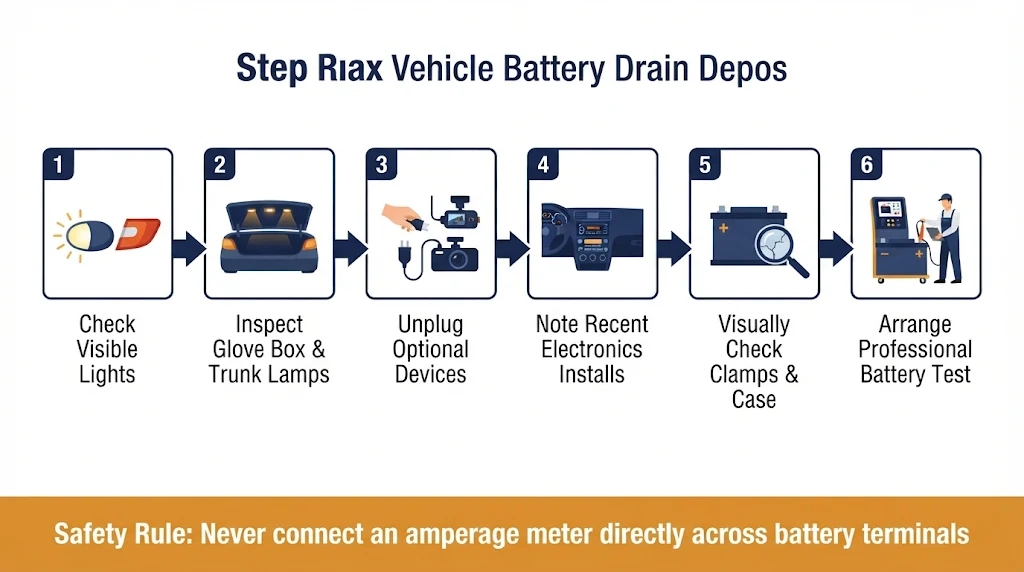
You can rule out several common causes without opening a fuse panel or disconnecting a battery cable. Follow these checks in order, then seek electrical testing if the failure continues.
- Check visible lights. Turn the engine off, close the doors, and confirm that interior and exterior lights shut down as expected.
- Look for hidden lamps. Inspect the glove box and cargo area for switches or lamps that appear to remain active.
- Unplug optional devices. Remove phone chargers and other accessories from sockets that might remain powered after shutdown.
- Review recent changes. Note any newly fitted stereo, tracker, alarm, dash camera, or repair completed before the problem began.
- Inspect without touching damaged parts. Look for loose clamps, heavy corrosion, cracked housing, swelling, or leaking near the battery.
- Arrange proper testing. Have the battery fully charged, its starting performance checked, and the charging system evaluated.
Write down when the car was last driven and how long it sat before failing. A simple record helps the technician recognize an intermittent problem that might not appear during a quick inspection.
A jump-start can get the engine running, but the battery may still need controlled charging and testing. Repeated jump-starts without diagnosis can leave you stranded again.
Warning
An incorrectly connected meter can short a battery or damage vehicle electronics. Never connect a meter in amperage mode directly across the battery terminals.
If the battery is hot, leaking, swollen, or badly damaged, do not try to charge it. Have a qualified technician handle the battery and inspect the surrounding electrical system.
What Does a Parasitic Battery Draw Test Measure?
A parasitic draw test measures electrical current leaving the battery after the car’s electronics enter their normal standby state. The purpose is to find a circuit using more power than the vehicle allows.
A technician may use a suitable current clamp or test meter and follow the model’s service procedure. The method matters because opening a door or disconnecting power can wake control modules.
Many vehicles continue routine checks for a period after shutdown. A reading taken before the modules sleep can be misleading, so the correct waiting process is vehicle-specific.
There is no single safe pass-or-fail current limit for every vehicle. A technician should compare the stabilized reading with the manufacturer’s specification for that model and equipment.
Once excess draw is confirmed, the technician can isolate the affected circuit and inspect its connected parts. Pulling random fuses without a plan can reset modules and obscure an intermittent fault.
Can the Alternator Cause a Battery to Die When Parked?
A faulty alternator can leave a battery low because it fails to recharge the battery during driving. Certain internal alternator faults may also allow unwanted current to flow after shutdown.
Those are different failure modes. A charging fault explains why the battery begins parking with too little energy, while a key-off fault removes energy after the engine stops.
Clues to a charging fault include a battery warning light, flickering vehicle lights, or loss of electrical power while driving. AAA advises against continuing to drive with signs of serious charging failure.
Read its alternator warning signs for symptoms that need prompt inspection. A trained technician can test charging performance and check for unwanted key-off current.
How Do You Prevent Battery Drain While Parked?
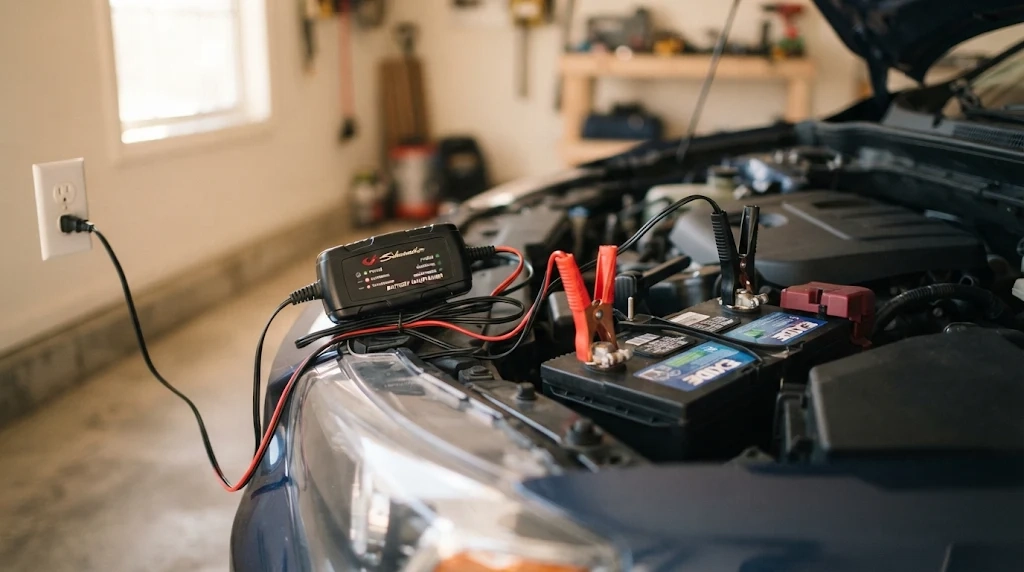
Preventing unwanted drain starts with shutting off accessories, keeping the battery healthy, and matching maintenance to how you drive. You do not need to disable normal vehicle electronics.
- Check that doors, the trunk, and the hood close correctly.
- Turn off lights that lack automatic shutoff.
- Unplug accessories when their sockets remain powered.
- Have newly installed electronics wired to the correct circuits.
- Keep battery connections clean and secure through proper servicing.
- Test the battery when starting becomes slower or less reliable.
- Use a compatible battery maintainer during long storage when the vehicle manual permits it.
A battery maintainer is a charger designed to support a battery during extended parking. Choose one compatible with the battery type and follow both the charger and vehicle instructions.
A maintainer can help during storage, but it does not repair a stuck relay or faulty wiring. If a battery loses charge unusually fast, investigate the cause rather than hiding it with repeated charging.
When Should a Mechanic Check a Recurring Dead Battery?
Professional testing is appropriate when a charged, healthy battery repeatedly loses starting power or the problem returns after simple checks. It is also needed when the vehicle has damaged electrical parts.
Ask for a battery load test, charging-system test, and key-off electrical draw test when the symptoms justify them. Share the time between parking and failure, plus any accessory installations.
Stop driving safely if a charging warning appears with dimming lights or other signs of power loss. A vehicle with a failed charging system may stall without warning.
Do not replace the alternator, starter, or battery based only on one symptom. Confirming the faulty circuit or component is more reliable than changing several parts in sequence.
Battery Maintainer
A compatible battery maintainer can help preserve battery charge while a vehicle is parked for an extended period.
Frequently Asked Questions
Can a nearby key fob drain my car battery?
A nearby key fob can keep some vehicles’ entry systems alert, which may increase parked electrical use. The effect depends on the vehicle’s keyless-entry design. Store the fob away from the vehicle if your owner’s manual recommends it. Check for other electrical loads too.
Can a faulty brake light switch drain the battery?
A faulty brake light switch can keep brake lamps powered after you park, draining the battery while the engine is off. Check whether the brake lights remain on without pedal pressure. Have the switch and related wiring inspected rather than guessing at a replacement.
Can a disconnected battery lose charge on its own?
A disconnected battery can slowly lose charge through natural self-discharge, even with no accessories attached. The rate varies with battery condition and storage temperature. A compatible maintainer may help during long storage, but a failing battery still needs testing. Store batteries as their maker directs.
Can a battery test pass but starting still fail?
A simple voltage reading can look acceptable even when a battery struggles to supply the power needed to start an engine. A proper battery test checks more than resting voltage. Cable resistance and the starter circuit may also need inspection.
Should I disconnect the battery before long storage?
Disconnecting a battery may reduce some parked electrical use, but it can erase settings or affect vehicle security and electronic systems. Some vehicles have special storage procedures. Check your owner’s manual before disconnecting anything, particularly on modern cars. A mechanic can suggest safer storage options.
Can a battery maintainer be used with an AGM battery?
An AGM battery should use a maintainer approved for that battery chemistry and the vehicle’s charging requirements. Not every charging mode suits every battery. Confirm the type printed on the battery and follow the charger’s instructions before connecting it. Avoid incompatible charging settings.
Conclusion
What drains a car battery when the car is off? Hidden lights, powered accessories, faulty circuits, and normal standby use can all contribute, especially when the battery is weak. If simple checks do not reveal the cause, arrange battery, charging-system, and parasitic draw tests before replacing parts.

Alex Carter is an automotive content writer at VastAutoParts, focusing on car parts, vehicle troubleshooting, automotive tools, product research, and practical car care guides.