
How Long Can a Car Sit Without Starting? Battery Tips
Quick Answer
If you are wondering how long you can go without starting your car before the battery dies, plan for roughly two to four weeks without driving. Some healthy batteries last longer, but an older battery or extra electrical drain can cause trouble much sooner. Starting the engine briefly is not a reliable substitute for driving or charging.
- A fully charged, healthy battery has the greatest chance of starting after a long break.
- Alarms, computers, and connected accessories use power while the car is off.
- Longer drives replenish charge better than brief starts and short idling.
- A compatible smart battery maintainer is useful for extended parking.
You may be leaving your car at home during a trip, parking a second vehicle, or trying to avoid another dead battery. The time you can safely leave it depends on more than the number of days parked. Understanding the warning signs helps you choose a simple plan before the engine refuses to start.
In this article
- How long the battery may last
- Why a parked car loses charge
- Factors that shorten battery life
- Why brief engine starts do not help much
- How often to drive
- How to prepare for parking
- Which care method to choose
- How to check battery condition
- What to do if the car will not start
- When battery drain signals a fault
- Mistakes to avoid
- Frequently asked questions
- Conclusion
How Long Can a Car Sit Without Starting?
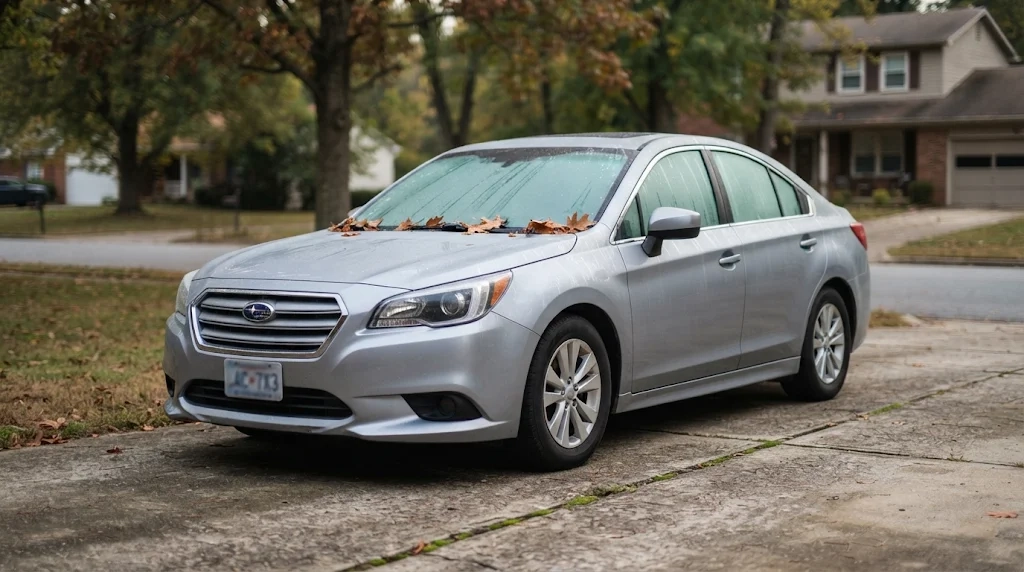
A healthy car may start after several weeks of parking, but there is no guaranteed safe limit. Its starting battery can lose enough charge to prevent cranking before it becomes fully discharged.
Interstate Batteries says an unused car battery can take about four weeks to two months to die in its battery storage guidance. ACDelco’s parked-car guidance gives a shorter estimate of two to four weeks before a modern vehicle may fail to start.
The difference matters: a battery does not have to be completely empty to leave you stranded. These estimates are starting points, not promises for every vehicle.
The table shows how to think about parking time for a typical vehicle with a healthy battery. Conditions can change the outcome at every stage.
| Time Parked | Possible Battery Condition | Practical Action |
|---|---|---|
| About one week | A healthy, charged battery will often start the car. | Check for accessories left on. |
| Around two weeks | Many cars still start, but weak batteries may struggle. | Consider a proper drive or maintainer. |
| Around three to four weeks | The chance of a no-start becomes more concerning. | Use a suitable maintenance plan. |
| A month or longer | A discharged battery becomes an increasing risk. | Prepare before parking rather than guessing. |
The most useful rule is to protect the battery before parking becomes an extended break. Waiting until the car will not start can shorten battery life.
Why Does a Parked Car Battery Lose Charge?
A parked car loses battery charge because electrical systems keep working and the battery slowly discharges on its own. Turning off the engine does not disconnect every electrical circuit.
What is parasitic battery drain?
Parasitic drain is electricity used by a vehicle after the ignition is off. Some drain is normal because the car needs power for stored settings and security features.
Common sources include the alarm, clock, keyless-entry receiver, and computers that monitor vehicle systems. A dash camera in parking mode can add more demand than the factory electronics alone.
Problems arise when a module does not enter sleep mode or an accessory stays on. The car may seem completely shut down while the battery keeps losing charge.
Does the battery lose power without any connected devices?
A disconnected battery still loses some charge through natural chemical reactions called self-discharge. That process continues even without a vehicle drawing power.
Inside a parked car, self-discharge combines with standby electrical use. This explains why a battery may weaken without any obvious lights or equipment running.
What Makes a Car Battery Die Faster While Parked?
Battery age, starting charge, temperature, and extra electrical devices determine how quickly a parked car becomes hard to start. The same car may behave differently after two separate parking periods.
Battery age and condition
Older batteries often store less usable energy, so they have a smaller reserve for engine starting. A battery already weakened by repeated discharge may fail sooner.
AAA says typical car battery service life is about three to five years, depending on use and conditions. Its battery life guidance also identifies heat, vibration, and short trips as important factors.
Weather and parking location
Hot weather can speed up battery deterioration, while cold weather makes engine starting more demanding. A weak battery may appear normal during mild weather and struggle during a cold morning.
Parking in a protected area can help limit harsh temperature exposure. Temperature control does not eliminate battery drain, so it cannot replace charging or maintenance.
Accessories and charging history
An always-powered dash camera, tracker, or aftermarket alarm can shorten the time before a no-start. Even a phone charger or interior lamp can matter if its circuit stays powered.
Short trips also matter because the alternator may not replace the energy used to start the engine. If the battery was partly discharged when parked, the countdown began with less reserve.
Will Starting the Engine for a Few Minutes Help?
Starting the engine for only a few minutes is not a dependable way to maintain battery charge. Engine starting uses energy, and a short idle may not replace it.
The alternator is the engine-driven component that supplies electrical power and recharges the battery. Its output depends on engine speed, electrical load, and vehicle design.
Air conditioning, rear defrosters, lights, and other equipment may use much of the available power during idling. A brief start can therefore leave the battery little better charged.
Repeatedly starting and stopping a parked vehicle is a poor storage routine. Plan a meaningful drive or use a compatible charger instead.
Warning
Running an engine in an attached garage can cause deadly carbon monoxide exposure, even with the door open. Move the vehicle outside before running it.
The CDC carbon monoxide guidance specifically warns against running cars inside attached garages. Battery care is never a reason to take that risk.
How Often Should You Drive a Car That Sits?
A real drive at regular intervals is more useful than occasionally turning the engine on. Choose a schedule that lets the charging system replace energy used during starting and parking.
Interstate Batteries recommends a drive of at least 30 minutes about once a week for cars that would otherwise sit. The exact charge recovered still depends on the battery and driving conditions.
A longer uninterrupted drive is generally more helpful than several tiny trips. However, a severely discharged battery may still need an external charger.
If you cannot safely drive the car, do not have someone start it simply to idle. Use an appropriate battery maintainer or follow the vehicle maker’s storage instructions.
How Can You Stop the Battery Dying While Away?
Prevent a parked battery from going flat by checking its condition, removing unnecessary electrical loads, and planning how it will stay charged. These steps work better before leaving than after a no-start.
- Start with a charged battery. Take a proper drive or charge it with a compatible battery charger before parking.
- Check battery health. Have an older or unreliable battery tested before depending on it after a long absence.
- Switch off accessories. Unplug devices that draw power while parked, including optional dash camera parking modes when appropriate.
- Choose a charging plan. Use a suitable smart maintainer for long storage, or arrange periodic real drives when practical.
- Review the owner’s manual. Some vehicles have special instructions for battery charging, disconnecting, and storage.
A smart battery maintainer monitors the battery and supplies charge when needed. Unlike a simple unregulated charger, a suitable automatic maintainer is designed for extended maintenance use.
Check the battery type before connecting equipment. A charger intended for one battery chemistry or voltage may be wrong for another.
Which Battery Care Method Should You Choose?
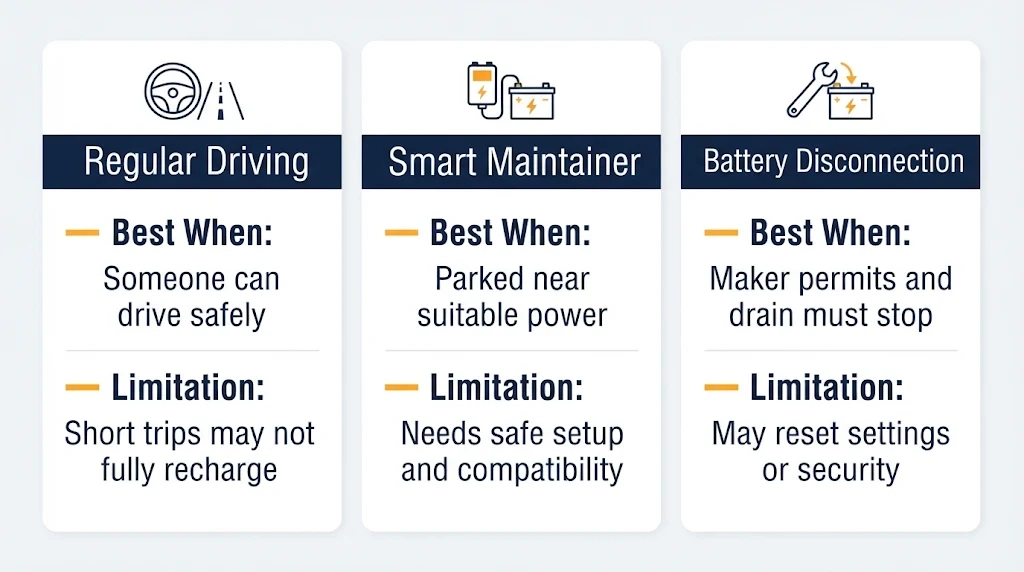
The right battery care method depends on access to electricity, how long the car will sit, and the vehicle’s electronics. No single option suits every owner.
This comparison shows the main tradeoffs without assuming your battery has the same condition as someone else’s.
| Method | Useful When | Main Limitation |
|---|---|---|
| Regular driving | Someone can operate the car safely. | Short trips may not fully recharge. |
| Smart maintainer | The vehicle stays parked near suitable power. | Requires safe setup and correct compatibility. |
| Battery disconnection | The maker permits it and standby drain must stop. | May reset settings or disable security functions. |
A compatible maintainer is usually the simpler long-storage option when electrical power is available. Disconnecting a battery requires more caution because modern vehicles may lose settings or need special procedures.
Do not disconnect a battery without checking the owner’s manual. If your vehicle has unusual electronics, ask a qualified technician for the correct method.
How Do You Check a Battery Before Parking?
Check the battery’s charge and condition before leaving the car unused, especially if it has shown starting problems. Visual checks are useful, but a proper battery test gives more information.
Look for loose terminals, visible corrosion, a damaged case, or a battery that is not securely mounted. Do not touch leaking fluid or attempt to repair a damaged battery.
A digital voltmeter measures battery voltage, but voltage alone does not prove the battery can start an engine. A load or conductance test checks whether it can supply power under demand.
A resting voltage reading is most useful after charging has stopped and the battery has settled. Interpret the result using the battery maker’s specifications rather than treating one reading as a complete diagnosis.
Ask for both battery and charging-system tests if the car has been unreliable. A new battery will not fix an alternator fault or an excessive electrical drain.
What If Your Car Will Not Start After Sitting?
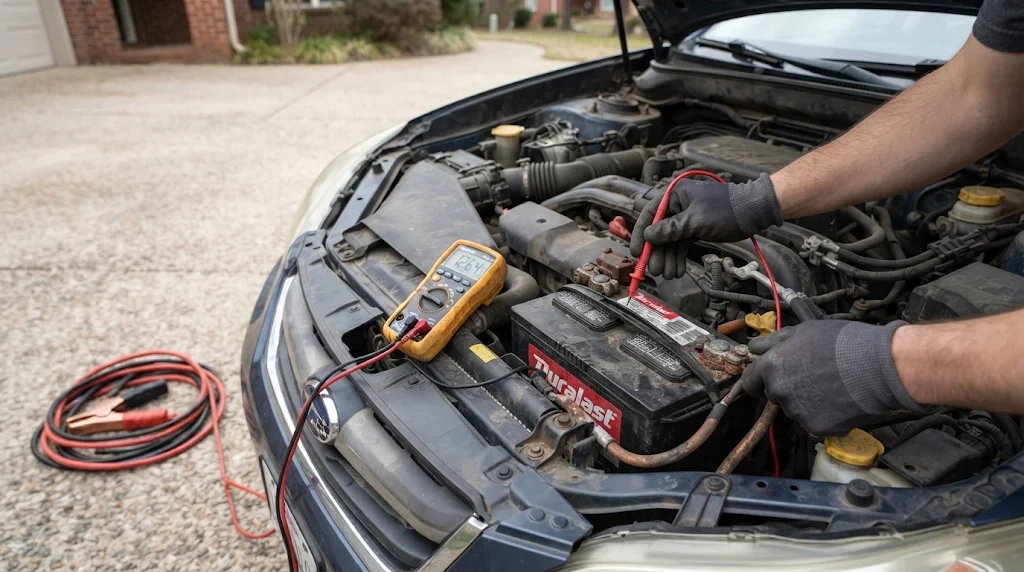
If your car will not start after being parked, check the battery and its connections before replacing parts. The sound and behavior during the start attempt help narrow the cause.
- Notice what happens. Slow cranking, repeated clicking, or weak dashboard lights often point toward low available battery power.
- Inspect accessible connections. Look for loose or badly corroded battery terminals without touching damaged wiring.
- Use an approved recovery method. Charge the battery or follow the vehicle manual’s jump-start procedure with suitable equipment.
- Test the battery afterward. Recharging may restore operation, but repeated deep discharge can reduce remaining capacity.
- Check other systems if needed. A normally cranking engine that will not fire may have a fuel, ignition, or control-system problem.
A jump-start supplies enough power to begin operation; it does not prove the battery is healthy. A charger and a battery test help distinguish a temporary low charge from a failing battery.
Do not keep cranking an engine that will not start. Repeated attempts can discharge the battery further and place extra strain on the starting system.
When Does Battery Drain Suggest Another Problem?
A battery that repeatedly goes flat after short parking periods may have a fault rather than normal standby drain. The cause may be electrical, battery-related, or part of the charging system.
Battery Tender identifies stuck lights, control modules, aftermarket accessories, and faulty alternator components as possible sources of excessive draw. A professional can measure standby current after the vehicle’s computers enter sleep mode.
Consider a diagnostic visit if the battery dies after only a few days despite being charged and tested. That pattern deserves investigation before another replacement battery is installed.
Document when the problem occurs, whether it happens after short drives, and which accessories were connected. That history can make the technician’s diagnosis more focused.
What Mistakes Should You Avoid While Parking?
Avoid relying on a weak battery, brief idle sessions, or unverified battery disconnection instructions. These habits can create starting trouble or unnecessary risk.
- Do not leave unnecessary lights, chargers, or parking-mode accessories powered.
- Do not assume a battery is healthy just because the engine started once.
- Do not use a charger unless its instructions match the battery and vehicle.
- Do not ignore repeated slow cranking or unexpected battery warning lights.
- Do not assume a single jump-start has restored a deeply discharged battery.
When storage lasts longer than planned, reassess the charging plan before returning to daily use. A small amount of preparation is easier than troubleshooting a no-start when you need the car.
12V Battery Maintainer
A compatible smart battery maintainer helps keep a parked vehicle’s starting battery charged during extended storage.
Frequently Asked Questions
Can a new car battery die while parked?
A new car battery can lose enough charge to prevent starting if electrical systems draw power while the car is parked. New batteries generally have more usable capacity than worn ones, but they are not immune to standby drain or accessories left on. Check the starting charge before a long break.
Can a disconnected car battery still go flat?
A disconnected car battery can still lose charge because self-discharge continues even after the vehicle’s electrical load is removed. Disconnecting may slow the loss, but it will not preserve charge indefinitely. Follow the battery maker’s storage and charging instructions.
Does accessory mode charge the car battery?
Accessory mode does not charge a conventional car’s starting battery because the engine-driven alternator is not supplying power. The radio, screens, and other accessories instead consume stored energy. Avoid leaving the ignition in accessory mode during storage.
Is a trickle charger the same as a maintainer?
A trickle charger supplies a small charging current, while a smart maintainer regulates charging to help hold an appropriate charge level. The terms are sometimes used interchangeably, so check the equipment’s actual functions. Choose a model approved for your battery’s voltage and chemistry.
Can hybrids also have problems after sitting unused?
Hybrid vehicles can fail to enter their ready state when their separate low-voltage battery becomes discharged during storage. That battery is different from the high-voltage traction battery used for electric drive. Follow the hybrid owner’s manual because starting and charging procedures can differ from conventional cars.
Should I replace a battery after one dead start?
One dead start does not automatically mean a car battery needs replacement, because it may only be undercharged. Recharge the battery with suitable equipment and have it tested. Replacement makes more sense when testing shows lost capacity or the problem returns.
Conclusion
How long can a car sit without starting depends on battery health and electrical drain, but several weeks can already present a no-start risk. If the car will remain parked for an extended period, check its battery and choose a compatible maintainer or a reliable driving schedule.

Alex Carter is an automotive content writer at VastAutoParts, focusing on car parts, vehicle troubleshooting, automotive tools, product research, and practical car care guides.