
Why Do I Smell Gas When Starting My Car? Safe Next Steps
Quick Answer
A gas smell when starting your car may come from a richer cold-start exhaust, spilled fuel, a loose gas cap, an evaporative emissions problem, or a fuel leak. A faint outdoor odor that disappears quickly can have a less serious cause. However, a strong, recurring, or cabin odor deserves attention, especially if you notice liquid fuel.
- Shut off the engine if the smell is strong or fuel is leaking.
- Do not restart a vehicle with a suspected fuel leak.
- Note whether the odor comes from the tailpipe, engine area, or cabin.
- Have persistent odors checked by a qualified mechanic.
If you’re asking, “Why do I smell gas when starting my car?” the location and timing of the odor offer useful clues. The smell could come from normal startup exhaust, but it could also warn you about escaping gasoline.
This guide explains the likely causes, safe checks, and warning signs that mean your vehicle needs professional help. The goal is to identify the next safe step without guessing at a repair.
In this article
- Why gas smells appear at startup
- Common causes of fuel odor
- What the odor location tells you
- When a gas smell becomes dangerous
- Safe checks you can make
- How a mechanic finds the cause
- Preventing repeat fuel odors
- Frequently asked questions
- Conclusion
Why Does My Car Smell Like Gas When Starting?
A car may smell like gas at startup because its engine burns a richer fuel mixture while cold. The odor can also reveal a leak that becomes noticeable when the fuel system pressurizes.
A richer mixture contains more gasoline relative to air. The engine may need it to start smoothly before its parts warm up. The exhaust system also works differently before its emissions controls reach operating temperature.
The EPA’s cold-start emissions research explains how engines can run rich during startup. That helps explain a brief exhaust odor, but it does not prove that your vehicle is free from leaks.
Is a brief gas smell on a cold start normal?
A brief, faint smell outside near the tailpipe can occur during a cold start. The odor should fade as the engine and exhaust system warm up.
The pattern matters more than any fixed number of seconds. A new, worsening, or strong odor is not something to dismiss as normal.
Gasoline fumes inside the passenger area are a different concern. They should not be explained away as ordinary cold-start enrichment without an inspection.
Why does the smell disappear after the engine warms up?
A startup exhaust odor may fade because combustion becomes more stable and the catalytic converter warms. A catalytic converter helps reduce harmful exhaust pollutants.
Some leaks can also seem intermittent because temperature or fuel pressure changes. Therefore, a smell that disappears is not proof that a damaged seal or hose is safe.
What Causes a Gas Smell When Starting Your Car?
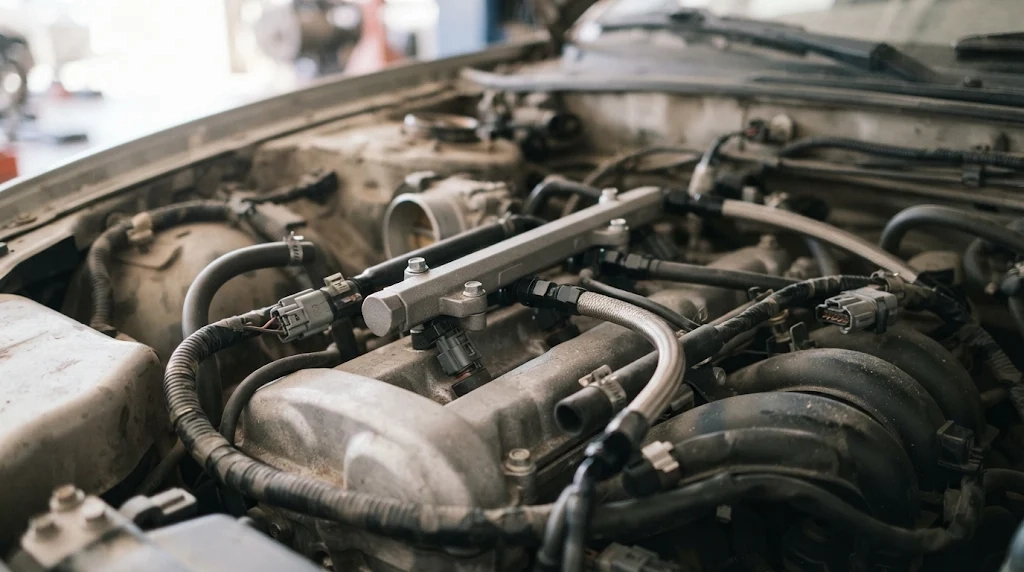
Gas odors at startup can come from combustion, spilled fuel, vapor leaks, or liquid fuel leaks. The causes below differ in both urgency and how a mechanic checks them.
Cold-start fuel enrichment
Cold-start enrichment adds fuel to help a cool engine start. Some unburned fuel-related compounds may make the exhaust smell stronger until the engine warms.
The odor is more likely to seem related to startup if you notice it outdoors near the tailpipe. Rough running, unusually strong fumes, or a changing pattern call for diagnosis.
Leaking fuel lines, connections, or injector seals
Damaged fuel lines and seals can release gasoline when the fuel system builds pressure. Leaks near the engine create a fire risk because fuel may reach hot surfaces.
Potential leak points include hoses, fittings, the fuel rail, and seals around fuel injectors. The fuel rail distributes pressurized gasoline to the injectors.
A leak does not always leave a puddle. Fuel can evaporate or collect out of sight, so a dry driveway does not rule it out.
A fuel injector that leaks internally
A leaking injector can drip fuel into an engine cylinder after shutdown. The next start may bring hard cranking, rough idle, or a gasoline-like exhaust smell.
This problem differs from a seal leaking outside the engine. An internal injector leak can affect the air-fuel mixture without leaving visible fuel under the hood.
Testing injector operation and fuel pressure is a mechanic’s job. Replacing an injector based only on the smell may waste money and miss a separate fault.
A loose gas cap or EVAP system fault
A loose cap or faulty EVAP component can allow gasoline vapor to escape. EVAP stands for evaporative emissions control, the system that stores and manages fuel vapors.
Possible faults include a cracked vapor hose, damaged charcoal canister, or malfunctioning purge valve. The purge valve controls when stored vapors enter the engine.
A faulty purge valve can also disturb starting after refueling. An EVAP issue may trigger the check engine light, but no warning light is guaranteed.
An engine that runs too rich or misfires
An overly rich engine delivers more fuel than the available air can burn efficiently. Problems with sensors, ignition parts, or fuel control can contribute to the condition.
A misfire means a cylinder fails to burn its fuel mixture as intended. Warning signs include shaking, rough idle, poor fuel economy, and an unusual exhaust odor.
These symptoms need testing rather than automatic parts replacement. A fuel odor with poor running can have several overlapping causes.
Spilled gasoline or a problem after refueling
Fuel spilled during refueling can leave an odor on the bodywork, ground, shoes, or clothing. A cap that was not secured can also release fumes near the filler area.
Check whether the problem began immediately after a fill-up. If the smell returns long after spilled fuel should have cleared, ask a technician to inspect the filler and vapor system.
Exhaust escaping near the engine
An exhaust leak can bring strong startup fumes closer to the cabin. Leaks near an exhaust manifold or pipe connection may also cause extra noise.
Exhaust fumes are not the same as a liquid gasoline leak. However, either problem deserves attention when fumes enter the vehicle.
Where Is the Gas Smell Coming From?
The area where you notice the smell can help narrow down the cause. Location alone cannot confirm a repair or rule out danger.
This comparison shows common patterns and the safest response to each one.
| Where you notice it | Possible explanation | Safer next step |
|---|---|---|
| Tailpipe, briefly | Cold-start exhaust or rich running | Arrange inspection if strong or recurring |
| Under the hood | Fuel connection, hose, injector seal, or exhaust leak | Stop engine and request professional assessment |
| Near fuel filler | Loose cap, spilled fuel, or EVAP fault | Check cap only when safe; seek diagnosis if persistent |
| Inside the cabin | Fuel vapor or exhaust entering passenger area | Stop, exit vehicle, and arrange inspection |
| Under the vehicle | Tank, fuel line, or vapor connection | Do not drive if a leak is suspected |
A strong smell under the hood, inside the cabin, or near visible liquid fuel calls for caution. Do not use a brief tailpipe odor to explain fumes coming from another area.
When Is a Gas Smell at Startup Dangerous?
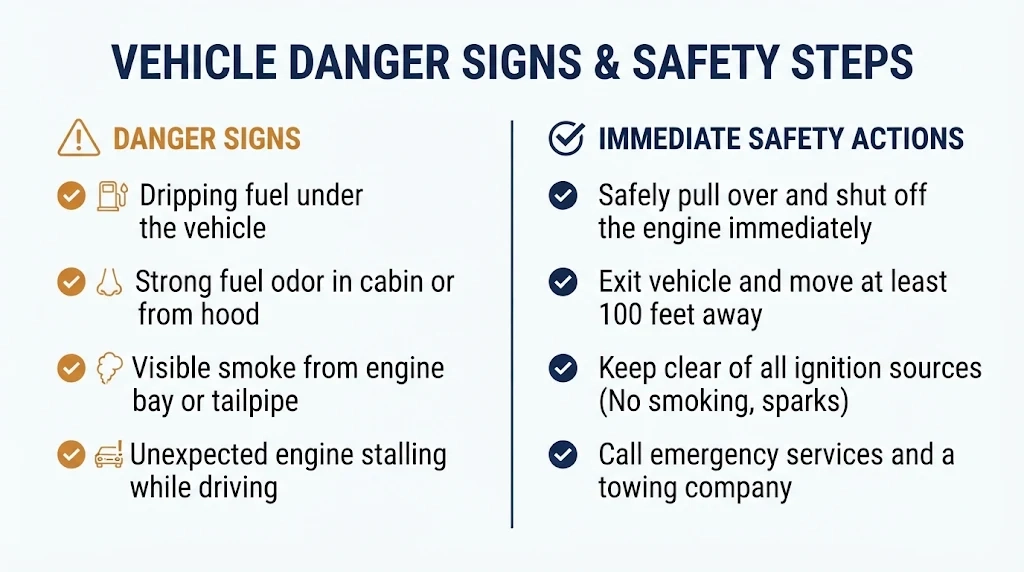
A strong gasoline smell can be dangerous when liquid fuel or vapors escape near ignition sources. Gasoline is flammable, and concentrated vapors can also harm your health. The CDC’s gasoline guidance explains health effects from breathing these fumes.
The FTC’s auto repair guidance warns that persistent gasoline odor may indicate a dangerous fuel-system leak. If that situation is possible, stop driving and arrange professional help.
- Gasoline is dripping, pooling, or leaving wet fuel residue.
- The smell is strong under the hood or inside the cabin.
- Smoke appears near a suspected fuel-system problem.
- The engine stalls, runs poorly, or produces unusual exhaust fumes.
- The odor becomes stronger with each start.
Do not start or restart a car with a suspected active fuel leak. Keep people away from the vehicle and avoid smoking, flames, and other ignition sources.
Warning
If you see dripping fuel or smell strong gasoline inside the cabin, shut off the engine, leave the area, and request a tow instead of driving.
If the smell develops while driving, pull over somewhere safe and switch off the engine. Move away if you suspect a substantial leak, and contact emergency services if there is fire or immediate danger.
How Can You Check a Gas Smell Safely?
You can record useful clues without opening pressurized fuel lines or running a hazardous test. Start with observations made from a safe distance.
- Stop and assess the odor. If the smell is strong, persistent, or inside the cabin, shut off the engine and avoid restarting it.
- Look for obvious spills. Check the ground from a safe position without crawling under the car. Avoid touching or sniffing unknown liquids.
- Think about the last fill-up. Note any gasoline spill and whether the cap was recently removed. Check the cap only if there is no suspected active leak.
- Record when the smell appears. Note cold versus warm starts, outdoor versus cabin odor, and whether the car runs roughly.
- Check the dashboard. Record any check engine light or warning message without restarting the engine just to look for one.
- Arrange the right inspection. A tow is safer than driving when an active leak or strong cabin odor is possible.
Never loosen fuel fittings, bypass a safety switch, or use a flame to locate a leak. Fuel-system pressure and hidden ignition hazards make those checks unsuitable for an untrained owner.
What if the gas smell happens only in the morning?
A morning-only odor can reflect a cold start, an overnight fuel seep, or changing temperatures around a weak connection. That pattern does not identify the cause by itself.
Tell the repair shop that the smell happens after the car sits. A technician may need to inspect the vehicle before its first start of the day.
What if the car smells like gas but has no puddle?
A gasoline odor without a puddle may come from escaping vapor, an internal injector leak, or a rich exhaust mixture. Gasoline can also evaporate before leaving an obvious wet spot.
A dry parking space is reassuring only in a limited sense. Persistent or strong odors still need an inspection.
How Does a Mechanic Diagnose the Gas Smell?
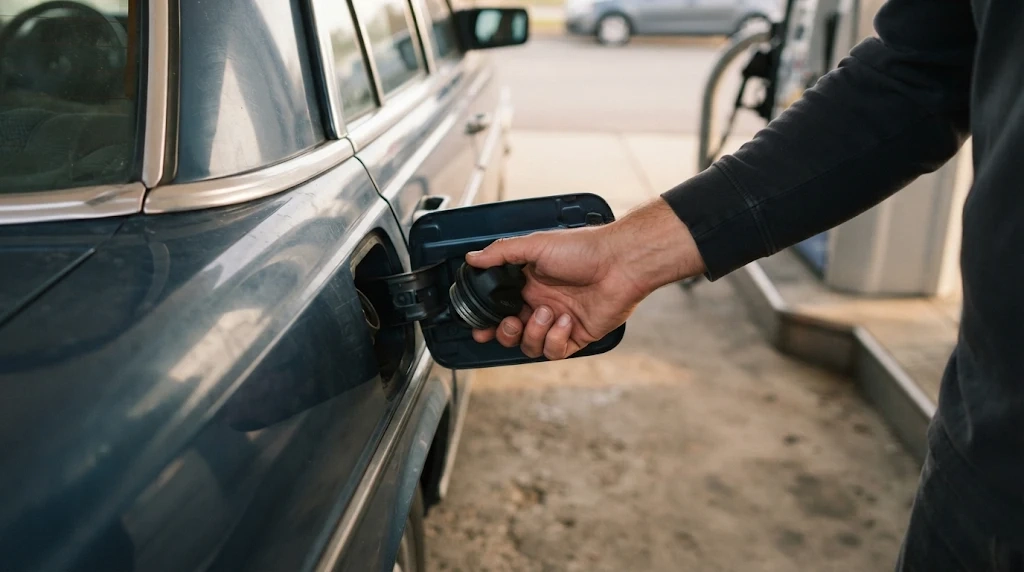
A mechanic first determines whether gasoline is escaping or whether the smell comes from engine exhaust. The proper test depends on where the odor starts and what other symptoms appear.
A technician may inspect the fuel tank, lines, connections, injectors, and seals. They may also check the EVAP system or look for exhaust leaks near the engine.
When the check engine light is on, an OBD2 code reader can retrieve stored trouble codes. These codes point toward systems needing diagnosis, but they cannot prove there is no fuel leak.
Why are trouble codes only part of the diagnosis?
A trouble code identifies a condition detected by the vehicle’s computer, not necessarily the failed part. Fuel vapor and engine mixture problems can create similar complaints.
A mechanic may compare sensor readings, check fuel pressure, and inspect for leaks using suitable equipment. Choosing tests before replacement helps avoid buying unnecessary parts.
What should you tell the repair shop?
Tell the shop exactly when the smell appears and where you notice it. Mention recent refueling, hard starts, rough idle, warning lights, or repairs near fuel components.
Ask whether the vehicle is safe to start or transport before arriving. A technician can advise whether a tow is appropriate based on the symptoms.
How Can You Reduce Repeat Gas Smells?
Prompt repairs and simple refueling habits can reduce some causes of gasoline odor. They cannot prevent every component failure, so recurring smells still require diagnosis.
- Secure the fuel cap according to the owner’s manual.
- Clean up external refueling spills safely and avoid carrying leaking fuel containers.
- Follow the vehicle’s maintenance schedule for engine and fuel-system checks.
- Report rough starts, misfires, or changing fuel economy promptly.
- Have damaged seals, hoses, and vapor-system parts repaired by a qualified technician.
Do not hide persistent gasoline odors with air fresheners. A masked smell can delay finding a leak or an exhaust problem.
OBD2 Code Reader
An OBD2 code reader can display stored engine trouble codes, although it cannot rule out a fuel leak.
As an Amazon Associate I earn from qualifying purchases.
Frequently Asked Questions
Can gas fumes make me feel sick?
Breathing gasoline fumes can cause headache, dizziness, nausea, or irritation, particularly when exposure is concentrated or prolonged. Move to fresh air and seek medical help if symptoms are significant or continue. Avoid staying inside a vehicle with a strong or unexplained gasoline odor.
Can a car smell like gas without a warning light?
A car can smell like gasoline without turning on the check engine light because not every leak or odor creates a detectable fault. Some problems also appear before the computer records one. Treat visible fuel, strong odors, and poor running seriously regardless of the dashboard.
Can bad spark plugs cause a gasoline smell?
Worn spark plugs can contribute to misfires that leave fuel incompletely burned, which may make the exhaust smell unusual. Spark plugs do not explain every gas odor, especially one near the tank. A mechanic should confirm misfires and their causes before parts are replaced.
Could the smell come from another parked vehicle?
Gasoline or exhaust odors can drift from nearby vehicles, equipment, or refueling spills rather than your own car. Notice whether the odor remains when the surroundings change, without repeatedly starting a suspect vehicle. A recurring smell near your vehicle still deserves examination.
Could a fuel smell appear after an engine repair?
A gasoline smell after engine work can suggest a disturbed hose, loose fitting, damaged seal, or spilled fuel. Contact the repair shop and describe exactly when the odor began. If an active leak is possible, do not drive the car back to the shop.
Should I keep trying to start a flooded engine?
Repeated starting attempts are not a safe way to investigate a persistent gasoline smell. A failed start can leave excess fuel vapor, but continuing to crank may hide a separate problem. Stop and seek advice when fuel odor continues or a leak is suspected.
Conclusion
The answer to “why do I smell gas when starting my car” depends on whether you notice brief cold-start exhaust or escaping fuel. If the smell is strong, returns repeatedly, or enters the cabin, switch off the engine and arrange a professional inspection instead of guessing.

Alex Carter is an automotive content writer at VastAutoParts, focusing on car parts, vehicle troubleshooting, automotive tools, product research, and practical car care guides.