
Why Does My Car Shake When Starting? Causes and Fixes
Quick Answer
A car may shake when starting because the engine is misfiring, an engine mount is worn, or the air and fuel mixture is uneven. Shaking during cranking can point to a different starting-system problem. Notice when the vibration begins, check for warning lights, and avoid driving if the shaking is severe.
- Rough idle often points toward ignition, air, or fuel problems.
- A steady vibration with a smooth-running engine can suggest worn mounts.
- Grinding or slow cranking calls for a battery and starter check.
- A flashing check engine light needs immediate attention.
Wondering why your car shakes when starting can be unsettling, especially if the vibration feels stronger than usual. The key is finding out whether the shake happens while cranking, just after the engine fires, or during idle. Those clues help you narrow the cause without replacing parts at random.
In this article
- What startup shaking means
- How timing changes the diagnosis
- Common causes of shaking
- Cold-start shaking
- Shaking during cranking
- Safe checks you can make
- When not to drive
- How a mechanic diagnoses it
- How to reduce repeat problems
- Frequently asked questions
- Conclusion
Why Does a Car Shake When Starting?
A car shakes at startup when engine vibration becomes stronger or reaches the cabin more easily. That can happen because the engine runs unevenly or its mounts no longer absorb normal movement.
Every combustion engine produces some vibration as its parts move and fuel burns. Good engine operation and sound mounts keep most of that motion from bothering you.
Rough running means the engine does not fire or idle evenly. A misfire happens when a cylinder fails to produce its expected power during a combustion cycle. Either condition can make a vehicle shudder just after it starts.
Other problems do not affect combustion directly. For example, a damaged mount can pass ordinary engine vibration into the steering wheel, seat, or dashboard.
Not every brief movement is a fault. A slight shake as an engine catches may be normal, but a harsh, repeated, or worsening shake needs investigation.
How Can You Tell What the Shaking Means?

The moment the vibration begins is one of the most useful clues. Shaking before the engine runs suggests different faults from shaking after it settles into idle.
The table compares common patterns and the first area to investigate.
| When it shakes | Possible explanation | Useful next check |
|---|---|---|
| While cranking | Starting-system trouble or unusual engine movement | Battery, cables, starter, and mounts |
| Immediately after firing | Misfire or unstable air-fuel mixture | Warning lights and diagnostic codes |
| At a steady idle | Engine roughness or worn mounts | Idle quality and mount condition |
| Only while moving | A separate tire, wheel, or drivetrain issue | Driving-speed pattern and wheel inspection |
A shake that begins only after the engine fires deserves an engine-running diagnosis first. A shake limited to cranking calls for a closer look at the starting process.
Pay attention to the sound as well. A lumpy exhaust note suggests uneven firing, while a clunk can point toward a mount or loose component.
What Causes a Car to Shake Right After Starting?
Startup shaking usually comes from uneven combustion, poor airflow, fuel delivery, or vibration passing through worn mounts. The accompanying symptoms help separate these possibilities.
Worn spark plugs or failing ignition coils
Worn spark plugs or weak ignition coils can make a gasoline engine misfire. A plug creates the spark, while a coil supplies the high voltage needed to fire it.
A misfire can feel like an uneven pulse through the seat or steering wheel. The engine may hesitate when you accelerate, and a check engine light may appear.
AAA explains that bad spark plug symptoms include hard starting, rough idling, and misfiring. However, similar symptoms can come from other engine faults.
Dirty throttle body or unwanted air leaks
A dirty throttle body or intake air leak can upset the air entering the engine at idle. The throttle body controls airflow, while intake hoses help keep that flow measured.
A cracked hose may allow unmeasured air into the intake. The engine computer may struggle to keep the fuel mixture stable, especially at low engine speed.
You might notice an uneven idle, a hissing sound, or an engine that nearly stalls. Cleaning or replacing parts without confirming the problem may not solve it.
Fuel delivery problems
Inconsistent fuel delivery can cause rough combustion immediately after startup. Dirty fuel injectors, low fuel pressure, or contaminated fuel are possible contributors.
An injector delivers fuel into the engine. If delivery is uneven, the affected cylinder may produce less power and contribute to shaking.
Fuel problems may also cause hesitation or stalling. A technician may need to test fuel pressure and injector operation before recommending repairs.
Worn engine or transmission mounts
Worn engine mounts allow more vibration to reach the vehicle body. These supports hold the powertrain in place while reducing the movement you feel inside.
A damaged mount may make the cabin shake even when engine speed sounds steady. Vibration can increase when you select Drive or Reverse with the brake applied.
Firestone describes worn motor mount signs such as stronger vibration, clunks, and excess engine movement. Mounts should be inspected rather than diagnosed by vibration alone.
Engine sensors or mechanical faults
Incorrect sensor readings or mechanical problems can also cause a rough start. The engine computer relies on sensor data to manage fuel and airflow.
A temperature sensor reading that does not match engine conditions can affect startup fueling. In some vehicles, carbon buildup or a compression problem may create similar symptoms.
These causes need targeted tests. Replacing sensors because they appear on a list often wastes money and leaves the original problem unresolved.
Why Does My Car Shake on a Cold Start Only?
Cold-start shaking can happen when the engine needs a different fuel mixture and idle setting during warm-up. Weak ignition parts or small air leaks may become more noticeable then.
A cold engine may idle faster after starting. A mild, short-lived vibration without warning lights can differ from strong shaking, stumbling, or repeated misfires.
If the vibration disappears when warm, record how quickly it stops. That pattern can help a mechanic reproduce the fault under the same conditions.
Do not assume the weather explains a violent shudder. A problem that fades after warm-up may still need repair, especially if it returns on each cold start.
What If the Car Shakes Before the Engine Starts?
Shaking during cranking needs a starting-system check because the engine has not begun normal combustion. The starter motor is turning the engine until it can run on its own.
A weak battery or poor cable connection can make cranking slow or uneven. A faulty starter may produce clicking, grinding, or trouble turning the engine.
A worn engine mount can also let you feel more movement during the start. A sharp clunk when the engine catches is different from a rough idle that continues afterward.
If the starter grinds or the engine struggles to turn, stop repeated attempts. Continued cranking can make the problem worse and may leave you stranded.
Battery and starter symptoms do not automatically explain shaking after the engine runs normally. That is why the timing of the vibration matters more than guessing one part.
How Do You Check a Car That Shakes When Starting?
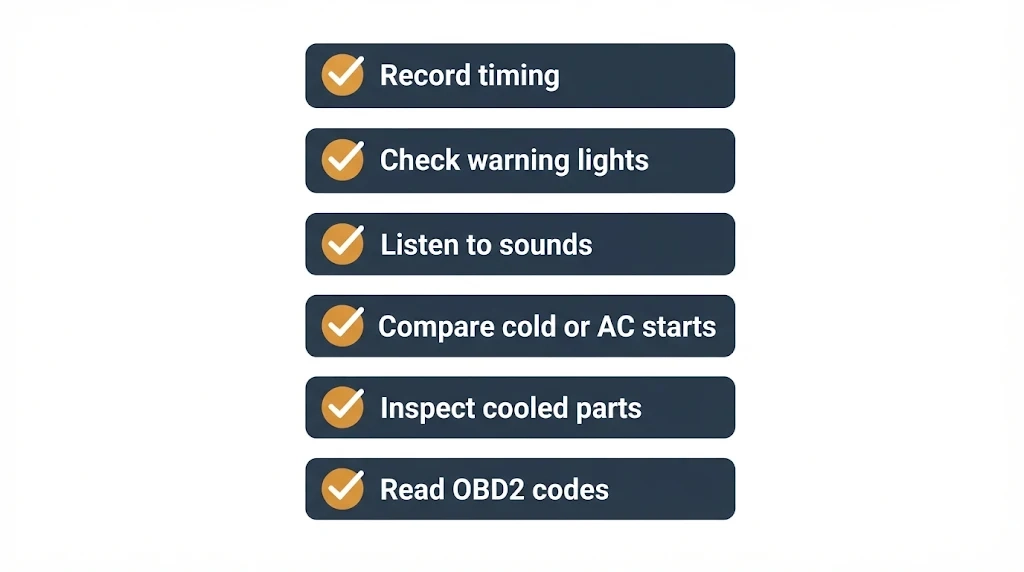
Start with simple observations and warning lights before touching any engine parts. These checks can help you describe the fault accurately without taking unnecessary risks.
- Record the exact timing. Note whether the shake starts during cranking, after ignition, or once the engine settles into idle.
- Watch the dashboard. Look for a solid or flashing check engine light, battery warning, temperature warning, or oil pressure warning.
- Listen from the cabin. Note grinding, clicking, uneven engine sound, hissing, or a single clunk.
- Compare different starts. Notice whether the fault appears only when cold, after refueling, or with the air conditioner running.
- Inspect only when parked and cooled. Look for visibly loose battery connections, damaged hoses, or obvious mount deterioration without reaching near moving parts.
- Read stored fault codes when appropriate. An OBD2 code reader may reveal clues, but the codes do not identify a failed part by themselves.
An OBD2 scanner reads trouble codes stored by the vehicle computer. AAA’s onboard diagnostics guide explains why those codes help technicians narrow a fault.
Save the code details before anyone clears them. Erasing a code can hide evidence that a mechanic needs, even if the warning light temporarily disappears.
Do not remove ignition coils, probe electrical connections, or spray chemicals into a running engine during a basic check. Those jobs belong to a controlled diagnostic process.
When Is Startup Shaking Unsafe to Drive With?
Do not continue normal driving when the car shakes severely, loses power, or displays a flashing check engine light. Those symptoms may indicate an active misfire or another urgent fault.
A flashing light can signal a condition that needs immediate service. If it appears, pull over safely and arrange professional help rather than trying to drive through it.
Warning
A flashing check engine light with heavy shaking can signal an active misfire and possible exhaust-system damage. Stop somewhere safe and seek immediate service.
Strong fuel odors, smoke, overheating, or an oil pressure warning also demand urgent attention. Switch off the engine in a safe place and use roadside assistance when appropriate.
A gentle shake without warning lights is less urgent, but it is not proof that the car is healthy. Arrange an inspection if the vibration repeats, gets stronger, or affects driving.
A solid check engine light still needs diagnosis. The absence of any warning light does not rule out worn mounts, early ignition trouble, or intermittent faults.
How Will a Mechanic Find the Real Cause?
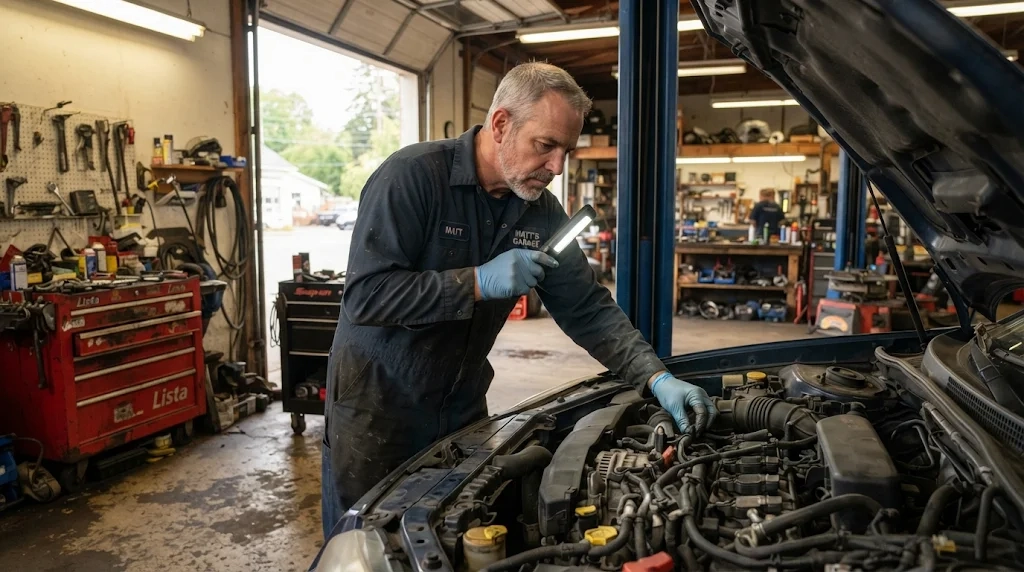
A mechanic identifies the cause by matching the vibration pattern with diagnostic tests. The correct repair depends on whether the issue is combustion, starting, or vibration isolation.
The technician may first reproduce the shake and inspect stored and pending fault codes. They can then choose tests that match what the engine is doing.
- Ignition checks: inspect spark plugs, coils, connectors, and related fault data.
- Airflow checks: inspect intake hoses and test for unwanted air leaks.
- Fuel checks: evaluate pressure and injector performance when symptoms point toward fuel delivery.
- Mount checks: inspect support rubber, fluid leaks, and excessive powertrain movement.
- Mechanical checks: measure engine compression or examine timing when simpler causes do not fit.
These tests prevent common repair mistakes. For example, a misfire code may identify an affected cylinder without proving that its ignition coil is bad.
A mount may also be worn while the engine has a separate idle problem. A careful inspection checks both possibilities when the symptoms overlap.
How Can You Reduce Repeat Startup Shaking?
Preventing startup shaking means maintaining the ignition and fuel systems while responding early to new symptoms. Good maintenance cannot prevent every fault, but it reduces avoidable causes.
Follow your vehicle’s service schedule for spark plugs, filters, and other listed items. Use the correct parts and specifications for your engine rather than a generic mileage rule.
Have damaged intake hoses and leaking mounts inspected when noticed. Address a persistent check engine light before rough running becomes severe.
Keep a short record of the conditions that trigger the vibration. Temperature, warning lights, fuel stops, and whether the car is in gear can make later diagnosis faster.
Most importantly, repair the confirmed cause instead of treating the shake itself. An engine mount will not correct a misfire, and new spark plugs will not restore a broken mount.
OBD2 Code Reader
An OBD2 code reader can show stored engine fault codes to discuss with a mechanic before repairs.
As an Amazon Associate I earn from qualifying purchases.
Frequently Asked Questions
Can low engine oil cause shaking when starting?
Low engine oil is not the usual cause of a rough idle, but inadequate lubrication can create serious mechanical problems. Check the level using your owner’s manual. If the oil pressure warning stays on after starting, switch off the engine safely and seek help.
Why does my car shake after new spark plugs?
Shaking after spark plug replacement can mean the ignition system needs another inspection. Incorrect plugs, loose coil connections, or installation problems can cause rough running. Ask the installer to check the work, especially if the vibration began immediately after service.
Can the air conditioner make startup vibrations worse?
The air conditioner can increase engine load and make existing vibration easier to feel. A weak mount or unstable idle may become more noticeable when the compressor engages. If shaking is strong, have both the idle condition and accessory system inspected.
Why does my car shake after filling up with gas?
Shaking after refueling may point to fuel quality or a fuel-system problem, but timing alone cannot prove the cause. Note the fuel stop and any warning lights. A mechanic can use that history to guide fuel and emissions-system checks.
Will disconnecting the battery stop startup shaking?
Disconnecting the battery usually does not repair the mechanical or combustion fault behind startup shaking. It may clear useful stored information or reset learned settings. Keep diagnostic evidence available and investigate the cause instead of using a battery reset as a fix.
Can a car have a misfire without a warning light?
A car can run unevenly before its computer turns on the check engine light. An intermittent misfire may leave pending diagnostic information or require testing while symptoms occur. A mechanic can examine live data even when the dashboard looks normal.
Conclusion
The answer to why does my car shake when starting depends on whether the vibration happens during cranking, just after ignition, or at idle. If the shake is severe or a warning light flashes, stop safely and seek help. Otherwise, record the pattern and arrange a targeted diagnosis.

Alex Carter is an automotive content writer at VastAutoParts, focusing on car parts, vehicle troubleshooting, automotive tools, product research, and practical car care guides.