
Car Starter vs Alternator Problems: Signs and Tests
Quick Answer
Car starter vs alternator problems differ mainly in when they appear. A bad starter usually prevents the engine from turning over. A bad alternator usually fails to recharge the battery while the engine runs. A weak battery or damaged cable can imitate either fault, so test the entire starting and charging system before replacing parts.
- One click with no cranking can point to a starter or cable fault.
- A battery warning light while driving points toward a charging problem.
- Rapid clicking often means low voltage or poor connections.
- Battery and charging tests provide better evidence than sounds alone.
Your car will not start, or it stops running after a jump. Is the starter failing, or is the alternator not charging?
This guide explains the symptoms, safe checks, and test results that separate these faults. It also shows why the battery can make the diagnosis confusing.
In this article
- What the starter and alternator do
- Starter vs alternator symptoms
- Signs of a bad starter
- Signs of a bad alternator
- Battery problems that look similar
- How to test the system
- When the engine cranks but will not start
- What a jump-start tells you
- When to stop driving
- How to avoid replacing the wrong part
- Frequently asked questions
- Conclusion
What Do the Starter and Alternator Actually Do?
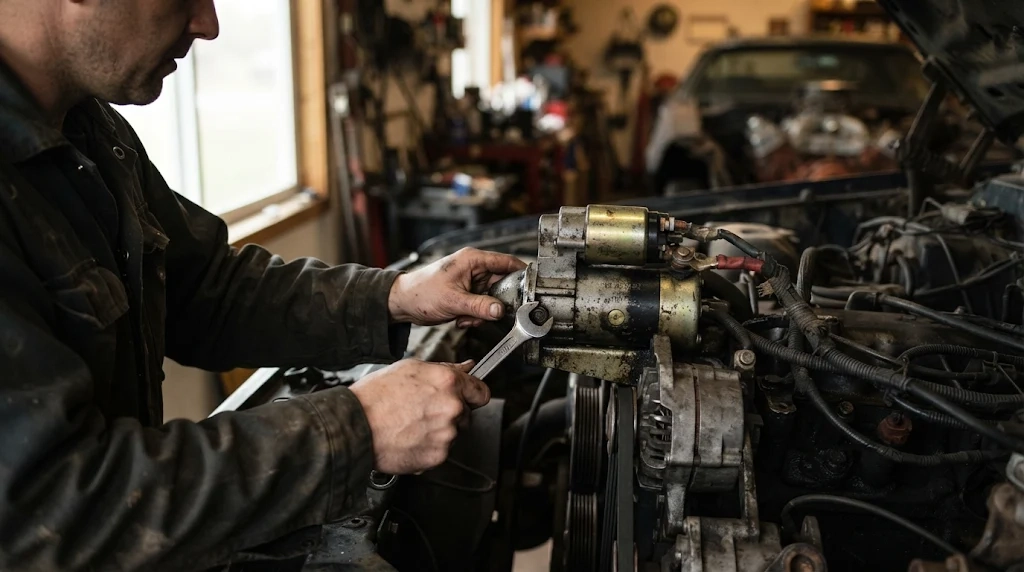
The starter turns the engine during startup, while the alternator makes electrical power after the engine begins running.
The starter motor uses battery power to rotate the engine. A starter solenoid, an electrical switch attached to many starters, helps engage the motor and its drive gear.
The alternator is driven by the running engine, usually through a belt. It supplies electrical power and recharges the battery, while a charging control system manages voltage.
The battery stores electricity for starting and for certain electrical needs when the engine is off. All three parts depend on working cables, grounds, and control circuits.
Understanding these separate jobs is the foundation of an accurate diagnosis. A starter does not normally charge the battery, and an alternator does not crank the engine.
Car Starter vs Alternator Problems: Which Signs Differ?
Starter faults usually show up when you request a start, while alternator faults often show up after the engine is already running.
The following table compares common clues and the checks that help confirm them.
| What you notice | Possible cause | Check next |
|---|---|---|
| One solid click, no crank | Starter, solenoid, battery cable, or engine fault | Battery load and starter circuit |
| Rapid clicking, dim lights | Weak battery or poor connection | Battery charge, terminals, and grounds |
| Battery light while driving | Alternator, belt, or charging circuit | Charging system and belt |
| Lights fade while engine runs | Charging or electrical supply fault | Voltage and electrical connections |
| Engine cranks normally but never fires | Fuel, ignition, sensor, or security fault | Engine fault diagnosis |
No single symptom proves a part has failed. The strongest clue is whether trouble begins during cranking or after the engine starts.
What Are the Signs of a Bad Car Starter?
A failing starter may produce one click, no cranking, intermittent operation, or grinding when you try to start the engine.
One click but the engine does not turn
A single click can mean the solenoid operates but the starter motor cannot turn the engine.
However, a discharged battery, damaged cable, poor ground, or mechanical engine problem can create a similar result. Check battery condition before ordering a starter.
Grinding or a harsh noise during starting
Grinding during a start attempt can mean the starter gear is not engaging correctly with the engine’s ring gear.
Stop cranking if grinding continues. Repeated attempts can damage the gear teeth and raise repair costs.
Starting works only on some attempts
Intermittent no-crank trouble can come from worn starter contacts, a failing relay, an ignition switch, or loose wiring.
The same symptom may appear with a park or neutral safety switch fault. That switch prevents some vehicles from starting in an unsafe gear.
Record whether you hear a click, whether the dash stays bright, and whether the engine actually turns. Those details help a technician locate the fault.
What Are the Signs of a Bad Alternator?
A failing alternator may trigger the charging warning light, cause unstable lighting, drain the battery, or let the engine stall while driving.
Battery or charging light stays on
A battery symbol that stays illuminated with the engine running warns of a charging system problem.
The alternator is a common cause, but the belt, wiring, fuse, or charging controls can also fail. The AAA guide to alternator signs explains these driving symptoms.
Headlights dim or electrical accessories act strangely
Unstable electrical supply can cause lights to flicker and accessories to work poorly while the engine runs.
A loose connection can create similar behavior. Lighting changes alone cannot confirm an alternator failure without electrical testing.
The car stalls after running normally
A failed charging system may leave the vehicle relying on stored battery energy until the engine can no longer run.
This problem can begin during a drive, unlike a starter motor fault that usually appears at the next start attempt. An engine can also stall for unrelated fuel or ignition reasons.
Warning
Driving with a charging warning light can lead to sudden stalling. Pull over somewhere safe and arrange an electrical system inspection.
How Can a Weak Battery Mimic Either Problem?
A weak battery can make a healthy starter click and can also be the result of an alternator that stopped charging.
The starter needs substantial electrical power for a short burst. Dashboard lights may still glow even when the battery cannot deliver enough power to crank the engine.
Corrosion or loose terminals can prevent current from reaching the starter. They may also interfere with charging, making a good alternator appear faulty.
Rapid clicking and a slow crank usually justify a battery and connection check first. A battery that repeatedly goes flat needs further testing after it is charged.
A discharged battery does not automatically need replacement. It may have been weakened by short trips, electrical loads, poor charging, or a fault that drains power while parked.
How Do You Test the Starter and Alternator Safely?
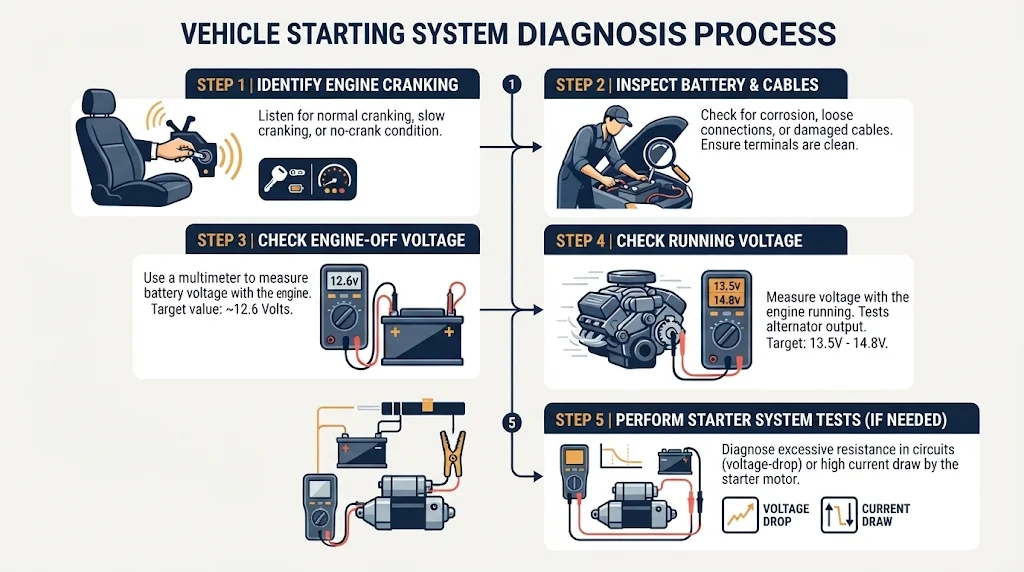
Start with the battery and cables, then check charging output if the engine runs, and test the starter circuit if it does not crank.
A digital multimeter can measure battery voltage, but voltage alone cannot prove battery capacity or starter condition. Use the vehicle service information for its specific test limits.
Step 1
Identify whether the engine cranks
Listen for normal engine rotation, a slow crank, a click, or silence. An engine that turns normally needs different checks from one that will not turn.
Step 2
Inspect the battery and visible cables
With the engine off, check for loose clamps, corrosion, and damaged insulation. Leave damaged high-current wiring for a qualified technician.
Step 3
Measure battery voltage with the engine off
For a conventional 12-volt lead-acid battery, about 12.6 volts can indicate a full charge. A lower reading may call for charging and a battery load test.
Step 4
Check voltage with the engine running
Many conventional systems measure about 13.5 to 14.8 volts while charging. Smart charging systems can vary, so follow the vehicle’s specified procedure.
Step 5
Arrange a starter circuit test when needed
If the battery tests healthy but the engine will not crank, request starter voltage-drop and current-draw tests. Those tests separate motor faults from wiring faults.
AutoZone’s alternator testing instructions explain basic multimeter checks. Keep hands, clothing, and test leads clear of moving engine parts.
A single voltage reading is only a clue. Test results must be interpreted alongside the battery’s condition, electrical loads, and the vehicle’s charging strategy.
Tip
Write down voltage readings with the engine off and running. Share both results with the technician instead of relying on one dashboard warning.
What If the Engine Cranks but Will Not Start?
An engine that cranks at normal speed but never fires usually needs fuel, ignition, sensor, or engine control diagnosis.
Cranking means the starter is already turning the engine. That makes a completely failed starter less likely, although unusual cranking sounds can still matter.
Possible causes include missing fuel pressure, absent ignition spark, an immobilizer issue, or incorrect engine timing. The exact possibilities depend on the vehicle.
Look for a security warning or a check engine light, and report any codes to a technician. Do not keep cranking if you hear grinding or mechanical knocking.
The AAA no-start troubleshooting guide describes other reasons a car may not start even with working electrical parts.
What Does It Mean When a Jump-Start Works?
A successful jump-start shows that additional electrical power helped start the engine, but it does not identify the failed part.
The original battery may be discharged, worn out, or disconnected through a poor cable. The charging system might also have failed to replenish it.
If the car starts with outside power and then stalls, the alternator or its drive and wiring deserve attention. A separate engine problem is still possible.
If the engine runs normally but will not restart later, have the battery load-tested and the charging system checked. A parked electrical drain is another possibility.
Follow the manufacturer’s approved jump-start procedure. Some vehicles use dedicated connection points and have specific restrictions.
When Should You Stop Driving or Cranking?

Stop driving when a charging fault threatens to stall the engine, and stop cranking when mechanical noises or smoke appear.
- Battery light while driving: Pull over safely and arrange service before the battery becomes depleted.
- Smoke or burning smell: Shut the engine off in a safe place and request professional help.
- Grinding during starting: Stop repeated attempts to limit possible gear damage.
- Damaged battery or cables: Avoid touching exposed conductors and arrange inspection.
- Repeated stalling: Do not assume another jump-start makes the car safe to drive.
Never disconnect a battery cable while the engine runs to test the alternator. That method can damage vehicle electronics and creates avoidable electrical hazards.
How Can You Avoid Replacing the Wrong Part?
The most reliable approach is to test the battery, charging system, cables, and starter controls before replacing a component.
A charged battery and a failed starter can produce a no-crank condition. A good starter and failed alternator can also produce a no-crank condition after the battery discharges.
Ask the repair shop to explain which test failed. A clear diagnosis may include battery load results, charging output, cable voltage drop, or starter current draw.
Do not replace the alternator solely because the battery is empty. Do not replace the starter solely because you hear a click.
Focus first on the failed system, then on the specific failed component. This order reduces unnecessary purchases and repeat breakdowns.
Digital Multimeter
A digital multimeter helps you compare battery voltage before starting and charging voltage while the engine runs.
Frequently Asked Questions
Can a bad alternator make the starter click?
A bad alternator can indirectly make the starter click by leaving the battery too discharged to crank the engine. The clicking itself comes from the starting circuit. Charging and battery tests can show whether the alternator caused the low battery charge.
Can a starter fail without making any noise?
A starter system can fail silently when its motor, relay, control wiring, or power connection does not operate. Silence does not prove the starter motor is defective. Check battery power, the gear selector position, and start authorization before replacing it.
Why do my headlights work but my car will not crank?
Headlights can work with a battery that cannot supply the higher current needed to turn the engine. A bad starter or cable connection can cause the same symptom. A battery load test and starter circuit check can distinguish those problems.
Can a loose alternator belt cause starting problems?
A loose alternator drive belt can cause starting trouble indirectly if slipping prevents the battery from charging properly. Some vehicles use the belt to drive other components as well. A damaged or missing belt deserves prompt inspection before further driving.
Will a new battery fix a failing alternator?
A new battery will not repair an alternator that cannot maintain the vehicle’s electrical supply. The engine might start with stored battery power, but the battery can discharge again. Have the charging system tested before assuming a battery replacement is enough.
Does an alternator have to fail completely to cause trouble?
An alternator can produce intermittent or insufficient output without stopping completely. Heat, connections, belt slip, or internal faults may change its performance. Testing under the conditions that trigger the problem helps identify partial charging failures.
Conclusion
Car starter vs alternator problems are easiest to separate by checking when the failure happens and what electrical tests reveal. If the engine will not crank, check the battery and starter circuit; if charging fails while running, test the alternator system.

Alex Carter is an automotive content writer at VastAutoParts, focusing on car parts, vehicle troubleshooting, automotive tools, product research, and practical car care guides.