
How Do I Know if My Starter or Battery Is Bad? Tests
Quick Answer
How do I know if my starter or battery is bad? Rapid clicking, slow cranking, and fading lights usually point to a weak battery. One solid click with bright lights suggests a starter problem. Check the battery connections, test battery voltage, and use a safe jump-start before deciding what needs repair.
- Rapid clicking or slow cranking: test the battery and cables first.
- One click with steady lights: investigate the starter circuit.
- A successful jump-start suggests a power supply problem, but does not prove the battery is faulty.
- A battery load test helps confirm whether it can deliver starting power.
A car that will not start can leave you guessing between a dead battery and a failed starter motor. Both faults may cause a click, silence, or a slow attempt to crank the engine. The clues below will help you narrow down the problem without replacing parts at random.
Start with what you hear, what the dashboard does, and whether the engine turns over. Then use simple checks to confirm your first suspicion.
In this article
- How the battery and starter differ
- Starter vs. battery symptoms
- What sounds and lights reveal
- How to test the cause
- What a jump-start means
- How to read battery voltage
- Other problems that look similar
- When to repair or get help
- Frequently asked questions
- Conclusion
What Is the Difference Between a Battery and a Starter?
The battery supplies electrical power, while the starter motor uses that power to turn the engine. Both must work for a normal engine start.
Turning the key or pressing the start button sends a start request through the vehicle’s control circuit. The starter solenoid is an electrical switch that engages the starter and connects its power supply. The starter then spins the engine until it can run on its own.
The alternator, which charges the battery while the engine runs, plays a different role. A failed alternator can leave a healthy battery discharged, making it seem like the battery failed. That is why a good diagnosis checks the charging system when needed.
A bad battery may leave the starter without enough current to turn the engine. A bad starter may refuse to turn even when the battery holds a useful charge.
Starter vs. Battery Symptoms: What Should You Notice?
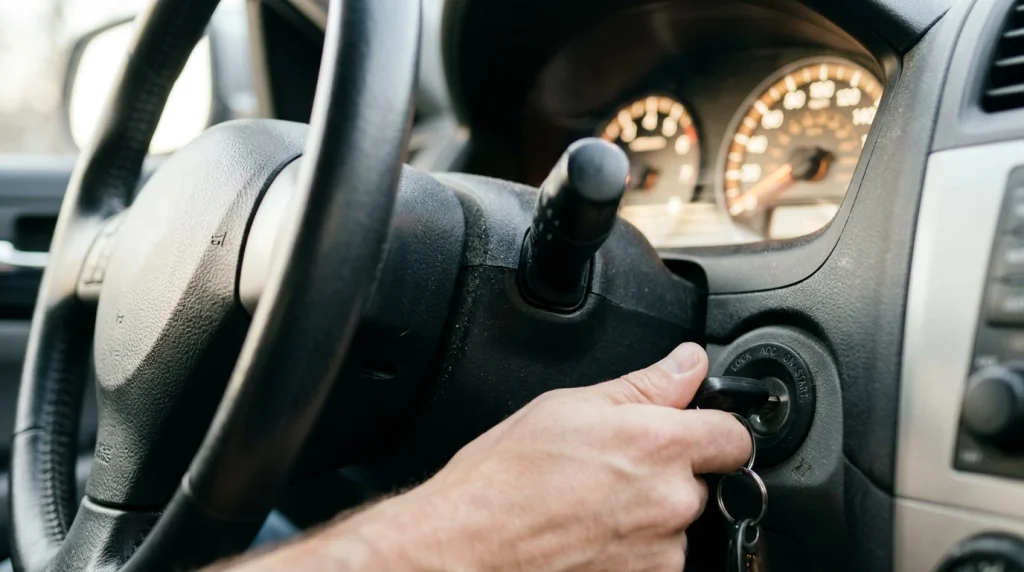
Battery faults often weaken several electrical functions at once, while starter faults may stop cranking despite normal accessory power. The pattern is useful, but no single symptom proves which part failed.
The following comparison shows where to look first when the engine will not crank.
| What you notice | Possible cause | First useful check |
|---|---|---|
| Rapid clicking and dim lights | Weak battery or poor connection | Check terminals and battery charge |
| Engine turns slowly | Weak battery, cable resistance, or starter drag | Test battery under load |
| One click and bright lights | Starter, solenoid, or cable fault | Confirm battery health, then inspect start circuit |
| No click and no dashboard lights | Discharged battery or interrupted power | Inspect battery posts and connections |
| Grinding or free-spinning sound | Starter engagement problem | Stop cranking and seek inspection |
Rapid clicks and fading lights make battery testing the sensible first move. A single click with steady lights calls for a closer look at the starter circuit, after battery health is confirmed.
What Do Clicking Sounds and Dashboard Lights Tell You?
The sound of a failed start shows whether the starter is trying to work and how the electrical system responds. Listen during one brief start attempt instead of repeatedly turning the key.
Why Does Rapid Clicking Suggest a Weak Battery?
Rapid clicking often means voltage falls when the starter tries to draw power. The solenoid may engage and release repeatedly because the electrical supply cannot stay steady.
A loose battery clamp or corroded cable can create the same effect. Test those connections before assuming the battery itself is worn out.
Why Does One Loud Click Suggest a Starter Fault?
One firm click can mean the starter solenoid engages but the motor does not spin. A damaged starter, faulty solenoid, or high-resistance cable may be responsible.
Bright dashboard lights make this pattern more suspicious, but they do not prove the battery is healthy. Accessories use less power than engine cranking, so a weak battery may still light the dashboard.
What If the Engine Makes No Sound at All?
Complete silence may come from a discharged battery, a disconnected cable, or a start-control fault. Check whether the dashboard and interior lights work before blaming the starter.
If the lights operate normally, a relay, ignition switch, security system, or transmission safety switch could block the start request. A technician can trace that circuit rather than guessing which part to replace.
What If the Starter Whirs or Grinds?
Whirring without engine movement may mean the starter is spinning without engaging the engine. Grinding may indicate that starter gears are not engaging correctly.
Stop trying to start the vehicle if you hear harsh grinding. Repeated attempts may damage the starter drive or the gear teeth it contacts.
How Can You Test a Bad Starter or Battery at Home?
You can narrow the cause with a few checks that do not require removing the starter. Work with the vehicle parked safely and avoid touching moving engine parts.
- Make the vehicle safe. Park on level ground, set the parking brake, and select Park or Neutral as the owner’s manual directs. Switch off accessories before testing.
- Inspect the battery case. Look for cracks, swelling, leaks, or an unusual sulfur smell. If any appear, stop and arrange professional help.
- Look at the terminals. With the engine off, check for obvious looseness, corrosion, or damaged cables. Do not place tools across battery terminals or attempt repairs you cannot perform safely.
- Observe one start attempt. Note rapid clicks, a single click, slow cranking, silence, or grinding. Watch whether the headlights or dashboard lights dim sharply.
- Check battery voltage. Use a digital multimeter on the battery’s accessible test points, following the meter and vehicle instructions. Record the engine-off reading.
- Arrange a battery load test. A battery can show normal resting voltage yet lack the power to crank. Ask a repair shop or parts retailer to test starting capacity.
- Investigate the starter circuit. If the battery and connections pass, have the starter, solenoid, cables, and start-control circuit checked before ordering parts.
A proper diagnosis follows the path from the battery to the starter. The AAA guide to no-start causes also explains why ignition and fuel faults sometimes resemble starting-system problems.
Warning
A swollen or leaking battery can release dangerous gas or acid. Do not jump-start, charge, or handle it. Contact roadside assistance instead.
Leave advanced starter tests to someone trained to work around live high-current cables. Testing the starter terminals with a tool can create a short circuit if done incorrectly.
Can a Jump-Start Tell Whether the Battery or Starter Is Bad?
A successful jump-start usually points to insufficient electrical power reaching the starter. It does not identify whether the battery, charging system, or cable connections caused the shortage.
If the vehicle supports jump-starting, follow the owner’s manual and the booster equipment instructions. The AAA jump-start safety guide covers battery inspection and cable precautions.
If you
Get a normal start with a suitable booster
Choose battery and charging tests, because extra power changed the result.
If you
Still get one click with verified power
Choose starter-circuit testing, because a healthy power supply may not be reaching the motor.
If you
Start successfully but lose power while driving
Choose a charging-system inspection, because the alternator may not be supplying enough power.
A failed jump-start does not automatically prove the starter is bad. Faulty jumper cables, poor clamp contact, a severely discharged battery, or a start-control problem may also prevent cranking.
Never disconnect a battery cable while the engine runs to check the alternator. That old shortcut can damage vehicle electronics.
How Do You Check Car Battery Voltage With a Multimeter?
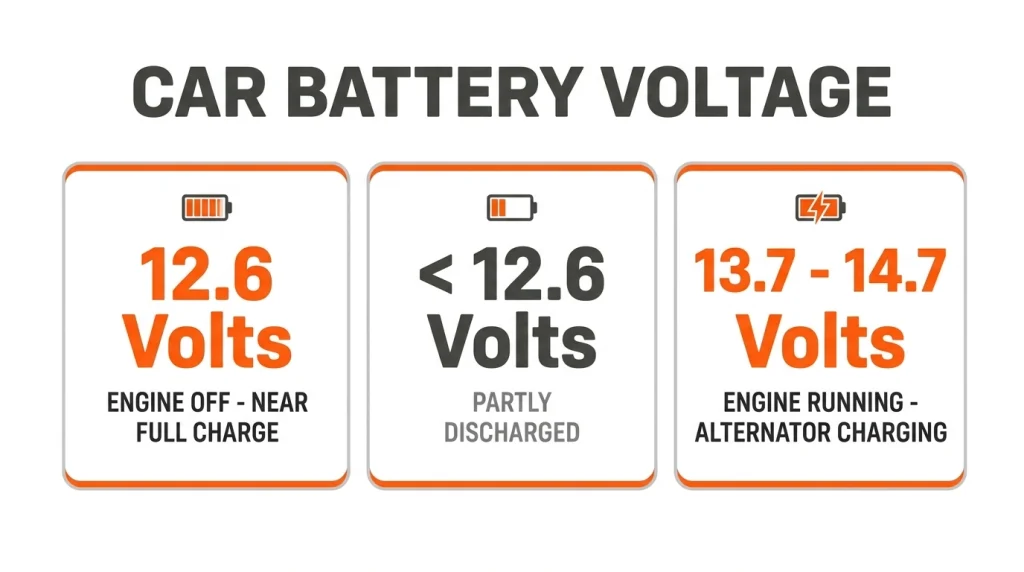
A digital multimeter can show whether a conventional car battery is charged, but it cannot confirm starting capacity alone. Measure across the correct battery test points with the engine off.
For a typical 12-volt lead-acid starting battery, Interstate Batteries describes a fully charged reading as about 12.6 volts or higher. A low reading suggests charging is needed before battery health can be judged.
The Interstate battery guidance also gives typical charging voltage while the engine runs. Vehicle specifications and battery type can change how readings should be interpreted.
The table compares general readings with their practical meaning.
| Battery reading | What it suggests | Next action |
|---|---|---|
| About 12.6 volts or higher, engine off | Battery is near full charge | Load-test if cranking is weak |
| Below the normal charged reading | Battery may be partly discharged | Charge and retest safely |
| Typically 13.7 to 14.7 volts, engine running | Charging system may be operating | Use vehicle-specific charging test if needed |
These figures are broad reference points, not universal pass-or-fail limits. A normal engine-off voltage cannot rule out a battery with poor capacity or a high-resistance connection.
Why Does a Battery Need a Load Test?
A load test checks whether a charged battery can supply power when demand rises. Starting an engine demands more than powering lights or a radio.
Some battery testers measure electrical conductance, a clue to battery condition. A workshop may also test voltage drop while the starter operates, which helps locate resistance in cables or connections.
What Else Can Mimic a Dead Battery or Bad Starter?
Battery and starter symptoms can also result from charging faults, poor wiring, or controls that prevent cranking. Testing the complete start path helps avoid the wrong repair.
Could the Alternator Be the Real Problem?
A weak alternator can leave the battery discharged even when the battery itself is still usable. Repeated low-charge problems or a charging warning light while driving call for an alternator test.
The alternator is usually not what spins the engine during the initial start. Its failure may appear later as a weak battery and slow cranking.
Can Loose or Corroded Battery Cables Cause Clicking?
Loose or corroded connections can block the strong current the starter needs. A battery may test well at its posts while the starter receives too little power.
Do not assume that a white deposit proves the battery has failed. Ask for cable and ground testing when the symptoms do not match the battery test result.
What If the Engine Cranks Normally but Will Not Fire?
Normal cranking means the starter is turning the engine, so fuel, spark, or engine-control problems move higher on the list. A battery issue is less likely to be the sole cause.
Watch for a security warning, fuel-related symptoms, or a check-engine light. A mechanic can check the relevant systems without replacing a starter that already turns the engine.
When Should You Replace a Battery or Starter?

Replace a battery or starter only after testing identifies the faulty part. Similar symptoms do not justify replacing either component without confirmation.
A battery that was simply drained may recover after proper charging. A battery that fails a capacity test after charging may need replacement. If a healthy battery reaches the starter correctly but the motor cannot crank, a starter repair becomes more likely.
A shop can confirm the fault with battery capacity, charging-system, and circuit voltage-drop tests. Ask which test failed and whether the issue lies in the battery, cable, solenoid, or starter motor.
Seek roadside assistance if the vehicle is stopped in an unsafe place, the battery is damaged, or a grinding sound continues. Do not keep trying to crank an engine that will not turn.
Digital Multimeter
A digital multimeter lets you check battery voltage before arranging more complete starting-system tests.
Frequently Asked Questions
Can a bad battery still power the radio?
A weak car battery can power the radio and dashboard while failing to provide enough current to crank the engine. Small accessories need less electrical power than the starter motor. A battery test under load is more useful than judging battery health by the radio alone.
Will a bad starter eventually drain the battery?
A failing starter can run down a battery when repeated cranking attempts draw power without starting the engine. That does not mean the starter normally drains the battery while the vehicle is parked. An overnight drain needs a separate electrical check.
Can cold weather make a battery look faulty?
Cold weather can reduce a battery’s available starting power and make an existing weak battery more noticeable. Thick engine oil can also increase the effort needed to crank. A battery test helps tell a discharged or worn battery from a temporary difficult start.
Does a push-button car have the same starting symptoms?
Push-button cars can show the same weak-battery and starter symptoms as vehicles that use a traditional ignition key. However, a brake-pedal switch, key recognition fault, or security system may stop the start request. Check the dashboard messages and vehicle manual before replacing parts.
Why does the battery warning light appear before starting?
The battery warning light may illuminate with the ignition on and the engine stopped as part of normal warning-light behavior. A light that stays on after the engine starts can indicate a charging-system fault. Consult the vehicle manual for the exact warning behavior.
Can a good battery and good starter still cause no crank?
A vehicle may fail to crank even with working battery and starter units if power or a start command cannot reach the motor. Common possibilities include a faulty relay, damaged wire, poor ground, or safety-switch problem. A circuit test can locate the interruption without unnecessary part replacement.
Conclusion
To answer how do I know if my starter or battery is bad, compare the sounds and lights, then test the battery before blaming the starter. If the battery passes a proper load test but the engine still will not crank, request a starter-circuit diagnosis.

Alex Carter is an automotive content writer at VastAutoParts, focusing on car parts, vehicle troubleshooting, automotive tools, product research, and practical car care guides.