
What Are Signs of a Weak Battery? 7 Symptoms to Check
Quick Answer
The most common signs of a weak car battery are slow engine cranking, rapid clicking, dim lights, resetting electronics, and repeated jump-starts. These clues do not prove the battery has failed, because poor connections and charging problems can look similar. A proper battery test helps confirm the cause.
- Slow or uneven cranking often appears before a no-start condition.
- Rapid clicking can mean insufficient starting power or a poor connection.
- Dim lights and resetting electronics suggest an electrical supply problem.
- Swelling, cracks, or leakage call for professional assistance.
What are signs of a weak battery when your car still starts sometimes? Small changes in starting speed and electrical behavior may be your first clues.
This guide explains the symptoms, what else can cause them, and how to decide whether your battery needs charging, testing, or replacement.
In this article
- Early signs of a weak battery
- Why lights may still work
- Battery, alternator, and starter differences
- Safe ways to check the battery
- Common causes of weak batteries
- When to charge or replace
- What to do if the car will not start
- Common diagnosis mistakes
- How to reduce future problems
- Frequently asked questions
What Are the Early Signs of a Weak Car Battery?

Weak car batteries often show starting and electrical symptoms before they stop working. Look for changes from your vehicle’s usual behavior, rather than relying on one warning alone.
1. The engine cranks more slowly than usual
Slow cranking is a strong sign that the battery may not be supplying enough power to the starter motor. Cranking is the sound of the engine turning before it begins running.
You might hear a drawn-out turning sound instead of the usual quick start. A slow crank deserves testing, especially when it happens after the car sits overnight.
2. You hear rapid clicking while starting
Repeated clicking can happen when voltage falls as the starter tries to engage. The starter solenoid is the electrical switch that helps connect the starter motor.
A discharged battery or resistance in a loose cable can create similar clicking. One solid click without cranking can also point toward the starter itself.
3. Headlights or interior lights look dim
Dim lights can indicate low electrical power, but they do not identify the exact faulty component. You may notice dashboard lights fading during an attempted start.
Lights that change brightness while driving can also indicate a charging problem. The AAA battery warning signs include slow cranking, dim headlights, and electrical trouble.
4. The clock, radio, or electronics reset
Electronic settings may reset when system voltage drops during starting. A clock that loses its setting or a display that briefly shuts off provides another clue.
Some vehicles also show several warning messages after a low-voltage event. These behaviors warrant an electrical check, not an automatic battery replacement.
5. Your car needs repeated jump-starts
Frequent jump-starts suggest the battery lacks enough available power when you try to start. A jump-start supplies temporary outside power through approved connections.
However, a successful jump does not show why the battery became weak. The cause might be battery wear, an alternator fault, or an electrical drain while parked.
6. The terminals are corroded or the case is damaged
Powdery deposits around battery terminals can interfere with electrical connections. White, blue, or green buildup may appear around the metal posts or cable ends.
Corrosion alone does not prove the battery is worn out. Cracks, swelling, moisture from a leak, or an unusual sulfur odor are more serious warning signs.
7. A battery-shaped dashboard warning appears
A battery warning light while driving usually points to a charging-system problem, not simply a worn battery. The alternator may not be supplying enough power.
Do not rely on the warning light as a stand-alone battery health test. If it stays illuminated while driving, arrange prompt professional diagnosis.
Why Can a Weak Battery Still Power the Lights?
A weak battery may run small electrical accessories but lack enough current to turn the engine. Starting demands more power than a radio or interior light.
Battery voltage describes electrical pressure, while starting current describes the power delivery needed during heavy demand. A battery can show reasonable resting voltage yet struggle when loaded.
This explains why a working radio does not rule out battery trouble. A battery load test checks its ability to deliver power under conditions closer to starting.
A separate charging-system check matters when dimming happens with the engine running. That pattern may involve alternator output, wiring, or the battery.
How Do Battery, Alternator, and Starter Symptoms Differ?
Battery, alternator, and starter faults overlap, so the symptom should guide your next test. The battery supplies starting power, the starter turns the engine, and the alternator recharges the battery.
The table compares common symptoms with their possible causes and useful first checks.
| What you notice | Possible cause | Useful first check |
|---|---|---|
| Slow cranking | Weak battery, cables, or starter | Battery test and terminal inspection |
| Rapid clicking | Low available power or poor connection | Battery condition and cable connections |
| One click, no crank | Starter, cable, relay, or battery | Battery load and starter circuit |
| Warning light while driving | Alternator or charging-system fault | Charging-system test |
| Normal crank, engine never fires | Fuel, ignition, sensors, or engine fault | Engine no-start diagnosis |
The key distinction is whether the engine turns slowly, does not turn, or turns normally without starting.
According to Firestone’s charging-system guidance, repeated discharge and warning lights can involve either the battery or alternator. Testing both avoids replacing the wrong part.
How Can You Check a Weak Car Battery Safely?
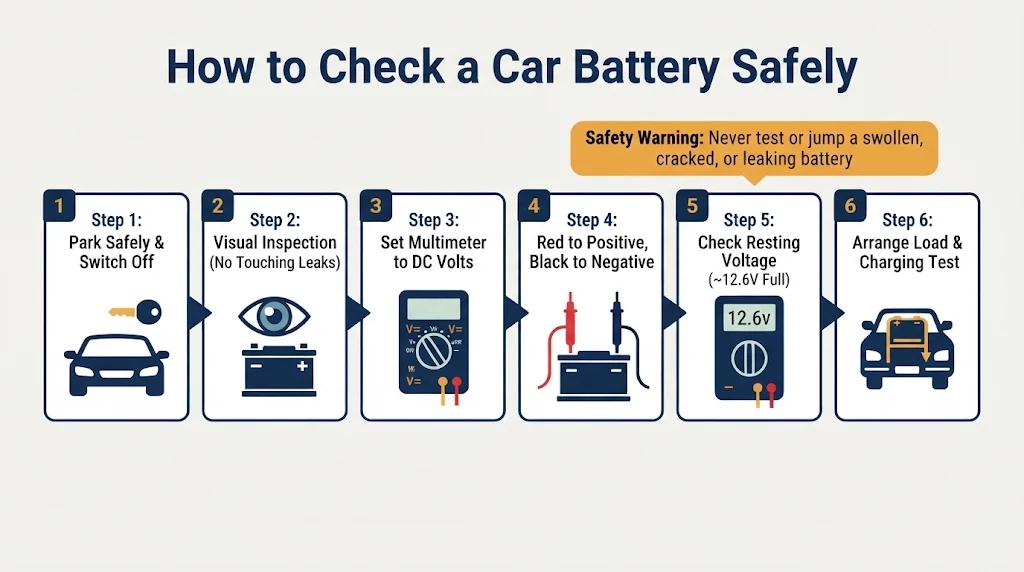
You can begin with a visual inspection and a resting-voltage measurement. A battery tester or technician can then check whether it delivers enough power under load.
These checks apply mainly to conventional vehicle starting batteries. Follow your owner’s manual for battery location and any special procedure.
- Park safely and switch the vehicle off. Apply the parking brake, turn off accessories, and keep metal tools away from exposed battery terminals.
- Inspect the battery without opening it. Look for loose cables, corrosion, leaking fluid, swelling, and damaged insulation. Do not touch leaking material.
- Measure resting voltage if you know how. Set a digital multimeter to DC volts. Connect the red probe to positive and black to negative.
- Interpret the reading carefully. A fully charged conventional lead-acid battery is commonly around 12.6 volts at rest. Lower voltage suggests discharge, not necessarily permanent failure.
- Arrange a battery health test. If the car cranks slowly or needs repeated boosts, request a load or electronic battery test.
- Check the charging system when needed. Repeated discharge or a charging warning while driving also requires alternator and electrical-system testing.
For multimeter instructions, see the Haynes battery testing guide. A resting voltage reading is a useful clue, but not a full battery health assessment.
Warning
A swollen, cracked, leaking, or unusually hot battery can cause injury. Do not charge, test, or jump-start it yourself. Request professional assistance.
What Causes a Car Battery to Become Weak?
A car battery becomes weak when its stored charge is low or its ability to hold and deliver power declines. Several conditions can lead to similar starting symptoms.
- Age and wear: Internal changes reduce the amount of starting power the battery can deliver.
- Short trips: Repeated short drives may not restore the energy used during starting.
- Extended parking: Security systems and other electronics can draw small amounts of power while parked.
- Electrical drain: A light left on or a faulty component may discharge the battery.
- Temperature extremes: Cold conditions make starting harder, while prolonged heat can speed battery wear.
- Charging faults: An alternator or wiring problem may prevent the battery from recovering its charge.
A weak battery after parking does not always mean the battery itself is defective. First determine whether it can hold a full charge when the rest of the electrical system is working correctly.
Should You Charge or Replace a Weak Battery?
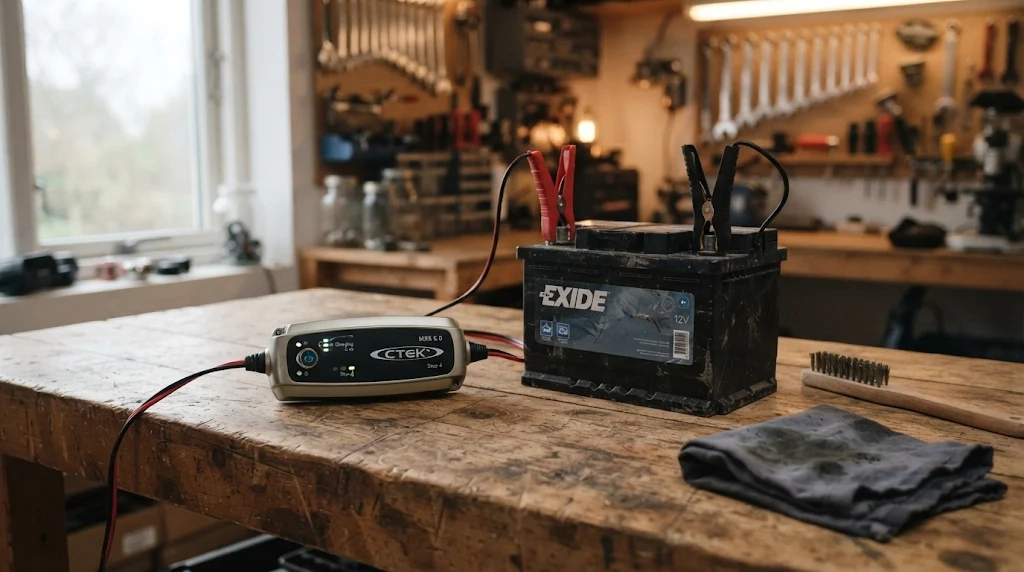
Charge a merely discharged battery, repair faulty connections, and replace a battery that fails an appropriate health test. The right action depends on the cause.
If you
Left a light on and the battery passes testing
Choose proper recharging, because low charge alone does not prove battery failure.
If you
Have loose or corroded battery connections
Choose connection inspection and repair, because resistance can mimic weak battery power.
If you
Have a battery that fails a health test
Choose replacement, because charging cannot restore a battery that no longer works reliably.
If the battery keeps going flat despite passing its test, investigate charging and parked electrical drain. Replacing a good battery would not fix those causes.
When replacement is needed, follow the vehicle maker’s battery type, size, terminal layout, and electrical requirements. Cars with special battery management systems may need a registration procedure.
What Should You Do If Your Car Will Not Start?
If the engine will not start, identify the starting symptom before trying another repair. A simple observation can separate low power from other faults.
- Check the starting behavior. Listen for rapid clicking, a single click, slow cranking, or normal cranking without ignition.
- Check basic vehicle conditions. Make sure the transmission is in the required position and the key or fob is recognized.
- Inspect safely for obvious damage. Look for bad battery connections without handling exposed, wet, or damaged parts.
- Use approved starting assistance only when safe. Follow your owner’s manual or request roadside help. A jump-start is not suitable for a damaged battery.
- Get the battery and charging system tested. If the engine starts after assistance, identify why the original charge was too low.
Do not keep cranking through grinding sounds, smoke, strong odors, or unusual heat. These signs can indicate a fault that needs professional attention.
If the engine turns at normal speed but never fires, focus on fuel, ignition, and engine-control diagnosis instead. That pattern is less typical of a simple weak starting battery.
What Battery Diagnosis Mistakes Should You Avoid?
Replacing a battery based on one symptom can waste money and leave the real fault unresolved. Use the symptoms to decide what to test.
- Assuming working lights prove battery health: The starter needs much more current than most accessories.
- Treating a jump-start as proof: External power can hide poor charging or cable problems.
- Ignoring a charging warning: An alternator fault can discharge an otherwise usable battery.
- Using voltage as the only verdict: A battery can have adequate resting voltage and still fail under load.
- Repeatedly cranking a stalled starter: Continued attempts may create heat and worsen damage.
Watch how the car behaves before, during, and after starting. Those observations help a technician select the right test.
How Can You Reduce Future Battery Problems?
Regular inspection and timely testing can reduce unexpected battery trouble. The goal is to detect weak performance before it causes a no-start.
- Pay attention when cranking becomes slower than normal.
- Have the battery and charging system tested when symptoms appear.
- Keep battery connections secure and have corrosion handled safely.
- Switch off accessories before leaving the vehicle.
- Use the correct charging or maintenance method during long storage.
- Investigate repeated discharge instead of relying on repeated jump-starts.
Cars used mostly for short trips or left parked for long periods deserve extra attention. A charging and battery health check can distinguish wear from insufficient charge.
Car Battery Tester
A car battery tester can help check battery condition before you decide whether charging or professional service is needed.
Frequently Asked Questions
Can a car battery fail without warning signs?
A car battery can fail without clear warning, even when earlier starts appeared normal. An internal fault may develop suddenly. Regular testing can help spot weakening performance, but no inspection can guarantee that a battery will never fail unexpectedly.
Why does my car start only on the second try?
A car that starts only after another attempt may have inconsistent battery power, poor connections, or a starter-control issue. Record whether the engine cranks slowly or normally. A technician can compare battery performance with starting-circuit operation to narrow the cause.
Can a good voltage reading hide a bad battery?
A normal resting-voltage reading can hide a battery that cannot supply enough current under heavy load. Voltage shows charge status better than cranking capability. A battery load or electronic health test checks performance more directly when starting symptoms persist.
Does a weak key fob battery mean the car battery is weak?
A weak key fob battery does not automatically mean the vehicle’s main starting battery is weak. They are separate power sources. If the car reports a key-recognition problem, follow the owner’s manual for backup starting or a spare key.
Can a weak battery cause a car to stall while driving?
A car that stalls while driving may have a charging-system or other engine fault rather than only a weak battery. The alternator normally powers electrical systems while running. Have unexpected stalling diagnosed promptly and avoid driving until the cause is identified.
Should you disconnect the battery to test it?
Disconnecting the battery is not normally required for a simple resting-voltage measurement at accessible battery terminals. Some vehicles may lose settings or require special procedures after disconnection. Check the owner’s manual before removing cables or performing advanced electrical tests.
Conclusion
The main signs of a weak battery are slow cranking, clicking, dim lights, electronic resets, and repeated jump-starts. If you notice these changes, inspect the connections safely and arrange a battery health and charging-system test before replacing parts.

Alex Carter is an automotive content writer at VastAutoParts, focusing on car parts, vehicle troubleshooting, automotive tools, product research, and practical car care guides.