
Car Won’t Start and No Electrical Power: Causes and Fixes
Quick Answer
If your car won’t start and has no electrical power, first suspect a discharged battery, loose or corroded battery connections, or a failed ground cable. A main fuse or power-distribution fault is also possible. Check the lights and battery connections before attempting a jump-start or replacing parts.
- No lights or sounds suggest a main power supply problem.
- A loose battery clamp can imitate a dead battery.
- A voltage test helps separate a discharged battery from a wiring problem.
- Stop if the battery is damaged, leaking, swollen, or frozen.
You turn the key or press Start, but the dashboard stays black and the engine makes no sound. A car with no electrical power needs a different diagnosis from a car that cranks but will not start. This guide helps you find the likely cause, make safe checks, and decide when professional repair is needed.
In this article
- What no electrical power means
- Common causes
- Steps to diagnose the problem
- Battery voltage checks
- Symptom comparison
- Jump-starting safely
- When a jump-start fails
- Alternator and starter questions
- When to get help
- Preventing power loss
- Frequently asked questions
- Conclusion
What Does It Mean When a Car Has No Electrical Power?
A car has a complete power-loss symptom when the dashboard, interior lights, headlights, and starter are all unresponsive. The central question is whether battery power can reach the vehicle’s electrical systems.
The battery supplies power when the engine is off. Its cables connect that power to the car, and the chassis ground completes the electrical path.
Different symptoms point to different branches of diagnosis:
- Everything stays dark: Check the battery, terminals, ground cable, and main power feed.
- Lights come on, but nothing cranks: Consider the starter circuit, starting controls, and safety interlocks.
- Engine cranks normally: Fuel, ignition, and engine-management faults become more relevant.
- Power cuts in and out: Look for an intermittent connection or charging problem.
A dead dashboard does not prove the starter has failed. A failed starter usually cannot explain why every unrelated electrical accessory is also dead.
Why Won’t a Car Start With No Electrical Power?
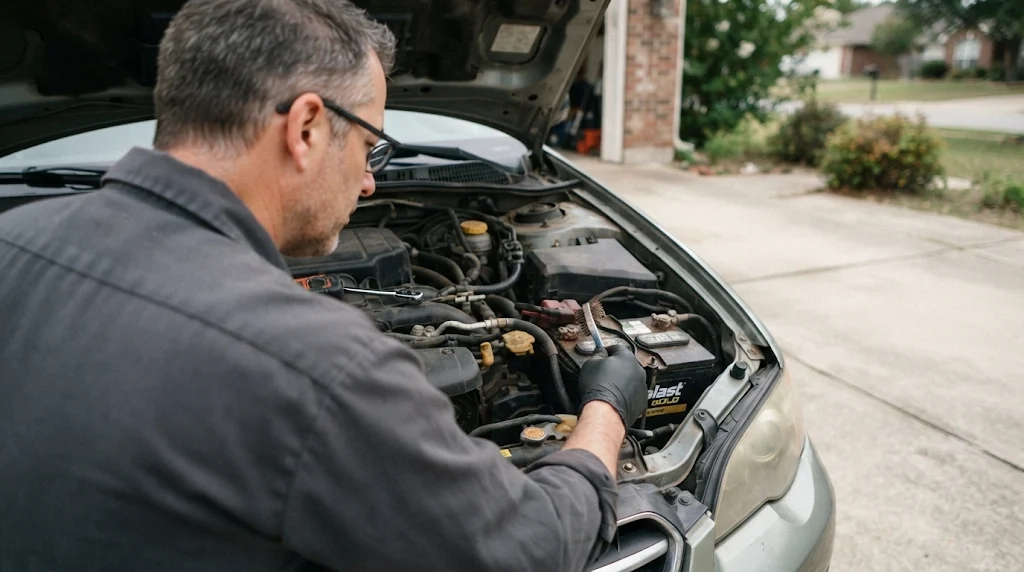
The leading possibilities are a discharged battery or an interrupted connection between the battery and the vehicle. A damaged main power circuit is less common but can produce similar symptoms.
A deeply discharged or failed battery
A battery with too little usable charge may not power the dashboard or starter. Leaving an electrical load on, prolonged storage, battery aging, or charging faults can contribute.
Some batteries accept a charge and continue working. Others have lost enough capacity that charging provides only temporary relief.
Loose or corroded battery terminals
Loose clamps or corrosion can interrupt power even when the battery contains a useful charge. White, green, or crusty deposits around terminals are warning signs.
Connections can also look clean while corrosion hides between the clamp and battery post. A visual check is helpful, but it cannot prove the connection is good.
A damaged ground cable or battery cable
A broken ground path prevents current from returning through the intended circuit. The negative battery cable usually connects to the vehicle body or engine.
Loose grounding bolts, damaged cable ends, and internal cable corrosion can cause intermittent or complete power loss. A mechanic may use a voltage-drop test to locate resistance under load.
A failed main fuse or power-distribution connection
A blown main fuse or fusible link can interrupt power to a large part of the vehicle. A fusible link is a protected section of wiring designed to open during a fault.
Vehicle designs differ, so a main fuse failure may not disable every circuit. Follow the fuse diagram and power-distribution layout in your owner’s manual.
AAA’s starting-problem guide also identifies battery, ground cable, and fuse faults as possible causes. Those parts should be tested before they are replaced.
How Do You Diagnose a Car That Won’t Power On?
Diagnose a completely dead car by checking simple symptoms first, then the battery and its connections. Stop before disconnecting cables or probing live wiring if you lack the proper training.
Step 1
Make the vehicle safe
Park away from traffic, apply the parking brake, and switch off accessories. Avoid battery work if you see damage or smell a strong sulfur odor.
Step 2
Try several electrical features
Check the dome light, headlights, and dashboard. If one feature works, the vehicle may have a narrower circuit fault rather than total power loss.
Step 3
Locate the correct battery or jump points
Use the owner’s manual to locate the battery and approved service points. Some vehicles place the battery outside the engine compartment.
Step 4
Inspect terminals and visible cables
Look for disconnected clamps, corrosion, damaged insulation, or broken cable ends. Never touch exposed conductors or bridge terminals with a tool.
Step 5
Measure battery voltage if qualified
A digital multimeter can show the battery’s resting voltage. Use the correct DC setting and follow the meter and vehicle instructions.
Step 6
Choose a safe next action
Arrange an approved jump-start or battery test when discharge is likely. Request professional electrical testing if the battery has power but the vehicle remains dark.
These checks can narrow the problem without guessing at replacement parts. Do not disturb high-voltage components in hybrid or electric vehicles.
What Can Battery Voltage Tell You?
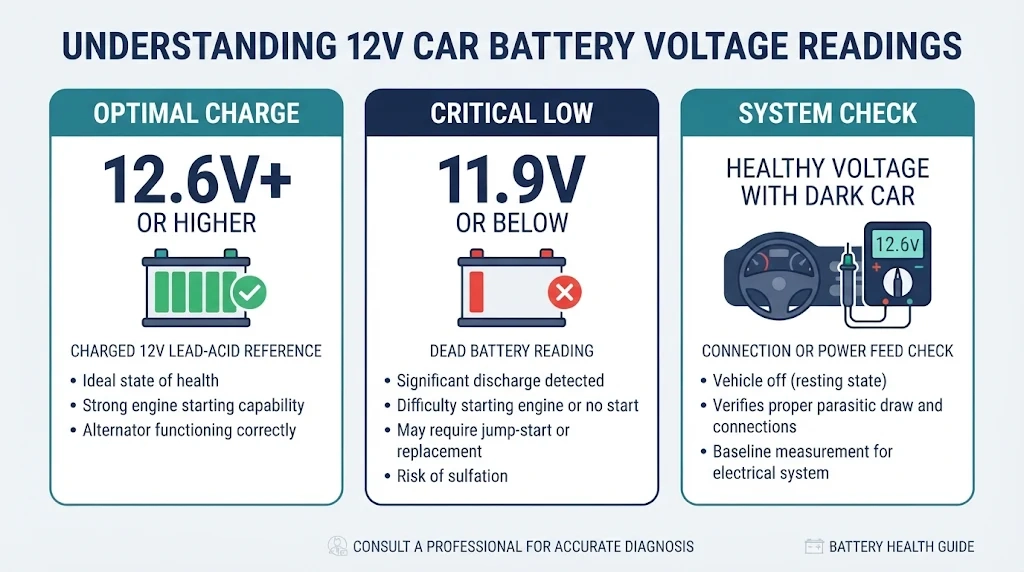
A resting voltage reading helps identify a discharged battery, but voltage alone cannot confirm battery health. A battery may show voltage without delivering enough current for starting.
For a conventional 12-volt lead-acid starting battery, Interstate Batteries says a fully charged reading is about 12.6 volts or higher. Its FAQ identifies 11.9 volts or below as a dead-battery reading.
These figures come from Interstate Batteries’ battery FAQ. Readings depend on battery type, charging history, temperature, and testing conditions.
Measure across the correct battery posts with the engine off, following the meter’s instructions. A low reading points toward charging or battery service, not automatically a replacement.
If the voltage is healthy at the posts but the car is completely dark, suspect a poor connection or interrupted power path. A technician can test the cables and fuses under load.
Which Symptoms Help Identify the Power Failure?
The pattern of electrical failure offers clues, but no single symptom proves which part has failed. The following comparison shows where to investigate first.
| What you notice | Possible cause | Useful next check |
|---|---|---|
| No lights and no crank | Discharged battery or main connection fault | Battery posts, clamps, and voltage |
| Power flickers or disappears | Loose terminal or ground connection | Cable condition and connection testing |
| Battery tests charged, car stays dark | Main cable, ground, or power feed | Professional voltage-drop and fuse tests |
| Dash lights work, starter silent | Starter control or interlock fault | Starting circuit and gear selection |
Start with the entire electrical symptom pattern rather than the starter motor alone. A test of the main power supply usually provides more useful direction when everything is dark.
Can You Jump-Start a Car With No Electrical Power?
A jump-start may restore power when a discharged battery is the cause and the main electrical connections remain intact. It cannot repair a broken main cable or blown power-distribution fuse.
First, read the vehicle’s owner’s manual for approved jump points and restrictions. Some vehicles need special procedures, and hybrid or electric vehicles require model-specific guidance.
Warning
A swollen, leaking, damaged, or frozen battery can rupture during jump-starting. Do not connect jumper cables; request roadside assistance instead.
When the manual permits a jump-start, use a compatible booster and follow its instructions. Wear eye protection, keep ignition sources away, and identify the positive and negative points correctly.
For conventional vehicles, the recommended connection method uses approved positive points and a designated ground point away from the weak battery. Follow the exact sequence in AAA’s jump-start safety instructions.
If the engine starts, the immediate power problem may be battery related. Arrange battery and charging-system testing, since a successful jump-start does not explain why the charge was lost.
What If the Car Still Has No Power After a Jump-Start?
If a proper jump-start produces no electrical response, the problem may lie beyond simple battery discharge. Stop repeated attempts and check whether the booster was connected correctly.
A jump-start can fail for several reasons:
- Poor contact: A corroded clamp or cable prevents power transfer.
- Severely damaged battery: An internal failure can keep the system from responding.
- Open ground path: Electrical current lacks a usable return connection.
- Main fuse fault: Power cannot reach essential vehicle circuits.
- Incorrect jump point: Some vehicles require remote connection terminals.
Do not keep trying different cable positions without checking the manual. Improper connections can damage components or cause injury.
If the booster reports a connection error, stop and check the instructions. If the setup is correct but the dashboard remains dark, call a professional for electrical diagnosis.
Can a Bad Alternator or Starter Cause Total Power Loss?
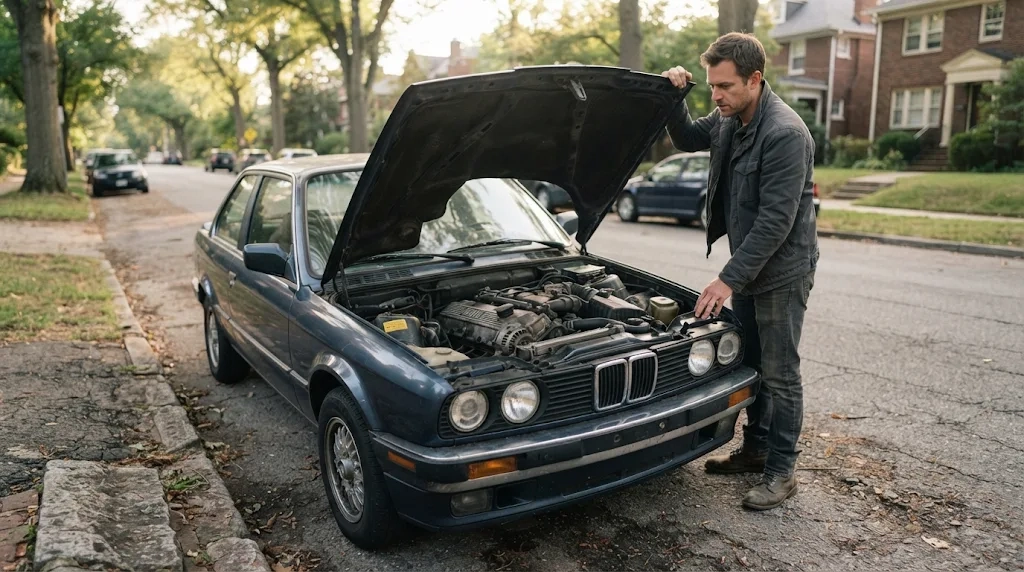
A failed alternator can eventually leave a car without electrical power by allowing the battery to discharge. A failed starter usually stops engine cranking without shutting off every light.
How an alternator problem leads to a dead car
The alternator supports vehicle electrical loads and recharges the battery while the engine runs. When charging fails, the battery can gradually lose its stored energy.
Warning signs may include dimming lights, a charging warning light, or repeated battery discharge. Battery replacement alone will not correct an alternator fault.
Why starter failure usually looks different
The starter turns the engine when it receives a start command. A faulty starter may produce a click, slow crank, or silence while cabin lights still function.
When the dashboard and headlights are both dead, testing the starter first overlooks the main symptom. Confirm battery power and connections before investigating the starter circuit.
When Should You Stop Troubleshooting and Call for Help?
Call a trained technician when the battery is unsafe, the power supply remains unexplained, or basic checks do not restore normal operation. Electrical faults can worsen when cables or fuses are handled incorrectly.
Get professional help if you notice any of these conditions:
- A swollen, cracked, leaking, or unusually hot battery.
- A burning smell, melted wiring, or smoke.
- A fuse that fails again after replacement.
- Loss of electrical power while the vehicle is moving.
- A confirmed charged battery with no power to the car.
- Exposed, damaged, or high-voltage wiring.
Do not bypass a fuse with wire or fit a higher-rated fuse to stop it from blowing. A technician should identify the fault that caused the protection to open.
If the car loses power in traffic, steer toward a safe location if you can do so. Use roadside assistance rather than attempting repairs beside moving traffic.
How Can You Prevent Another Complete Power Loss?
Routine inspection and battery testing can reduce the chance of another electrical shutdown. Prevention starts with clean connections, a secure battery, and a healthy charging system.
Check for corrosion, loose clamps, and visible cable damage during routine maintenance. Ask for a battery and charging-system test when starts become slow or lights begin flickering.
Keep track of accessories left running when the engine is off. Repeated discharge without an obvious cause deserves testing for an unwanted electrical drain, called a parasitic draw.
After a jump-start, do not assume a short drive fully recharges a deeply discharged battery. Arrange proper charging and testing before relying on the vehicle for another trip.
Digital Multimeter
A digital multimeter lets you check battery voltage while troubleshooting a vehicle with no electrical power.
Frequently Asked Questions
Why did my car lose all power overnight?
Overnight power loss can result from a weak battery, an accessory left on, a charging fault, or an unwanted electrical drain. If a charged battery becomes flat again while parked, request a parasitic-draw test. The test checks whether a circuit keeps using power after the vehicle is shut down.
Can cold weather leave a car completely dead?
Cold weather can make a weak battery less able to supply the current needed for starting. A battery already low on charge may appear to fail suddenly during a cold spell. Test the battery and inspect the connections before deciding that cold weather alone explains the problem.
Can I check battery voltage without removing it?
A battery’s voltage can normally be measured at accessible terminals without removing the battery from the vehicle. Use a digital multimeter set for DC voltage and follow the owner’s manual. Avoid exposed wiring, damaged batteries, and locations where the meter probes could short nearby metal parts.
Why does my car regain power without starting?
Power returning without engine cranking can indicate an intermittent cable connection or a separate fault in the starter circuit. The fact that lights return does not confirm the battery is healthy. A professional can test voltage and cable connections while the fault is present, helping avoid unnecessary replacement parts.
Could a dead key fob cause total power loss?
A dead key-fob battery can prevent remote unlocking or starting on vehicles that require electronic key recognition. However, it usually does not explain why the headlights and interior lights have no power. Try the manufacturer’s emergency key procedure before treating an unresponsive remote as proof of a vehicle battery failure.
Should I replace the battery after one jump-start?
A single successful jump-start does not necessarily mean the battery needs replacement. The battery may have discharged because an accessory stayed on. Charge and test it, then check the charging system if the fault returns or the battery cannot hold a charge.
Conclusion
If your car won’t start and has no electrical power, begin with the battery, terminal connections, and main ground path. If voltage and connections check out but the vehicle stays dark, arrange professional testing of the main fuse and power-distribution circuit.

Alex Carter is an automotive content writer at VastAutoParts, focusing on car parts, vehicle troubleshooting, automotive tools, product research, and practical car care guides.