
How Do I Know If My Crank Sensor Is Faulty? Signs and Tests
Quick Answer
You may have a faulty crankshaft position sensor if your engine cranks but will not start, stalls without warning, or struggles to restart after warming up. Check for related fault codes and watch engine RPM on a scan tool while cranking. These clues justify testing, but they do not prove the sensor itself is bad.
- Sudden stalling or a crank-but-no-start condition can point to a lost crankshaft signal.
- A check engine light may appear, but its absence does not rule out a fault.
- No reported engine RPM while cranking is a clue, not a final diagnosis.
- Inspect wiring and test the correct sensor type before buying a replacement.
Wondering, “How do I know if my crank sensor is faulty?” You may be dealing with a car that refuses to start or cuts out unexpectedly. This guide explains which signs matter, how to check them, and when to seek professional testing.
In this article
- What the crank sensor does
- Common symptoms
- Similar problems and differences
- Step-by-step checks
- Scan tool results
- Electrical testing
- Sensor versus wiring
- Heat-related failures
- Repair decisions
- Frequently asked questions
- Conclusion
What Does a Crankshaft Position Sensor Do?
The crankshaft position sensor, often called the CKP sensor or crank sensor, tells the engine computer how fast the crankshaft turns. It also provides position information the computer uses to coordinate engine operation.
The crankshaft turns as the engine runs. A sensor reads a nearby toothed wheel or other rotating target and sends an electrical signal to the engine control module.
The module uses that signal to manage ignition and fuel injection on applicable engines. If the signal disappears, the engine may lose the information it needs to start or keep running.
The parts manufacturer HELLA explains crankshaft sensor operation and the difference between common sensor designs. That difference matters because testing methods are not interchangeable.
What Are the Signs of a Faulty Crank Sensor?
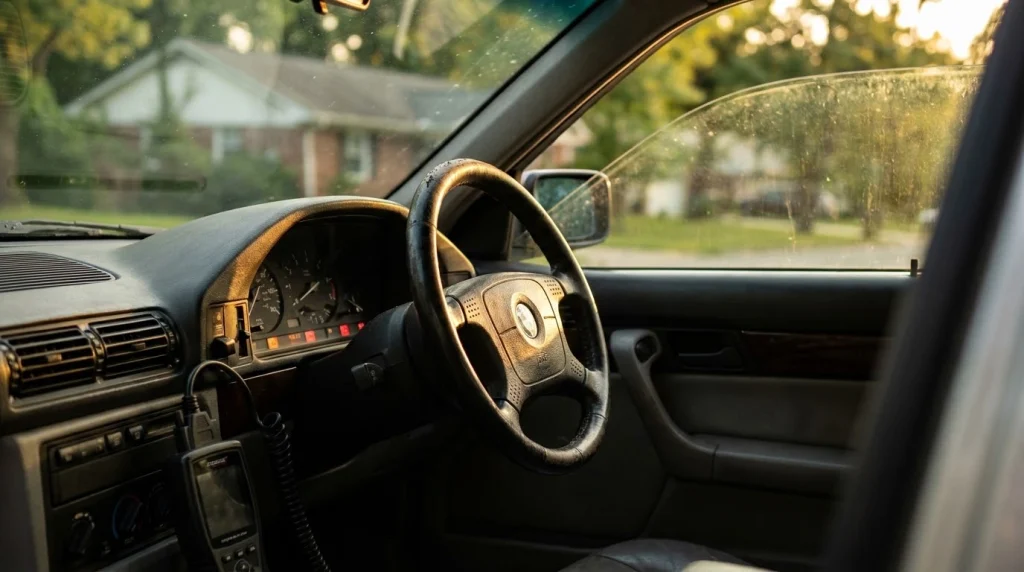
The strongest warning signs are starting trouble and sudden engine shutdowns, especially when they repeat under similar conditions. Other symptoms are possible but are less specific.
Engine cranks but will not start
A missing CKP signal can prevent the engine computer from timing important starting functions. The starter may turn the engine normally while combustion never begins.
Listen for the difference between cranking and not cranking. If the starter does not turn the engine, investigate the battery, starter, and related electrical circuits first.
Engine stalls while driving
An intermittent crankshaft signal can cause the engine to shut off suddenly. The engine may restart at once, restart later, or remain unable to start.
Stalling is not unique to a bad crank sensor. Fuel delivery, power supply, and other engine management faults can produce a similar event.
Hard starting after the engine gets hot
Some sensor or wiring faults appear only after the engine warms up. A vehicle may start cold, stall after driving, and start again once it cools.
That pattern is useful evidence, but heat can affect electrical connections and other components too. Repeating the test while the failure is present gives better results than guessing afterward.
Rough running, misfires, or weak acceleration
An unstable crankshaft signal can disrupt engine timing information and affect how the car runs. You may notice hesitation, shaking, or reduced power.
These signs also occur with ignition, fuel, air intake, and mechanical problems. Treat them as reasons to investigate, not proof of sensor failure.
Check engine light or stored fault codes
The engine computer may store a crankshaft-sensor-related fault code when it detects an invalid or missing signal. The warning light may come on, but not every failure sets it immediately.
Delphi’s symptom guide also describes hard starting, misfires, and uneven acceleration. A code points you toward a circuit to inspect, not automatically toward a part to replace.
Could Another Problem Feel Like a Bad Crank Sensor?
Yes, several unrelated faults can cause similar starting and running problems. The engine’s behavior helps narrow the search, but tests are needed to confirm the cause.
This table compares common patterns and useful first checks.
| What you notice | Possible direction | Useful first check |
|---|---|---|
| Starter turns, engine never fires | CKP signal, fuel, ignition, or other control issue | Scan codes and cranking RPM |
| Starter does not turn engine | Battery, starter, connection, or control issue | Check battery and starting circuit |
| Car stalls after warming up | Heat-related sensor, wiring, or fuel fault | Record data during the failure |
| Rough idle or misfire | Ignition, fuel, air, or crank signal issue | Read codes and related live data |
A crank sensor becomes a stronger suspect when multiple clues agree, especially an absent signal during cranking. Symptoms alone cannot identify which component has failed.
How Can You Check a Suspected Bad Crank Sensor?
Start with simple observations, then use scan data and electrical checks to narrow the fault. This order reduces the chance of replacing a working sensor.
- Confirm the starting behavior. Note whether the starter turns the engine, whether it fires briefly, and whether the problem appears hot or cold.
- Check battery condition. Weak voltage and slow cranking can make sensor data harder to interpret and may explain the starting complaint.
- Read stored and pending codes. Record the exact codes before clearing anything, including related camshaft or power supply faults.
- Watch engine RPM during cranking. Use a scan tool that reports live engine-speed data for your vehicle.
- Inspect accessible wiring. With the engine off, look for loose plugs, damaged insulation, corrosion, or signs of contact with hot or moving parts.
- Test the correct circuit. Follow the vehicle wiring diagram and sensor-specific test procedure. Seek waveform testing if the problem remains uncertain.
Write down each result before moving on. A clear record helps a technician reproduce an intermittent fault and prevents duplicate work.
What Can an OBD2 Scanner Tell You?
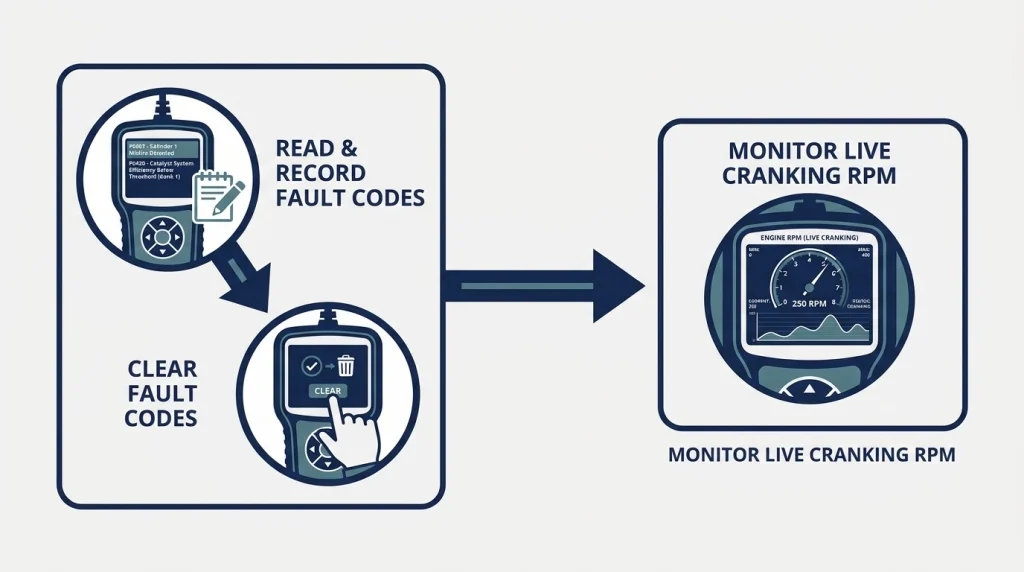
An OBD2 scanner can show fault codes and reported engine speed, making it a useful first tool for crank sensor diagnosis. It cannot always identify the failed component by itself.
Check the codes before replacing parts
Look for crankshaft position sensor circuit faults, along with related camshaft, voltage, and synchronization codes. Record the full code and vehicle information.
A code describing a missing or implausible signal can also result from a broken wire, damaged target wheel, or missing sensor supply. Erasing the code before diagnosis may remove helpful evidence.
Watch live RPM while the engine cranks
Open the scan tool’s live data screen and find engine speed or RPM. Have a helper crank the engine safely while you watch the reading.
If the tool reports no RPM during cranking, the computer may not be receiving a usable crankshaft signal. That is a reason to investigate the sensor circuit, not a reason to order a sensor immediately.
Some scan tools update slowly, and not every vehicle reports cranking RPM in the same way. A visible RPM reading also cannot guarantee that every sensor pulse is correct.
Warning
Unexpected engine stalling can put you at risk in traffic. Stop driving and arrange inspection or towing rather than testing the fault on the road.
How Do You Test the Crank Sensor Electrically?
Electrical testing depends on whether your vehicle uses an inductive sensor or an active sensor, such as a Hall-effect design. Identify the type from service information before connecting a meter.
Testing an inductive crankshaft sensor
An inductive sensor produces an alternating electrical signal as the engine turns. With the ignition off and the sensor disconnected, some designs allow a resistance test.
Compare the result with the exact vehicle specification, not a universal number. A sensor may pass a static resistance check but still fail when it warms up or the engine turns.
During cranking, a suitable meter may detect an AC signal if the service procedure allows that test. A waveform test provides more information about signal quality than one averaged voltage reading.
Testing a Hall-effect crankshaft sensor
A Hall-effect sensor typically needs electrical power and ground and sends a switching signal. Testing it as a simple resistance coil can give misleading results or damage some designs.
Use the wiring diagram to identify the correct terminals. Verify the specified supply and ground before checking the switching signal with approved test leads.
An oscilloscope can show the signal changing as the engine turns. A multimeter reading alone may hide missing pulses or an unstable waveform.
DENSO’s sensor guidance describes inspecting waveforms while cranking and checking sensor installation. Follow your engine manufacturer’s procedure before probing any circuit.
How Can You Tell a Bad Sensor From Bad Wiring?
Compare the signal at the sensor with the signal reaching the engine computer. Different results can point toward a connector or harness fault instead of a failed sensor.
Look closely for brittle insulation, bent contacts, loose connector locks, moisture, and corrosion. Wiring near the engine can suffer heat damage or rubbing against nearby parts.
If the sensor produces a proper signal but the computer does not receive it, investigate the path between them. If the correct power and ground are present but the sensor produces no valid output, examine the sensor and target wheel.
The reluctor wheel, also called a tone wheel or trigger wheel, gives the sensor a pattern to read. A damaged wheel, loose mounting, contamination, or incorrect clearance can create a bad signal even with a working sensor.
Do not assume that wire count identifies the sensor type. Obtain the connector pinout and test limits for the exact engine before applying power, resistance, or probes.
Why Does the Crank Sensor Fail Only When Hot?
Heat can expose an intermittent problem in the sensor or its electrical connections. A fault may disappear after cooling, leaving the car apparently normal when inspected later.
Record whether the engine cranks normally when hot, whether RPM data vanishes, and whether the same codes return. Compare those observations with a successful cold start.
A technician can monitor the crankshaft signal while the problem is occurring. Testing only after the car cools may miss a heat-sensitive interruption.
Do not pour water on hot sensors or disconnect parts near moving engine components. A safe inspection with the engine off is preferable to trying to trigger the failure.
When Should You Replace the Crank Sensor?
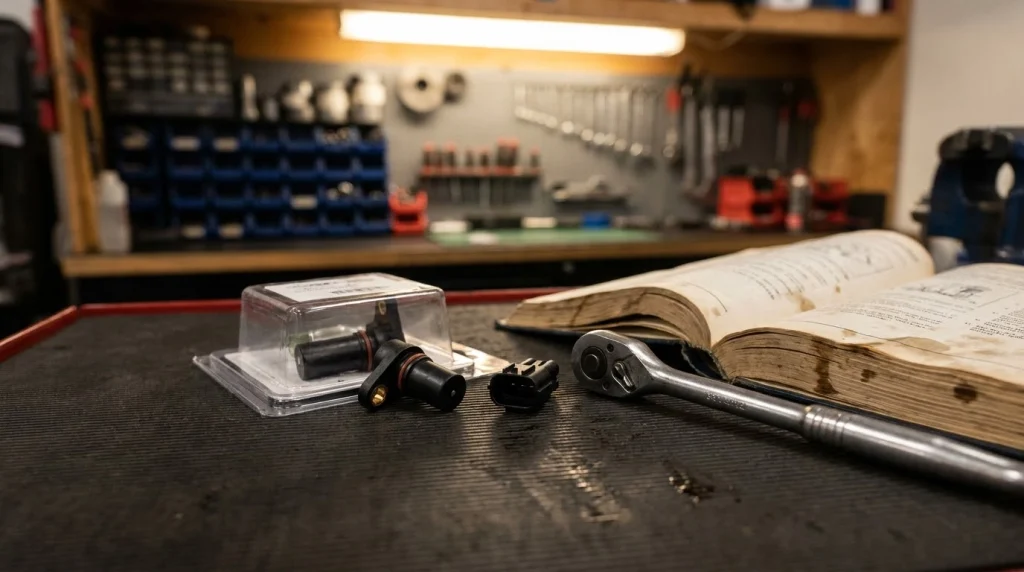
Replace the crankshaft position sensor when testing confirms that it cannot provide the specified signal under the correct operating conditions. Repair a damaged connector, wiring fault, or target wheel issue instead when that is the true cause.
Before buying a part, match it to the exact vehicle, engine, and connector. Similar-looking sensors can have different electrical designs or mounting requirements.
After repair, clear codes only when you have recorded the original results. Verify that the car starts, runs smoothly, and does not reproduce the original fault.
Some vehicles require a manufacturer-specific crankshaft position learning procedure after sensor or engine work. Follow service instructions rather than assuming every vehicle needs the same reset.
If the engine still stalls or refuses to start, further diagnosis is needed. Avoid replacing additional sensors solely because they are mentioned in a fault code.
OBD2 Scanner
An OBD2 scanner that supports live engine data can help you record codes and check reported RPM during cranking.
Frequently Asked Questions
Can a bad crank sensor leave no warning light?
A bad crank sensor can cause starting or stalling trouble without immediately turning on the check engine light. Some faults appear only briefly or under certain conditions. Reading pending codes and checking the signal during the problem is more useful than relying on the dashboard light alone.
Where is the crankshaft position sensor located?
The crankshaft position sensor is usually fitted near a crank-driven trigger wheel, but the exact position varies by engine. Common areas include the engine block, timing cover, and flywheel housing. Check a repair manual or vehicle-specific diagram before removing covers or reaching into a tight engine bay.
Can a bad crank sensor drain the car battery?
A faulty crankshaft position sensor is not a typical direct cause of a parked car’s battery draining. Repeated unsuccessful starting attempts can discharge a battery because the starter uses substantial power. If the battery becomes weak while parked, investigate the charging system and unwanted electrical draw separately.
Will unplugging the crank sensor prove it is bad?
Unplugging a crankshaft position sensor does not reliably prove that the sensor was already defective. Many engines cannot start without its signal, and removing the connector can create new codes. Use a scan tool and approved circuit tests instead of treating a change in engine behavior as confirmation.
Can a good sensor still produce a bad crank signal?
A working crank sensor can produce an unusable signal if its target wheel is damaged or the clearance is incorrect. Metal debris, loose mounting, and electrical interference may also affect readings. A technician can compare the measured waveform with the engine’s expected pattern to narrow the cause.
Does a new crank sensor need a relearn procedure?
A new crank sensor may require a learning procedure on certain vehicles, but many applications do not use the same process. The need depends on the engine computer and manufacturer service instructions. If a related fault remains after installation, confirm whether the vehicle specifies a calibration or relearn step.
Conclusion
If you are asking, “How do I know if my crank sensor is faulty?” look for starting or stalling symptoms supported by scan and signal tests. If the evidence points to a missing crankshaft signal, check the sensor, wiring, and target wheel before replacing parts.

Alex Carter is an automotive content writer at VastAutoParts, focusing on car parts, vehicle troubleshooting, automotive tools, product research, and practical car care guides.