
How to Start a Car With a Bad Starter Relay: Safe Fix
Quick Answer
To start a car with a bad starter relay, first rule out a weak battery and loose connections. If your vehicle uses a removable relay, fit an identical, approved replacement and start normally. A matching relay swap can help confirm the fault, but never bridge relay terminals with a wire or screwdriver.
- Park safely, switch off the engine, and set the parking brake.
- Check whether the engine cranks and whether the battery appears weak.
- Find the starter relay using the owner’s manual or fuse-box diagram.
- Use an approved, matching replacement relay if the design allows it.
- Call roadside assistance if the car still will not crank.
Your car will not crank, and you suspect the starter relay. You need a safe way to get moving without damaging the starting system. This guide explains what to check, when a relay swap can help, and when to stop trying.
In this article
- Can a Car Start With a Bad Starter Relay?
- How Can You Start a Car With a Bad Starter Relay Safely?
- What Should You Check Before Replacing the Relay?
- What Do Bad Starter Relay Symptoms Look Like?
- How Do You Test a Starter Relay Without Bypassing It?
- Will Jump Starting or Bypassing the Relay Work?
- How Do You Choose and Replace the Correct Relay?
- When Should You Stop Trying and Call for Help?
- Frequently Asked Questions
- Conclusion
Can a Car Start With a Bad Starter Relay?
A car can start after a faulty starter relay is replaced, but a fully failed relay may prevent normal cranking until that happens. Intermittent relay faults can also allow occasional starts.
The relay is an electrical switch that helps send the starting command to the starter solenoid. The solenoid then engages the starter mechanism so the motor can turn the engine.
Not every vehicle has a separate plug-in starter relay. Some designs integrate the starting control into another component or electronic module.
A relay fault usually causes a no-crank condition. The engine does not turn when you request a start, even though some dashboard lights may work.
If the engine turns normally but never fires, the relay may already be doing its job. Fuel, ignition, security, or engine control problems need a different diagnosis.
How Can You Start a Car With a Bad Starter Relay Safely?
The safest practical method is to confirm the fault and install the correct replacement relay before starting the engine normally. Start with checks that do not involve modifying wiring.
- Move out of danger. Stop on level ground when possible, select Park or Neutral as required, and apply the parking brake. Turn the ignition off.
- Check battery clues. Look for weak lights, rapid clicking, or loose battery terminals. A weak battery can mimic a relay fault.
- Confirm the starting symptom. Make one normal start attempt and listen. Notice whether the engine cranks, clicks, or stays silent.
- Locate the relay. Read the fuse-box legend and owner’s manual. Do not pull a relay based on its position alone.
- Check for a matching relay. Use only an approved spare or an identical relay that the manufacturer’s instructions permit you to exchange for testing.
- Fit the replacement. With the vehicle switched off, seat the correct relay fully in its socket. Follow vehicle-specific precautions.
- Try a normal start. If the engine cranks and runs, arrange a proper repair. If the symptom remains, investigate the rest of the circuit.
Never leave a different safety-critical circuit disabled just to make the starter operate. If you borrowed another relay for testing, restore that circuit before driving.
A successful swap strongly suggests a relay problem, but the socket or wiring may still need inspection. A failed swap does not prove the starter motor is bad.
What Should You Check Before Replacing the Relay?

Battery condition, cable connections, starting interlocks, and fuses should be checked before condemning a starter relay. Each can interrupt the starting process.
Check the battery and cable connections
A battery can run lights and accessories yet lack enough power to start the engine. Dirty terminals and loose cables can cause similar symptoms.
Inspect the battery case and visible cables with the ignition off. Do not touch a swollen, leaking, or damaged battery.
According to DENSO’s starter system guidance, battery and cable condition are basic parts of no-crank diagnosis. Have the battery load-tested if its condition is uncertain.
Check Park, Neutral, or the clutch switch
An automatic vehicle may block cranking when it does not recognize Park or Neutral. A manual vehicle may require the clutch pedal to be fully depressed.
Follow the owner’s manual for your transmission. Do not defeat a safety switch, since the vehicle could move unexpectedly.
Check starter-related fuses and the relay socket
A blown fuse or damaged relay socket can stop the starting signal even when the relay itself is healthy. Check the correct fuse using the vehicle diagram.
Replace a blown fuse only with the specified type and rating. If it fails again, leave the circuit alone and request electrical diagnosis.
Look for heat discoloration, melted plastic, or corrosion around an accessible relay socket. Do not insert tools into the socket contacts.
What Do Bad Starter Relay Symptoms Look Like?
A faulty relay may cause silence, intermittent starting, or a click without engine rotation. None of these sounds confirms the relay by itself.
The table compares common symptoms with the next useful check.
| What you notice | Possible cause | Useful next check |
|---|---|---|
| No click, no crank | Relay, fuse, starting command, or interlock | Check relay identification and starting controls |
| Rapid clicking | Weak battery or poor connection | Test battery and cable connections |
| One click, no crank | Solenoid, starter, supply, or control fault | Test the starting circuit, not just the relay |
| Starts intermittently | Relay contacts or loose electrical connection | Inspect and test the circuit |
| Cranks normally, will not run | A problem beyond starter activation | Check fuel, ignition, and security systems |
Use the sound to choose a test, not to select a replacement part. DENSO also notes that poor connections can reduce the power reaching the starter.
How Do You Test a Starter Relay Without Bypassing It?
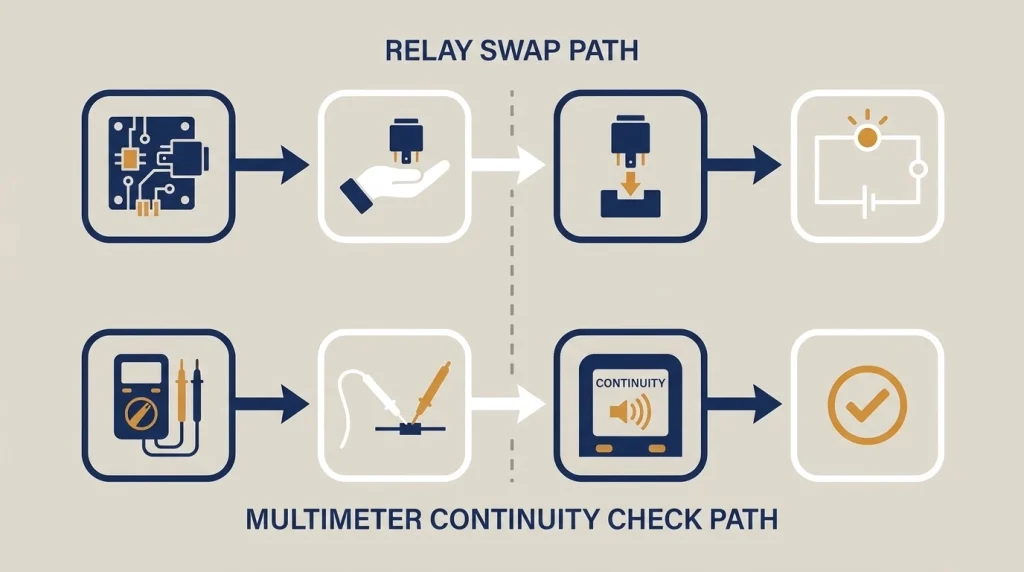
You can test a removable starter relay by swapping it with a verified identical unit or by following manufacturer-approved electrical tests. Avoid jumping terminals in the fuse box.
Try an identical relay swap
A relay swap is useful only when both components have matching specifications and pin arrangements. Similar size or color does not prove compatibility.
Check the part number and the vehicle’s service information. Keep the ignition off while moving relays, and do not borrow one that the vehicle needs for safe operation.
The starter relay testing guide from AutoZone describes the matching-relay swap as a simple diagnostic method. Use that result as evidence, not an excuse to leave another system inoperative.
Use a multimeter with the correct wiring diagram
A multimeter can help identify an open relay coil or contacts that fail to switch. Test procedures depend on the relay’s internal design.
Remove the relay only as directed by the vehicle’s instructions. Compare the readings with the exact service specifications rather than assuming every relay uses the same pins.
DENSO’s starter troubleshooting guide recommends checking relay continuity in its energized and de-energized states. A relay that fails the vehicle’s specified test should be replaced.
Warning
Bridging unknown relay terminals can cause sparks, damaged electronics, or unexpected vehicle movement. Use the specified test procedure or ask a qualified technician.
Will Jump Starting or Bypassing the Relay Work?
Jump starting may help a weak battery, but it does not repair a relay with failed contacts or a broken internal coil. Directly bypassing a relay is not a safe roadside fix.
A jump pack supplies electrical energy to the battery system. It cannot restore a missing switching function inside a failed relay.
If a properly performed jump start makes the car crank, reconsider the battery and its connections. Follow the vehicle manual, especially where electrical system restrictions apply.
Some online instructions recommend shorting relay socket terminals, striking the relay, or bridging starter terminals. Those methods can create uncontrolled cranking and electrical damage.
Push starting is also not a general answer. Most automatic vehicles cannot be push started, and many manual vehicles have restrictions or require enough electrical power for engine control.
Do not attempt a rolling start on a public road or slope. If the vehicle cannot start normally, replacement or roadside service is the safer choice.
How Do You Choose and Replace the Correct Relay?
Choose a relay specified for the vehicle and its starting circuit, not one that merely fits the socket. Electrical design and contact layout must match.
Check the part number, service manual, and applicable vehicle configuration. The right part may differ by engine, transmission, or electrical system.
For a standard plug-in design, switch the ignition off before removing the old relay. Follow the manufacturer’s battery disconnection instructions and avoid touching metal contacts.
Inspect the socket before fitting the new relay. A damaged or overheated socket needs repair rather than another replacement relay.
Push the correct relay into place without forcing it. Restore removed covers, verify the other circuits, and attempt a normal start.
If the vehicle starts, switch it off and make sure it can restart before relying on it for a trip. If the new relay fails again, arrange a proper circuit inspection.
When Should You Stop Trying and Call for Help?
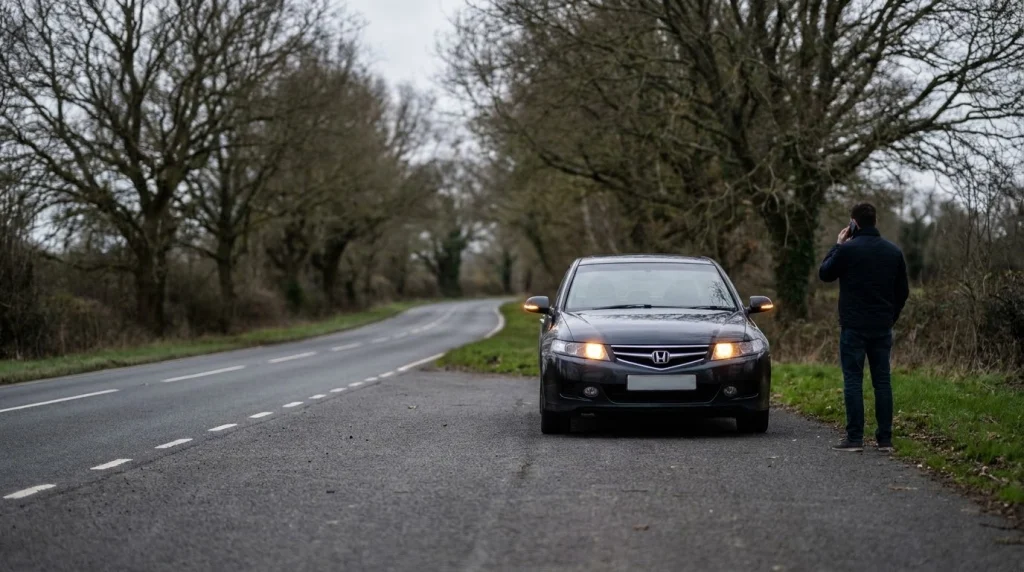
Stop and request roadside service when you notice smoke, burning odor, melted wiring, or uncontrolled starter operation. These conditions can cause further damage.
Roadside help is also sensible when the relay is integrated into a module or cannot be identified with confidence. Guessing at socket terminals can turn a simple fault into a larger repair.
If the car is stopped near moving traffic, focus on personal safety first. Move to a safer location when possible and follow local roadside procedures.
Tell the technician whether the engine cranks, what sounds you heard, and whether a matching relay changed the symptom. Those observations help narrow the search.
Starter Relay
A matching replacement relay restores the intended starter control path when a removable relay is confirmed faulty.
Frequently Asked Questions
Can a bad starter relay drain the battery?
A faulty relay can contribute to battery drain if its contacts remain closed and keep a circuit powered. Many failed relays instead prevent starting without creating an ongoing drain. A technician should check the circuit if you notice unexpected battery discharge.
Will a bad starter relay cause a dashboard warning light?
A bad starter relay does not always trigger a dedicated dashboard warning light, even when the engine will not crank. Some vehicles may store fault codes or show starting-system messages. Check the owner’s manual and scan the relevant modules if the vehicle reports an error.
Can cold weather make a weak starter relay fail?
Cold conditions may expose a marginal electrical connection or relay, but weak battery output is another common reason for cold-start trouble. Check battery health and terminal condition before blaming the relay. A repeated cold-only failure needs vehicle-specific testing.
Can a starter relay fail without clicking at all?
A failed starter relay can remain silent when its coil is damaged or the control circuit never energizes it. Silence alone cannot separate those two faults. A wiring diagram and an appropriate electrical test are needed to find where the command stops.
Does a new starter relay need programming to work?
A conventional removable electromechanical starter relay normally does not require programming after an approved replacement. Some vehicles use electronic starting modules rather than a basic plug-in relay. Those systems may require diagnosis or setup using vehicle-specific service procedures.
Can I keep driving after an intermittent relay starts working?
An intermittent starter relay can leave you stranded at the next engine restart, even if the vehicle runs normally now. Avoid unnecessary stops and arrange the correct repair promptly. Do not drive if there are signs of overheating, smoke, or unexpected starter engagement.
Conclusion
Learning how to start a car with a bad starter relay begins with confirming the fault and fitting a correct replacement, not bypassing the circuit. Check the battery and starting controls first. If an approved relay replacement does not restore normal cranking, arrange professional diagnosis.

Alex Carter is an automotive content writer at VastAutoParts, focusing on car parts, vehicle troubleshooting, automotive tools, product research, and practical car care guides.