
Cost to Fix a Car Starting Problem? 10 Simple Repair Prices
Quick Answer
Fixing a car starting problem typically costs about $100 to $1,200 at a shop, depending on the failed part. A new battery runs about $100 to $300, while a starter replacement runs about $350 to $1,100. Small fixes like a relay or a fuse cost far less. The diagnosis decides the bill, so test before you replace parts.
- Battery: about $100 to $300 installed.
- Starter: about $350 to $1,100, or $565 to $796 on average per RepairPal.
- Fuel pump: about $400 to $1,200, one of the priciest starting repairs.
- Diagnosis first: a test that costs about $50 to $150 can save a wrong part.
Your car will not start, and the first question is what the repair will cost. The answer depends on which part failed, because starting problems range from a loose cable to a dead fuel pump. This guide lists the typical cost of each fix, explains why quotes vary, and shows how to keep the bill down.
In this article
- What does it cost to fix a car starting problem?
- How much does a starter replacement cost?
- How much does a battery replacement cost?
- What does the diagnosis cost before any repair?
- Why does the same repair cost more on some cars?
- How can you keep the starting repair bill down?
- Is it worth fixing your car, or should you wait?
- Frequently Asked Questions
- Conclusion
What does it cost to fix a car starting problem?
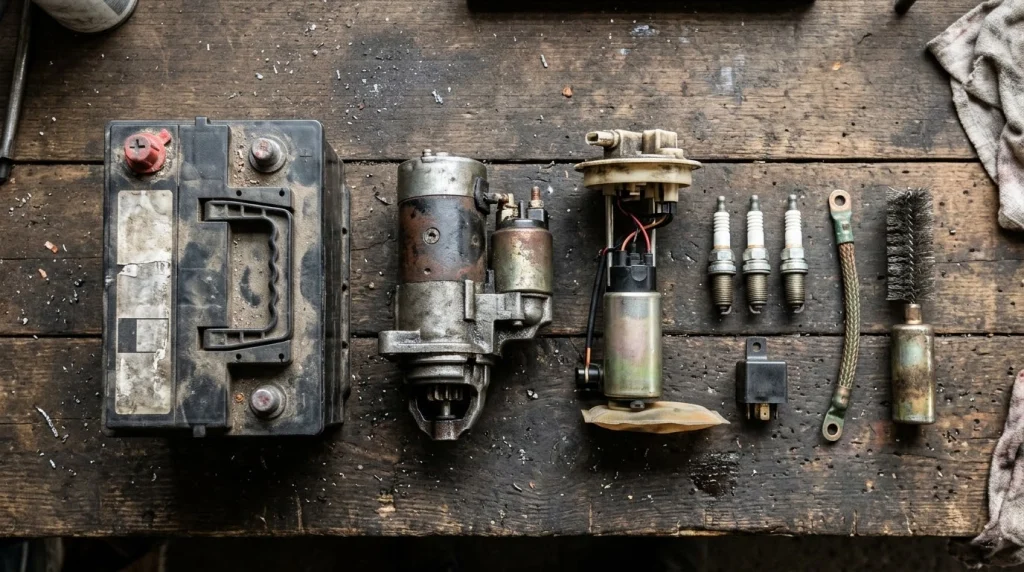
A starting repair costs about $100 to $1,200 at a shop, and the failed part sets the price. Small electrical fixes sit at the low end, while a starter or a fuel pump sits at the high end.
The table below lists the typical shop cost for each common fix. Ranges cover parts and labor for a standard car at an independent shop.
If you do not know which part failed yet, the common no-start causes guide walks through each symptom first.
The table compares the typical shop cost for each common starting repair.
| Repair | Typical shop cost | What drives the price |
|---|---|---|
| Battery replacement | About $100 to $300 | Battery type and size |
| Starter replacement | About $350 to $1,100 | Access and labor hours |
| Alternator replacement | About $300 to $800 | Part price and access |
| Fuel pump replacement | About $400 to $1,200 | Tank access and part price |
| Ignition switch replacement | About $150 to $500 | Key programming needs |
| Spark plug replacement | About $200 to $400 | Plug count and engine layout |
| Crankshaft sensor replacement | About $120 to $350 | Sensor location |
| Starter relay replacement | About $50 to $200 | Part price and labor |
| Battery cable or ground repair | About $50 to $250 | Cable length and corrosion |
| Terminal cleaning | About $20 to $100 | Shop time only |
The battery and the starter cause most no-start bills. A shop test tells you which one failed before you pay for either part.
How much does a starter replacement cost?
A starter replacement costs about $350 to $1,100 at a shop, and RepairPal puts the national average at $565 to $796. Parts run about $375 to $516 of that total, while labor runs about $191 to $280.
The RepairPal starter replacement estimate lists the same range for most cars. That range leaves out taxes and fees, so the final bill runs a little higher.
Access drives the labor bill more than the part does. A starter in plain view takes one to two hours, while one buried under the intake manifold can take up to six hours.
A remanufactured starter costs less than a new one, and most shops fit remanufactured units as standard. AAA notes that starters last about 100,000 to 150,000 miles, so a high-mileage car may need one as routine wear.
A single click with bright dash lights points at the starter, and the failing starter symptoms guide lists the other warning signs.
How much does a battery replacement cost?
A car battery replacement costs about $100 to $300 for a standard battery. Cars with start-stop systems need an AGM battery, which costs more than a standard flooded battery.
AAA lists a battery at $100 to $300 and a starter or an alternator at $300 to $800 in its common car problems guide. Those ranges cover the part plus fitting at a shop.
Some parts stores fit a battery at no charge when you buy it from them. That free fitting can cut the total bill to the price of the battery alone.
A weak battery and a bad starter sound alike, so test the battery before you pay for a starter. The starter or battery guide shows how to tell the two faults apart.
What does the diagnosis cost before any repair?
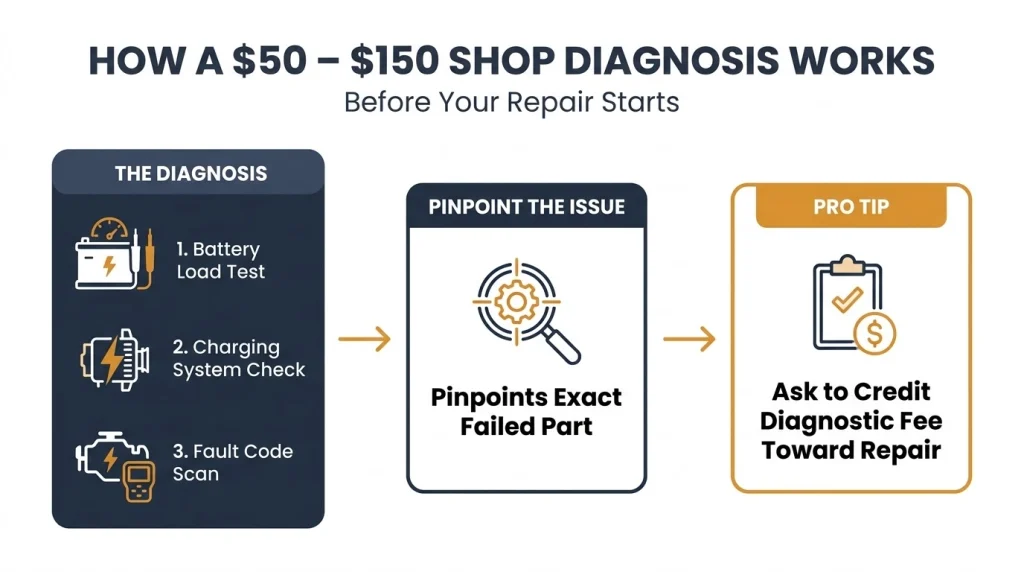
A shop diagnosis costs about $50 to $150 before any repair starts. The fee covers a battery test, a charging system check, and a scan for fault codes.
Many shops apply the fee to the repair if you approve the work. Ask about that credit before the test starts, so the diagnosis does not become a second bill.
You can run the first checks at home with a multimeter and a code scan. The diagnosing a no-start car guide walks through each test in order.
Tip
Ask the shop to put the diagnostic fee toward the repair if you approve the work. Many shops credit the fee, so the test costs you nothing extra.
A code scan alone does not name the failed part. Codes point at a circuit or a system, and the shop still tests the parts in that circuit.
Why does the same repair cost more on some cars?
The same repair costs more on some cars because labor time, part price, and shop rates all vary. A starter buried under the intake manifold takes hours more labor than one in plain view.
Part choice moves the price too. A new factory part costs the most, a remanufactured unit costs less, and a used part costs the least but carries the shortest warranty.
Labor rates vary by region and by shop type. AAA reports rates of $150 to $300 per hour in its approved repair network, and dealers charge more than independent shops for the same job.
The AAA starter replacement guide explains how access and labor hours shape the final bill. Luxury and European cars cost more as well, and AAA notes a new starter part alone can pass $600 on some luxury models.
How can you keep the starting repair bill down?
You can cut the bill by finding the fault before the shop visit. A few checks at home turn a vague no-start into a clear repair.
Step 1
Listen to the sound
Note what happens when you turn the key. A single click, rapid clicking, and silence each point at a different part.
Step 2
Test the battery first
Ask a parts store to load-test the battery. A battery test rules out the cheapest fix before you pay for a starter.
Step 3
Get a written itemized quote
Ask for parts, labor, and fees on separate lines. An itemized quote lets you compare two shops on the same work.
Step 4
Ask about part options
Ask what a remanufactured starter costs against a new one. The saving can reach hundreds of dollars on the same job.
Step 5
Check warranty cover
Check your factory warranty and any extended service plan. A starter or a fuel pump may still sit inside the covered period.
These five steps take under an hour and can save the price of a wrong part. A diagnosis you trust matters more than the lowest quote.
Warning
If you smell fuel or see smoke, stop trying to start the car. Fuel vapor near a hot engine can ignite, so move clear and call for help.
Is it worth fixing your car, or should you wait?
A starting repair is worth the money when the car is worth far more than the bill. A $500 starter on a car worth several thousand dollars is a clear fix.
The choice gets harder when the repair nears half the car value. A second quote or a cheaper part can change that math fast.
If you
own a car worth far more than the repair
Choose the repair, because one fix restores daily use.
If you
face a repair near half the car value
Choose a second quote, because prices for the same job vary by hundreds of dollars.
If you
see the car fail to start again after a repair
Choose a full charging-system test, because a weak alternator can kill a new battery.
Age alone does not decide the answer. A well-kept car with one failed starter deserves the repair, while a car with several failing systems may not.
Do
- Test the battery before you replace the starter.
- Get the quote in writing before work starts.
- Keep the old part until the repair is proven.
Avoid
- Replacing parts on a guess.
- Cranking a grinding starter again and again.
- Ignoring a fuel smell near the engine.
One tested fix beats three guessed parts. Spend the diagnosis money first, and the repair money second.
OBD2 Scanner
An OBD2 scanner reads fault codes from your car, so you can point the shop at the likely fault before you pay for a diagnosis.
Frequently Asked Questions
Can a car starting problem cost under $100 to fix?
A starting problem can cost under $100 to fix when the fault is a blown fuse, a loose cable, or a dirty terminal. A relay swap also stays near that range on many cars. The bill climbs only when a part like the starter or fuel pump has failed.
Does car insurance cover a starting problem repair?
Standard car insurance does not cover a starting repair caused by wear, age, or a failed part. A factory warranty or an extended service plan may pay for the same repair instead. Check your coverage before you approve the work.
Will a jump start fix my car for good?
A jump start gets a weak battery going for one trip, but it does not fix the fault that drained it. The car may fail again at the next stop if the battery or alternator is bad. Have the charging system tested before you rely on the car.
Why do two shops quote different prices?
Two shops quote different prices because labor rates, part choices, and diagnostic time vary from shop to shop. One shop may price a new part while another prices a remanufactured one. Ask each shop for an itemized quote so you compare the same work.
Should I replace the battery and starter together?
Replacing the battery and the starter together wastes money unless tests show both parts have failed. A bad starter can drain a battery, so test the battery again after the starter is fixed. Replace only the part that fails its test.
What if my car still will not start after a repair?
A car that still will not start after a repair needs a fresh diagnosis, because the first fix missed the real fault. Ask the shop to retest the starting and charging systems at no extra diagnostic charge. A second fault, like a bad ground cable, often hides behind the first.
Conclusion
Fixing a car starting problem costs about $100 to $1,200 at a shop, and the failed part sets the price. If your car clicks or cranks slowly, test the battery first, then get a written quote before any part is replaced.

Alex Carter is an automotive content writer at VastAutoParts, focusing on car parts, vehicle troubleshooting, automotive tools, product research, and practical car care guides.