
Can a Blown Fuse Stop a Car From Starting? 7 Quick Checks
Quick Answer
Yes, a blown fuse can stop a car from starting when it protects a circuit the engine needs to run. Fuses guard the starter, fuel pump, ignition coils, and engine computer, and a break in any of those circuits cuts power to that part. The engine then cranks without firing, or it stays silent when you turn the key.
- A blown starter fuse gives silence or a single click, with no cranking at all.
- A blown fuel pump or ignition fuse lets the engine crank, but it never fires.
- Check the fuse box diagram in the owner’s manual to find the right fuse.
- Always replace a blown fuse with one of the exact same amperage rating.
You turn the key and nothing happens, or the engine spins without catching. A blown fuse is a small part that can cause either symptom, and it is one of the cheapest faults to check first. This guide explains which fuses can stop a car from starting, how to spot a blown one, and what to do when the replacement blows again.
In this article
- How a blown fuse stops a car from starting
- Which fuses can stop a car from starting
- Signs a blown fuse is behind your no-start
- How to check for a blown fuse
- How to replace a blown fuse safely
- Why fuses blow and what a repeat blow means
- What to check when the fuses are fine
- Frequently Asked Questions
- Conclusion
How a blown fuse stops a car from starting
A fuse is a thin metal strip inside a small plastic case, and it melts to break the circuit when too much current flows through it. That break is the fuse doing its job, since it stops the extra current from reaching the wiring and the parts past it. Once the strip melts, power to that circuit stops until the fuse is replaced.
An engine needs fuel, spark, air, and compression to run, and the engine computer times the fuel and the spark. Fuses feed power to the fuel pump, the ignition coils, the starter control circuit, and that computer. A blown fuse in any of those circuits removes one piece the engine needs, so starting fails even when the battery is strong.
Not every blown fuse stops a car. A fuse for the radio, the windows, or the interior lights kills only that item, and the car starts as normal. The no-start risk comes only from fuses that guard starting circuits, which is why the fuse label matters more than the fuse itself.
Which fuses can stop a car from starting
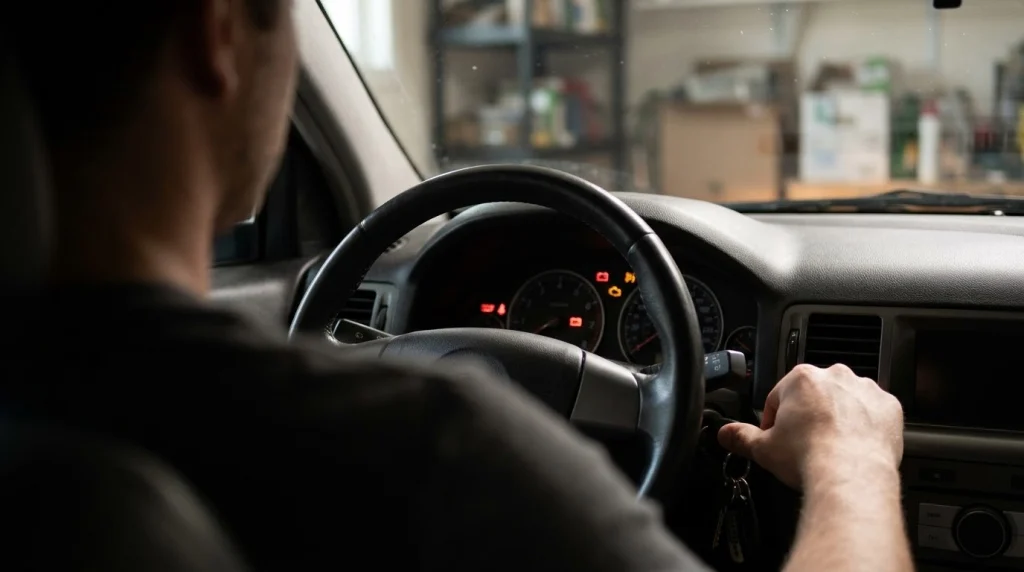
Five circuits carry fuses that can stop a car from starting when they fail. Each one feeds a different part of the starting sequence, so the symptom tells you which fuse to check first.
The table below compares the starting circuits, the fuse labels to look for, and the symptom each blown fuse causes.
| Circuit | Common fuse labels | Symptom when blown |
|---|---|---|
| Starter control | STARTER, ST, CRANK | No crank, silence or one click |
| Fuel pump | F/PUMP, FP, FUEL PUMP | Cranks but never fires |
| Ignition coils | IGN, IGN COIL, COIL | Cranks but never fires |
| Engine computer | ECM, PCM, ECU, EFI | Cranks but never fires, or no crank |
| Main fuse | MAIN, ALT, BAT | No power at all, no lights or crank |
The starter and main fuses cause silence, while the fuel, ignition, and computer fuses cause cranking without firing.
The fuel pump fuse is the one drivers miss most often. The pump sits in the fuel tank and needs power to push fuel to the engine.
A blown fuse starves the engine even when the tank is full. A bad fuel pump causes the same crank without firing, so check the fuse before you blame the pump.
That crank without firing is the classic car cranks but won’t start pattern, and a fuse is one of its simplest causes. The starter fuse gives the opposite symptom: the key turns, the dash lights up, and nothing else happens. Tell the two apart before you pull any fuse, since each points to a different box and a different circuit.
Some cars also have a fuse for the immobilizer or security system. If that fuse blows, the car may crank and stop, or it may refuse to crank at all.
On some cars, one fuse feeds more than one system, so a fuse with an unrelated label can still block starting. Check the diagram for your exact model before you rule any fuse out.
Signs a blown fuse is behind your no-start
A blown fuse gives clues that point away from the battery and the starter motor. Look for one of these signs before you test anything else.
- One electrical item died at the same time, such as the radio, the windows, or the lights.
- The lights and radio work, but the starter stays silent when you turn the key.
- The engine cranks at full speed but never catches, with no sputter at all.
- The no-start began at once, with no slow cranking in the days before it.
- A new fuse fixed the fault once, then the same circuit failed again.
- You smell a faint burnt odor near the fuse box under the hood.
The lights and radio work fine in many fuse cases, which matches the pattern of a car with power but won’t start. That pattern rules out a dead battery and points toward the starter circuit, the ignition switch, or a fuse.
A blown fuse often kills one system while the rest of the car works. The signs your car has a blown fuse include dead accessories beside the no-start.
Tip
Snap a photo of the fuse box diagram with your phone before you pull any fuse. The photo shows each fuse spot when the lid diagram is hard to read in low light.
How to check for a blown fuse
You can check the starting fuses in a few minutes with no tools, and a test light or multimeter confirms the result. Work with the ignition off, and keep your hands clear of the cooling fan under the hood.
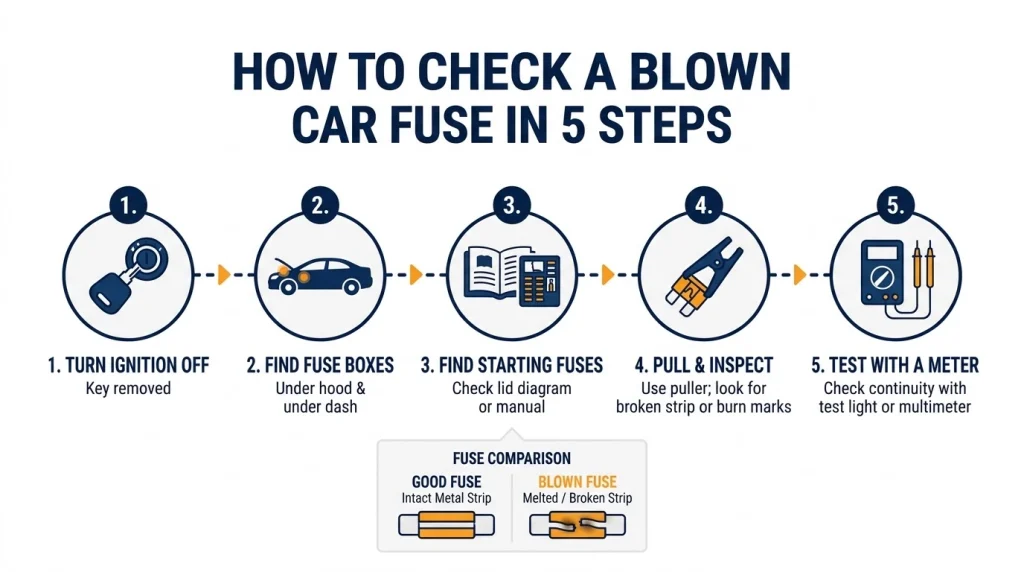
Step 1
Turn the ignition off
Switch the ignition off and take the key out. This keeps the circuits dead while you work in the fuse box.
Step 2
Find the fuse boxes
Most cars have two boxes: one under the hood and one under the dashboard. The owner’s manual shows both spots and the diagram for each box.
Step 3
Find the starting fuses
Use the diagram on the fuse box lid or in the manual to find the starter, fuel pump, ignition, and computer fuses. Labels vary by make and model, so trust the diagram for your own car.
Step 4
Pull and inspect each fuse
Use the fuse puller in the box or needle-nose pliers to lift each fuse out. A blown fuse shows a broken metal strip, melting, or dark burn marks inside the clear case.
Step 5
Test with a meter when unsure
A fuse can look fine and still be bad, so touch a test light or multimeter to both ends. No continuity means the fuse is blown, even when the strip looks whole.
The symptoms of a blown car fuse include a broken filament, melting, or burn marks inside the clear case. A visual check catches most blown fuses, but a meter catches the ones that look fine. Check every starting fuse, not just the first one that looks suspect.
How to replace a blown fuse safely
Replacing a blown fuse takes a few minutes, and the only rule that matters is matching the rating exactly. YourMechanic lists 15, 20, and 30 amps as the most common fuse ratings, and your car may use all three.
Turn the ignition off before you touch the fuse box, and disconnect the negative battery cable for work under the hood. Pull the blown fuse with the fuse puller or needle-nose pliers, then push the new fuse straight in by hand until it seats. AutoZone’s guide to how to replace a car fuse covers blade, mini, and maxi fuses, plus the larger bolted fuses in some cars.
Reconnect the battery cable and try to start the car. If it starts, the fuse was the fault, and you should still watch for a repeat in the days after the swap. Main fuses are often bolted in place and need a torque wrench, so leave those to a mechanic when you are unsure.
Do
- Match the exact amperage rating on the diagram.
- Push the new fuse in straight by hand.
- Find the cause when a fuse blows twice.
Avoid
- Fit a higher-amp fuse to stop it blowing.
- Bridge the fuse slot with wire or foil.
- Keep replacing a fuse that blows at once.
Why fuses blow and what a repeat blow means
A fuse blows when its circuit draws more current than the fuse rating allows. The extra current melts the metal strip, and the break protects the wiring and the parts past it.
Warning
A fuse that blows again points to a short circuit or a failing part, and each new fuse risks melted wiring or a fire. Stop replacing it and have the circuit tested by a mechanic.
The most common cause is a short circuit, where a chafed wire touches bare metal and current surges through the loop. A worn motor or pump can also draw more current than it should, and an overloaded circuit does the same when too many items share one fuse. Age and vibration can weaken the strip over time, so a single blown fuse with no repeat is often a one-off fault.
A fuse that blows at once, or blows again within days, means the fault is still there. Note which fuse failed and what was running when it blew, since that detail helps a mechanic find the fault fast. Do not fit a higher-amp fuse to keep the car going, since the wiring is sized for the rating on the diagram.
What to check when the fuses are fine
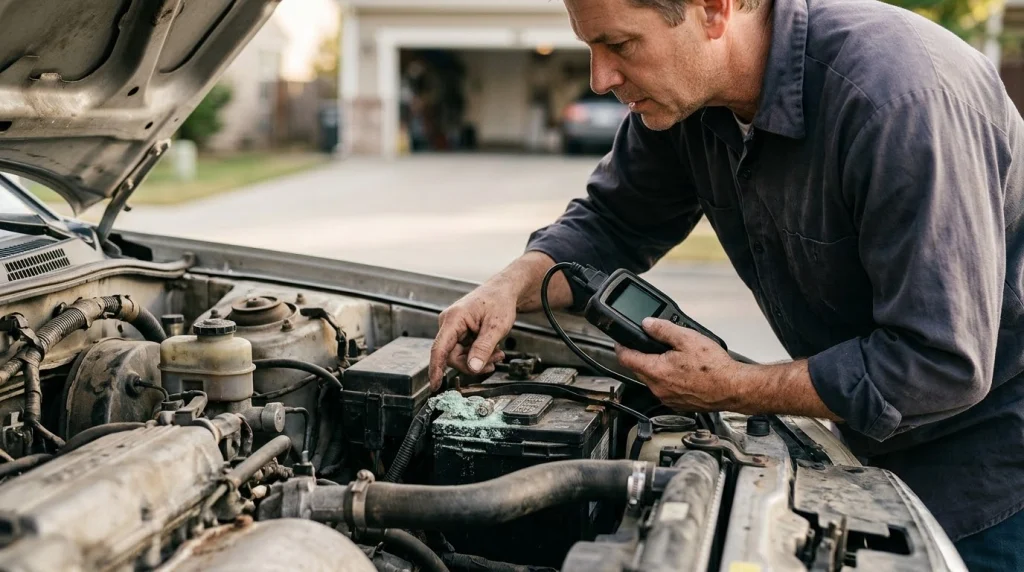
Good fuses mean the no-start comes from another part of the starting system. Work through the other suspects in order, starting with the simplest checks.
- Battery: weak charge, loose clamps, or green corrosion on the terminals.
- Starter motor: a single loud click, or silence with a strong battery.
- Ignition switch: no dash lights, or power that cuts out when you turn the key.
- Fuel pump: no hum from the tank when you turn the key to the run spot.
- Spark plugs: fouled or worn plugs that weaken the spark.
- Key or fob: a dead fob battery on a push-button car.
If the fuses test fine, the next step is a full check of the car that won’t start, starting with the battery and the starter. A scan tool can also read fault codes from the engine computer, and those codes often point to the failing part. When the cause stays unclear after the basic checks, a mechanic with a meter can trace the fault in one visit.
Car Fuse Kit
A car fuse kit holds spare blade fuses in the common ratings, plus a fuse puller, so you can swap a blown fuse at the roadside.
Frequently Asked Questions
Can a blown fuse drain a car battery?
A blown fuse cannot drain a car battery, because the melted strip breaks the circuit and stops current flow through that wire. The drain, if one exists, comes from another fault, such as a short circuit or a part that stays on. Test the battery and the charging system when a drain is the real symptom.
Will a car start with a blown main fuse?
A car will not start with a blown main fuse, because that fuse feeds power to the whole fuse box and the starting circuits. The dash stays dark, the lights stay off, and the starter stays silent. A main fuse is often bolted in place, so a mechanic should replace it when you are unsure.
Where is the starter fuse located?
The starter fuse sits in a fuse box under the hood or under the dashboard, and its spot varies by make and model. Check the diagram on the fuse box lid or in the owner’s manual for labels such as STARTER, ST, or CRANK. Some cars use a starter relay in place of a starter fuse.
Can a fuse blow without a short circuit?
A fuse can blow without a short circuit when a motor or pump wears out and draws more current than the circuit allows. Overloading one circuit with several accessories can do the same thing. Age and vibration can also weaken the metal strip until it breaks.
Can I drive with a blown fuse?
You can drive with a blown fuse only when it feeds a non-essential item, such as the radio or a power outlet. A blown fuse in a starting, lighting, or safety circuit can leave you stranded or make the car unsafe to drive. Replace the fuse and find the cause before a long trip.
Can a blown fuse cause a check engine light?
A blown fuse can turn on the check engine light when it cuts power to the engine computer or a sensor circuit. The computer logs a fault when it loses a signal it expects. A scan tool reads the code, and the code often points to the dead circuit.
Conclusion
A blown fuse can stop a car from starting when it guards the starter, fuel pump, ignition, or engine computer. Check the fuses before you blame the battery or the starter. If the car starts after a swap, keep a spare set in the glove box, and if the same fuse blows again, have the circuit tested.

Alex Carter is an automotive content writer at VastAutoParts, focusing on car parts, vehicle troubleshooting, automotive tools, product research, and practical car care guides.