
Is It Better to Fix a Starter or Replace It? What to Weigh
Quick Answer
For most daily drivers, replacing the starter is the better choice. A new or remanufactured unit restores full reliability, carries a warranty, and avoids paying for the same labor twice. Repair makes sense only when one cheap part failed, the starter is easy to reach, and the rest of the unit tests healthy.
- Repair wins when the fault is one part, such as worn brushes or burned solenoid contacts.
- Replacement wins when several parts are worn, the unit is old, or access is hard.
- Test the battery and cables first, since weak power can mimic starter failure.
- Compare total cost, not parts cost, because labor can exceed the price of parts.
Your car clicks or cranks slowly, and the starter is the prime suspect. The question now is whether to fix a starter or replace it, and the answer depends on what failed inside the unit. This guide walks through the failure types, the costs, and the checks that point to the right call for your car.
In this article
- What does fixing a starter mean?
- When is fixing a starter the better choice?
- When is replacing a starter the better choice?
- How much does fixing or replacing a starter cost?
- What should you check before you decide?
- Should you choose a new or remanufactured starter?
- How do you make the final call?
- What mistakes should you avoid?
- Frequently Asked Questions
What does fixing a starter mean?
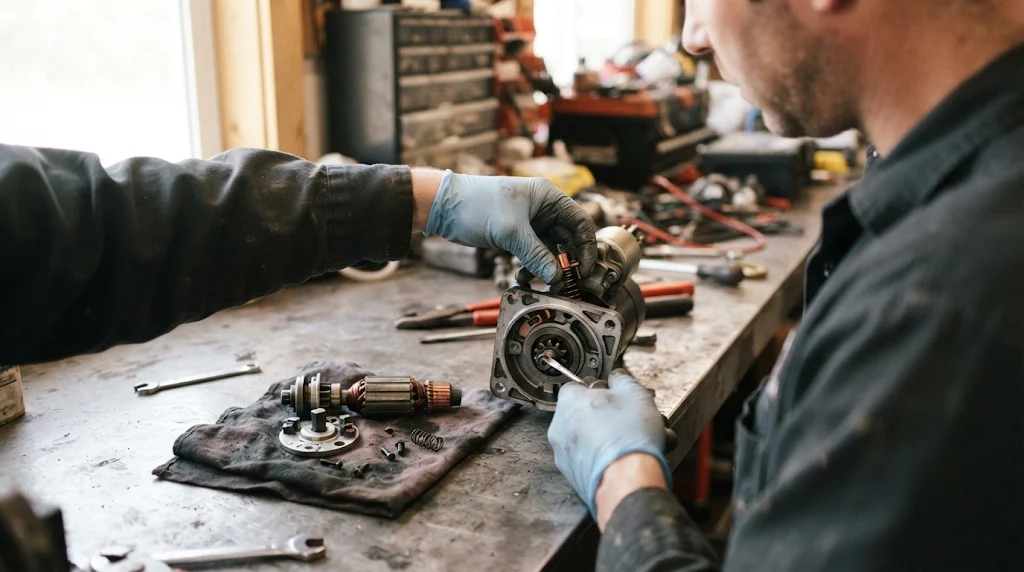
Fixing a starter means opening the unit and replacing only the parts that failed, such as the brushes, the solenoid contacts, or the solenoid itself. The motor housing, the armature, and the drive gear stay in place. This kind of repair is often called a rebuild when several wear parts are swapped at once.
Replacing a starter means removing the whole unit and fitting a new or remanufactured one. A remanufactured starter is a used unit that a factory has taken apart, cleaned, fitted with new wear parts, and tested. A new starter has all new parts and usually carries the longest warranty.
The two options solve different problems. A repair targets one known fault.
A replacement resets the whole unit, so hidden wear in other parts stops being a worry. Your choice depends on which problem you have.
When is fixing a starter the better choice?
Fixing a starter is the better choice when one part failed and the rest of the unit is sound. Worn brushes and burned solenoid contacts are the most common faults of this kind. Both are cheap parts, and both can be swapped with basic tools on many starter designs.
Repair also makes sense when the starter is easy to reach and remove. Easy access keeps labor low, so a second removal would not hurt much if the repair did not hold. Older and simpler cars often have starters that sit in open space under the hood.
A third case is a rare or classic car where a matching replacement is hard to find or costly. Keeping the original unit then matters more than saving time. If the fault is outside the starter itself, such as a corroded cable or a loose ground, you can often fix a starter without replacing it at all.
Repair kits keep the parts bill low. EngineerFix reports that a basic starter rebuild kit with brushes, bushings, and solenoid contacts often costs between $10 and $30. That low price is the main draw of a repair, but it covers parts only.
When is replacing a starter the better choice?
Replacing a starter is the better choice when the damage goes past one part. A shorted armature, burned windings, a cracked housing, or a damaged drive gear all point to replacement. These faults are hard to fix well, and a repair may not last.
Replacement also wins when the starter is hard to reach. Some cars hide the starter under the intake manifold or behind other parts, so removal alone takes hours. Paying that labor twice, once for a failed repair and once for the replacement, wipes out any parts saving.
High mileage is another reason to replace. A starter that has cranked an engine for many years has wear in several places at once.
Fixing one worn part leaves the next worn part ready to fail. A full unit gives you a fresh start across every wear point.
Daily drivers lean toward replacement for a simple reason. The car must start every morning, and a tested unit with a warranty gives more certainty than a partial fix. If you depend on the car for work or family trips, that certainty is worth real money.
How much does fixing or replacing a starter cost?
The gap between repair and replacement is mostly a parts gap, and labor can close it fast. The ranges below come from a VehicleRuns cost comparison and EngineerFix, and they cover parts only, not labor. Your car model and your area will shift the numbers.
| Option | Typical parts cost | What you get |
|---|---|---|
| DIY rebuild kit | About $10 to $30 | Brushes, bushings, and contacts for one repair |
| Solenoid only | About $30 to $120 | A new solenoid on the old motor |
| Remanufactured starter | About $100 to $250 | A tested unit with new wear parts |
| New aftermarket starter | About $120 to $350 | All new parts at a lower price than OEM |
| New OEM starter | About $250 to $600 or more | The factory part with the full warranty |
The takeaway is that a repair kit costs far less than any full unit, but the saving shrinks once labor enters the bill. VehicleRuns notes that labor can run from under an hour on some cars to several hours on others.
A shop charges for that time either way, so a hard to reach starter makes replacement the cheaper total job. For a full breakdown of parts and labor, see the cost to fix a car starter.
Warranty value belongs in the same math. EngineerFix reports that most replacement starters carry a warranty from one year to a lifetime, while a DIY rebuild carries none. A warranty does not lower the price you pay today, but it caps what a second failure would cost you.
What should you check before you decide?
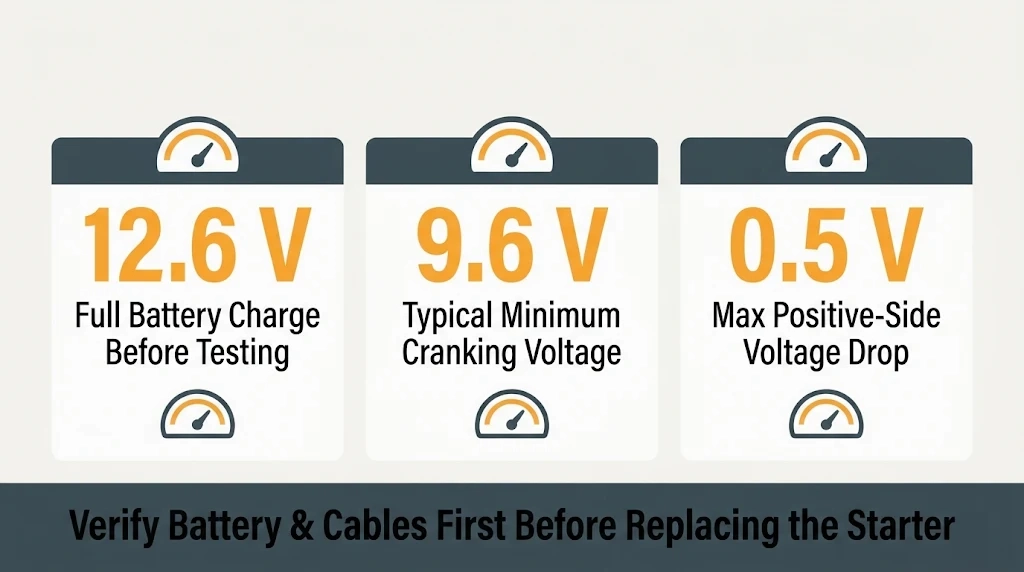
Check the battery and the cables before you blame the starter. A weak battery, a corroded terminal, or a loose ground can cause the same click or slow crank as a dead starter. Many starters get replaced when the real fault sits in the wiring.
Start with the battery. DENSO advises that the battery must be fully charged, at 12.6 volts or above, with clean cables and terminals, before any starter testing. A battery that lights the dash can still be too weak to crank an engine.
12.6 V
Full battery charge before testing
Source: DENSO
9.6 V
Typical minimum cranking voltage
Source: DENSO
0.5 V
Maximum positive-side voltage drop
Source: DENSO
Next, test voltage drop while cranking. DENSO states that a positive-side drop of 0.5 volts or less is acceptable. A larger drop points to a damaged cable, a poor connection, or a faulty magnetic switch.
The DENSO starter troubleshooting guide walks through each test step by step.
You can run most of these checks at home with a multimeter. Learn how to check a starter without removing it before you book a shop visit. If the starter still fails with good power and ground, the unit itself is the fault, and the fix or replace choice becomes real.
If you do remove the starter, test it on a bench before you decide its fate. A bench test shows whether the motor spins, the solenoid engages, and the drive gear extends. You can test your starter out of the car with jumper cables and a battery, following the steps in that guide.
Should you choose a new or remanufactured starter?
A new starter is the safer pick for a car you drive every day. Every part inside it is new, so no hidden wear carries over. The price is higher, but the unit starts from a clean slate.
A remanufactured starter is the value pick for most other cases. EngineerFix reports that remanufactured units typically cost 30% to 50% less than a brand-new starter. A factory rebuild replaces the wear parts and tests the unit, so a good reman unit can serve well for years.
Quality varies more with reman units than with new ones. Buy from a known supplier and check the warranty terms before you pay. A short warranty on a cheap reman unit can cost more than a new starter if the unit fails early.
One more check matters for any replacement. DENSO warns against fitting a starter with a lower power rating than the car needs, since excess current flow causes early failure. Match the power output and the fitting size to your car, not just the price.
How do you make the final call?
The final call comes down to four facts. They are what failed, how hard the starter is to reach, how long you plan to keep the car, and what a second failure would cost. Work through them in that order, and the answer usually becomes clear.
If you
Drive the car every day and need it to start each morning
Choose replacement, because a tested unit with a warranty removes the repeat-failure risk.
If you
Found one worn part and the starter is easy to reach
Choose repair, because a kit costs far less than a full unit.
If you
Own a rare or classic car with a scarce starter
Choose repair or a professional rebuild, because keeping the original unit may be the only option.
If you
Face high labor to remove the starter
Choose replacement, because you pay that labor once either way.
When two cards seem to fit, let labor decide. If removal is cheap and easy, a repair is a low-risk try. If removal is costly, replacement is the one-time fix that ends the question.
What mistakes should you avoid?
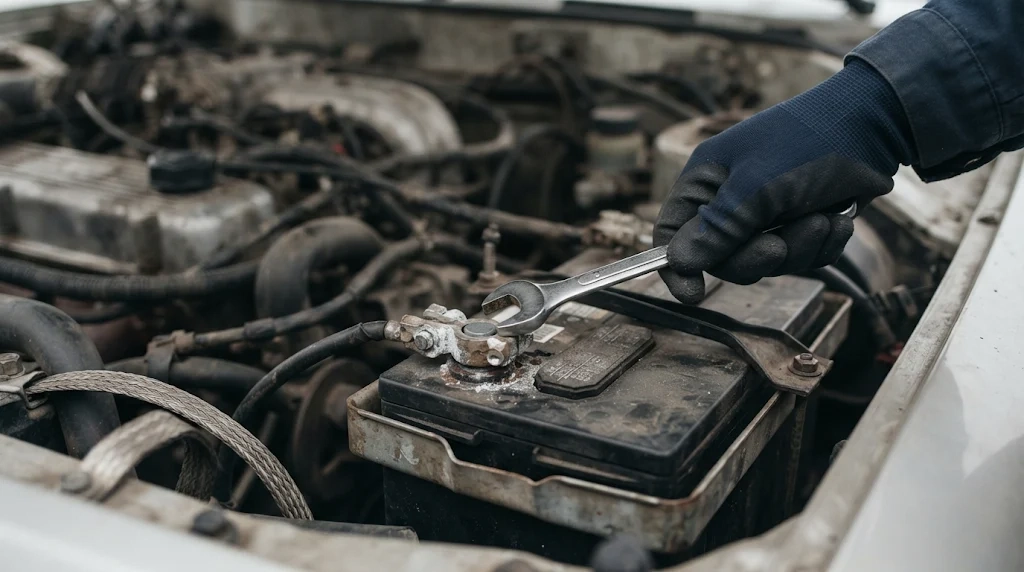
The costliest mistake is replacing the starter before testing the battery and cables. A new starter on a weak circuit will crank slowly too, and the owner ends up paying twice. Test first, then buy parts.
Other common mistakes are easy to dodge once you know them:
- Reusing corroded cable ends or a frayed ground strap after fitting a new starter.
- Skipping the flywheel ring gear check when the starter grinds while cranking.
- Ignoring an oil leak that drips onto the starter and will damage the new unit too.
- Repairing a starter with heavy wear only to save on parts, then paying labor twice.
- Buying the cheapest replacement without checking its warranty or power rating.
Warning
A starter carries high current from the battery. Disconnect the negative battery cable before you touch the starter, or a slipped wrench can short the cable and cause burns or a fire.
One last check pays off after any fix. Start the car several times over a few days and listen for slow cranking or a return of the click. A fault that comes back fast points to a cause the first fix missed.
Starter Motor
A replacement starter motor is the part you need if you decide that replacing the unit is the right call for your car.
Frequently Asked Questions
How long does a starter repair take?
A starter repair takes about one to three hours for a home mechanic with the unit already removed. Most of that time goes to disassembly, cleaning, and careful reassembly of small spring-loaded parts. Removal and refitting add more time, based on how easy the starter is to reach.
Can you replace just the starter solenoid?
Replacing just the solenoid is possible on many starter designs where the solenoid bolts on as a separate part. The motor must test healthy first, since a new solenoid cannot fix worn brushes or a shorted armature. Check your starter design before you order parts.
Does a rebuilt starter last as long as a new one?
A rebuilt starter can last as long as a new one when the rebuild replaces all wear parts and the core parts test healthy. A partial repair lasts less long, because the parts left in place keep their old wear. The quality of the rebuild matters more than the label on the box.
Can a bad starter drain the battery?
A bad starter can drain the battery when it draws excess current or when its solenoid sticks in the engaged position. Repeated failed cranking also drains a healthy battery fast. If the battery keeps going flat after a jump, test the starter draw before you blame the battery.
Should you replace the starter and battery together?
Replacing the starter and battery together is needed only when tests show both are weak. A failing starter can wear a battery down, and a weak battery can overheat a starter, so test both parts. Replace the one that fails its test, and keep the one that passes.
What happens if you keep driving with a failing starter?
Driving with a failing starter risks a no-start at the worst moment, with no warning before the last failure. A dragging starter also strains the battery and cables, which can add to the repair bill. Fix the fault while the car still starts, not after it strands you.
Conclusion
Replacing the starter is the better move for most drivers, while fixing makes sense for one cheap, clear fault. If you are still unsure whether to fix a starter or replace it, test the battery and cables first, then price both options for your car. That one check keeps you from paying for a part you never needed.

Alex Carter is an automotive content writer at VastAutoParts, focusing on car parts, vehicle troubleshooting, automotive tools, product research, and practical car care guides.