
How to Check if a Starter Is Bad Without Removing It: Tests
Quick Answer
You can check a starter without removing it by ruling out battery, cable, and control circuit problems first. Listen for clicking, check the battery’s charge, inspect the connections, and examine the starter relay. If adequate power and the correct start signal reach the starter but the engine will not crank, the starter becomes a strong suspect.
- Identify whether the engine cranks or stays still.
- Listen for clicks, grinding, or unusual starting sounds.
- Check battery voltage and cable connections.
- Inspect the starter fuse, relay, and starting interlocks.
- Confirm starter power and control voltage if the simple checks pass.
Turning the key and hearing a click without the engine starting can make you suspect a faulty starter. However, a weak battery or loose electrical connection can produce similar symptoms.
Learning how to check if a starter is bad without removing it can help you avoid replacing a working part. The following checks explain how to narrow down the cause safely, starting with the easiest tests.
Most basic checks can be completed from the battery, dashboard, or fuse box. Tests involving exposed starter terminals or energized electrical circuits are better left to a qualified technician.
In this article
- Understanding Starter Problems
- Signs of a Bad Starter
- How to Check the Starter
- Testing Battery Voltage
- Checking Battery Connections
- Checking the Relay and Fuse
- Electrical Testing Without Removal
- Understanding Test Results
- Testing Without Tools
- Mistakes and Safety Risks
- When Replacement Is Needed
- Frequently Asked Questions
- Conclusion
How Does a Starter Work, and What Can Go Wrong?
A starter motor uses electrical power from the battery to turn the engine until it can run on its own. The starting system includes several parts that must work together.
On a conventional vehicle, the ignition switch or start button sends a request through the control system. A starter relay may pass the signal to the starter solenoid.
The starter solenoid acts as an electrical switch and helps engage the starter drive with the engine’s ring gear. The starter motor then rotates the engine.
A problem anywhere in this process can prevent the engine from cranking.
What Is the Difference Between No-Crank and No-Start?
A no-crank condition means the engine does not turn when you try to start it. The starter system is one possible cause.
A crank-no-start condition means the engine turns over but never begins running. In that situation, fuel delivery, ignition, or another engine system may be responsible.
Distinguishing these conditions prevents unnecessary starter testing. The AAA starting problem guide describes several different faults that can prevent an engine from starting.
What Are the Signs of a Bad Starter?
A failing starter may cause clicking, slow cranking, grinding, or intermittent starting. However, none of these symptoms alone proves that the starter motor is defective.
One Click but the Engine Does Not Crank
A single click may mean the starter solenoid is trying to operate without successfully turning the engine. Possible causes include poor electrical connections, weak battery output, or worn starter components.
Pay attention to whether the dashboard lights remain bright. Bright lights may suggest that some electrical power is available, but they cannot confirm battery health.
Rapid Clicking When Turning the Key
Rapid clicking often points toward inadequate electrical power reaching the starting system. Low battery charge, excessive cable resistance, or poor connections can cause repeated solenoid operation.
Check the battery before replacing the starter. Repeated clicking is not enough to identify a defective starter motor.
Grinding or Whirring During Starting
Grinding can indicate a problem with starter gear engagement or the engine’s ring gear. A free-spinning sound without engine rotation may indicate that the starter drive is not engaging.
Stop attempting to start the engine when grinding occurs. Continued attempts may damage the gear teeth or related components.
Intermittent Starting Problems
An intermittently failing starter may work during one attempt and fail during another. Worn contacts, heat-related electrical faults, and loose connections are possible explanations.
Intermittent symptoms require testing while the fault is present. A successful start does not automatically prove the entire starting system is healthy.
How to Check a Starter Without Removing It
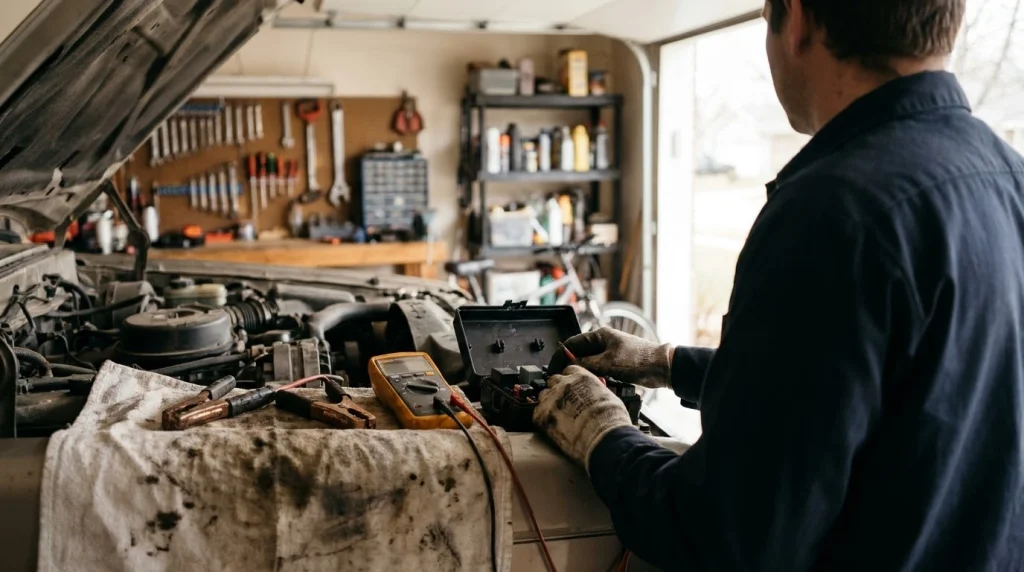
The most reliable approach is to inspect the starting system in a logical order. Check the battery and external circuits before treating the starter as the cause.
These steps can narrow down the fault without removing the starter from the engine.
Step 1
Secure the Vehicle
Park on level ground, apply the parking brake, and select Park or Neutral as appropriate. Keep people clear of moving engine components.
Step 2
Identify the Starting Sound
Make a brief starting attempt and listen for a click, repeated clicks, grinding, or normal cranking. Note whether the engine rotates.
Step 3
Check the Battery
Inspect the battery and measure its resting voltage with a digital multimeter. Have the battery load-tested if its condition remains uncertain.
Step 4
Inspect Battery Cables
Look for corrosion, loose clamps, damaged insulation, or disconnected ground cables. Repair connection problems before continuing.
Step 5
Inspect the Starter Fuse and Relay
Use the vehicle’s fuse-box diagram to identify the correct components. Check their condition according to the manufacturer’s instructions.
Step 6
Verify Starter Power and Signal
Have a qualified technician measure starter supply voltage and the control signal during a starting attempt. These tests can locate hidden electrical faults.
Step 7
Evaluate the Starter
If battery performance, cable voltage delivery, and the start signal meet specifications, a starter or solenoid fault becomes more likely.
Stop when you find a confirmed defect. A failed battery or damaged cable should be corrected before further starter diagnosis.
How Do You Test Battery Voltage Before the Starter?
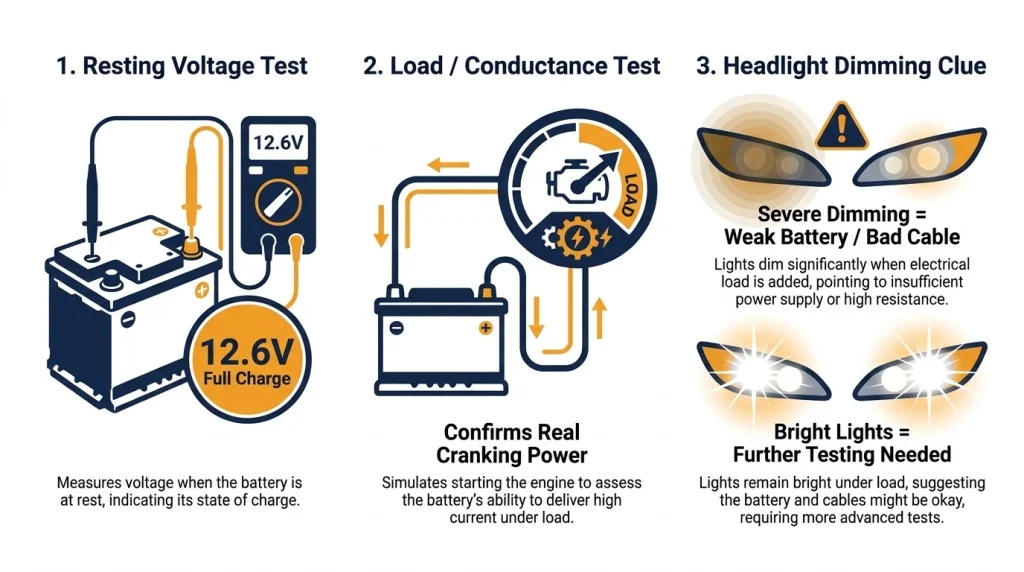
Battery voltage testing helps identify a discharged battery before you investigate the starter motor. A digital multimeter can measure battery voltage without removing the starter.
Check Resting Battery Voltage
Turn off the engine and electrical accessories. Set your multimeter to measure DC voltage and connect its probes across the battery terminals.
For a conventional 12-volt lead-acid automotive battery, a fully charged resting reading is approximately 12.6 volts. Interstate Batteries confirms this in its battery testing guidance.
A lower reading can indicate reduced charge. Charge and test the battery before assuming the starter is faulty.
Why Is Resting Voltage Not Enough?
Resting voltage shows battery charge, not its complete ability to supply starter current. A weakened battery may show a reasonable reading without performing well under a heavy load.
A professional battery load or conductance test provides better evidence about battery health. If the battery fails that test, correct the battery problem first.
Tip
Take the voltage reading directly at the battery posts rather than on corroded cable clamps. This helps separate battery condition from connection problems.
What Does the Headlight Test Tell You?
The headlight test provides a quick clue about electrical power during a starting attempt. Turn on the headlights and observe them while someone briefly tries to start the engine.
Severe dimming may indicate a weak battery, a poor connection, or excessive starter load. Lights that remain bright do not prove that the starter is defective.
Use the observation to guide further testing, not as a final diagnosis.
How Can Battery Cables Cause Starter Problems?
Loose or corroded cables can prevent adequate current from reaching a working starter. Electrical resistance may increase when connections deteriorate.
Inspect the following areas with the engine off:
- Positive battery terminal and cable clamp.
- Negative battery terminal and cable clamp.
- Visible battery cable insulation.
- Accessible engine-to-body ground connections.
- Visible signs of heat damage or corrosion.
Battery cables should not have loose clamps or damaged exposed conductors. A clean-looking cable can still have internal corrosion.
If a connection needs cleaning or repair, follow the vehicle’s battery disconnection procedure. Use suitable eye protection and avoid tools bridging the battery terminals.
High resistance can be confirmed through a voltage-drop test performed while the circuit is loaded. That test is more informative than visual inspection alone.
Can a Bad Starter Relay or Fuse Stop the Engine?
A failed starter fuse or relay can prevent a working starter from receiving the command to operate. These components should be checked before replacing the motor.
How Do You Check the Starter Fuse?
Locate the correct fuse using the owner’s manual or fuse-box diagram. Inspect or test it using the procedure specified for your vehicle.
If a fuse has failed, determine why before replacing it. Use the specified replacement rating rather than a higher-rated fuse.
How Do You Check the Starter Relay?
A starter relay controls part of the electrical path used to activate the starter. A relay may click while its internal contacts fail to deliver power.
Consult the manufacturer’s instructions for relay testing. Some systems permit comparison with an identical interchangeable relay, but this is not appropriate for every vehicle.
AutoZone explains relay diagnosis and testing methods in its starter relay testing guide.
Can Park, Neutral, or the Clutch Switch Be Responsible?
Starting interlock switches help prevent an engine from cranking under unsafe operating conditions. A faulty switch may block the starter command.
On an automatic vehicle, an approved test in Neutral may help identify a transmission range switch problem. Keep the service brake applied and the vehicle secured.
Manual vehicles may use a clutch-pedal switch. Push-button systems can also depend on brake input, key recognition, and electronic start authorization.
How Can You Electrically Test an Installed Starter?
Electrical testing can help distinguish a defective starter from a faulty power supply or control circuit. The starter does not need removal for every test.
However, starter terminals can carry substantial current. Testing them requires correct vehicle wiring information and safe access.
What Is a Starter Control Signal Test?
A control signal test checks whether the starter solenoid receives the command to operate. The test is normally performed while a start request is made.
If the required signal is absent, the problem may be upstream. Possible causes include a relay, switch, control module, or wiring fault.
If the correct signal reaches the solenoid, further power and load testing is needed. The presence of a signal does not prove the motor is defective.
What Is a Voltage-Drop Test?
A voltage-drop test measures electrical loss across cables or connections while current flows. Excessive loss can prevent the starter from receiving enough usable power.
Technicians compare losses in the positive and ground circuits against the vehicle’s specifications. A poor ground or corroded cable can resemble starter failure.
Starter manufacturers recommend checking battery condition and cable voltage drop before condemning the starter. A professional can perform these tests without removing the unit.
When Do Electrical Results Point to the Starter?
A starter becomes a stronger suspect when its electrical supply and control signal meet specifications but it still cannot crank the engine. Mechanical engine resistance must also be considered.
A seized engine or damaged engagement gear can produce symptoms that resemble starter failure. Qualified diagnosis may be needed before choosing replacement.
How Do You Interpret Different Starter Test Results?
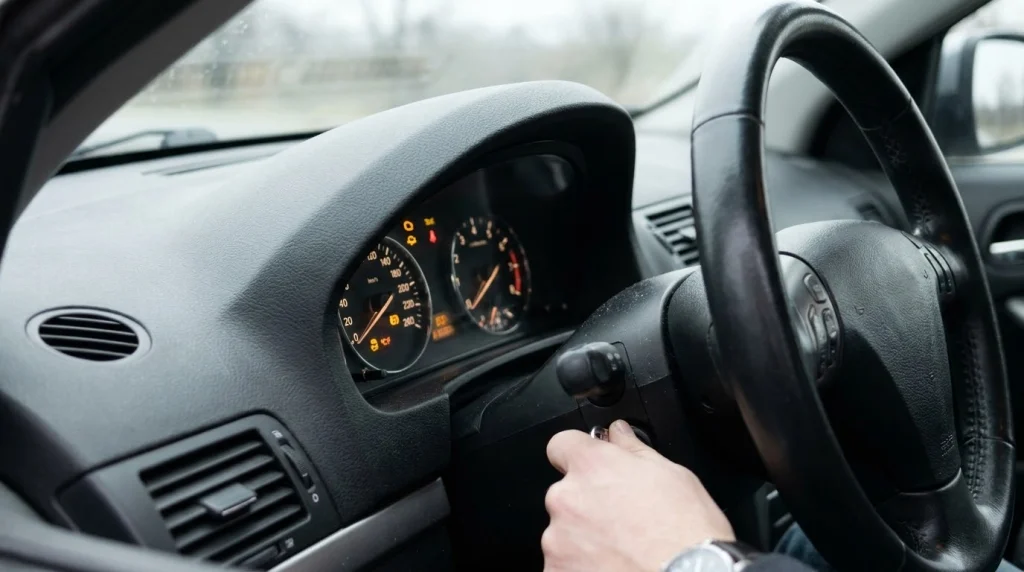
Starter symptoms are more useful when combined with battery and circuit checks. The table compares common observations with likely explanations and sensible next steps.
| Observation | Possible Cause | Next Check |
|---|---|---|
| Rapid clicking | Low battery voltage or poor connections | Test battery and cables |
| Single click, no crank | Battery, cable, solenoid, or starter fault | Load-test battery and check voltage delivery |
| No click or crank | Battery, fuse, relay, interlock, or wiring | Check start authorization and control circuit |
| Slow cranking | Weak battery, cable loss, or starter load | Test battery and circuit voltage drop |
| Grinding or free spinning | Starter drive or gear engagement problem | Stop cranking and inspect professionally |
| Normal engine cranking | Fuel, ignition, or engine control problem | Diagnose the crank-no-start condition |
The main takeaway is that sound alone cannot confirm starter failure. Battery testing and circuit measurements provide stronger evidence.
Can You Check a Bad Starter Without Any Tools?
You can identify clues about starter problems without tools, but you cannot reliably confirm an internal starter defect using observations alone.
Start by determining whether the engine actually turns. Then observe the starting sound and dashboard behavior.
Look for visible battery corrosion or loose connections without touching energized electrical parts. Check for security warnings or unusual start-button messages.
If your vehicle allows it, compare starting behavior in the permitted transmission positions. Follow the owner’s manual and keep the vehicle secured.
If you
Hear rapid clicks and see severe light dimming
Choose battery and cable testing, because low electrical power can imitate starter failure.
If you
Hear a single click with no engine movement
Choose electrical diagnosis, because the battery, solenoid, and cables still need checking.
These observations help decide where to begin. They cannot replace battery load testing or electrical diagnosis when the cause remains uncertain.
What Should You Avoid When Testing a Starter?
Unsafe or incomplete testing can damage the electrical system and lead to an incorrect diagnosis. Avoid shortcuts that bypass the vehicle’s normal starting controls.
- Do not bridge starter terminals with a screwdriver or loose wire.
- Do not bypass the transmission or clutch safety switches.
- Do not replace a starter based on clicking alone.
- Do not repeatedly crank an engine that makes grinding sounds.
- Do not assume bright headlights prove the battery is healthy.
- Do not work beneath a vehicle supported only by a jack.
Tapping a starter is sometimes presented as a diagnosis for worn internal parts. However, the result is not conclusive, and access may place you near hazardous components.
Use electrical testing and confirmed circuit measurements instead of relying on tapping or bypass methods.
Warning
Shorting starter terminals can cause sparks, burns, or unexpected engine cranking. Never bypass safety controls; use the manufacturer’s diagnostic procedure instead.
When Should You Replace the Starter?
Starter replacement is reasonable when proper testing identifies the starter or its solenoid as the cause of the failure. The diagnosis should exclude common external faults first.
A technician should confirm the following:
- The battery is adequately charged and passes its required test.
- The main power and ground circuits deliver acceptable voltage.
- The starter receives the correct control signal.
- The engine is mechanically capable of rotating.
- The starter still fails to crank or engage correctly.
Some starter assemblies contain components that may be serviceable separately. Replacement or repair depends on the design, condition, and available parts.
Do not assume replacing the motor will correct a faulty relay, damaged cable, or failed control module. Accurate diagnosis reduces unnecessary repairs.
Digital Multimeter
A digital multimeter helps you measure battery voltage during basic starting-system diagnosis.
Frequently Asked Questions
Can a starter fail only when the engine is hot?
A starter can fail intermittently when hot because temperature changes may affect worn internal parts or electrical connections. Heat-related faults can also occur in wiring and control components. Testing during the failure helps identify whether the problem is inside the starter or elsewhere in the system.
Does a clicking relay mean the starter has power?
A clicking relay does not prove that electrical power reaches the starter motor because its internal contacts can fail. A relay coil may operate while the output circuit remains open or has excessive resistance. Testing the circuit under the correct conditions is needed to confirm power delivery.
Can a security system prevent the starter from working?
A vehicle’s security or immobilizer system may prevent starting when it does not recognize an authorized key or start request. Some vehicles inhibit cranking, while others inhibit engine operation after cranking begins. Check dashboard security messages and follow the owner’s manual before replacing starter components.
Can an engine problem look like a bad starter?
A mechanically locked engine can resemble a failed starter because the starter cannot rotate the engine normally. Excessive mechanical resistance can also cause slow cranking or high electrical load. A technician should investigate mechanical binding before deciding that the starter motor needs replacement.
Can oil leaking onto a starter damage it?
Oil contamination can contribute to starter problems when fluid reaches sensitive electrical or mechanical components. The effect depends on the starter’s construction and the extent of contamination. Repairing the leak and checking the starter’s condition helps prevent repeated problems after any replacement.
Can a replacement starter still cause a no-crank problem?
A replacement starter can still leave a vehicle unable to crank if another starting-system fault remains unresolved. Poor cable connections, incorrect installation, defective replacement parts, or control problems can cause continued failure. Verify the circuit and installation before replacing another component.
Conclusion
Learning how to check if a starter is bad without removing it starts with battery testing, connection inspection, and verifying the starting circuit. Clicking sounds alone cannot confirm failure.
If battery and circuit tests pass but the engine still will not crank, have the installed starter and engine operation professionally checked before replacing parts.

Alex Carter is an automotive content writer at VastAutoParts, focusing on car parts, vehicle troubleshooting, automotive tools, product research, and practical car care guides.