
Why Does My Car Start and Die Immediately? Fixes That Work
Quick Answer
Your car can start and then immediately die when fuel pressure drops, airflow fails, or the anti-theft system cuts in. The engine fires on the first burst of fuel and spark, then stalls a few seconds later. Watch how long the engine runs and what the dash shows, since the stall pattern points to the cause.
- A clean cut after 1 to 2 seconds with a flashing security light points to the anti-theft system.
- A sputter after 2 to 4 seconds points to fuel pressure dropping off.
- An engine that stays alive only with your foot on the gas points to idle air trouble.
- Check the security light, listen for the fuel pump hum, and scan for codes before you replace parts.
You turn the key, the engine catches, and then it dies before you can shift into gear. This guide covers the most common causes and the checks you can run at home. You will learn to read the stall pattern and narrow the fault to fuel, air, sensors, security, or charging.
In this article
- What does it mean when a car starts then dies right away?
- How can the stall pattern point to the cause?
- Why does low fuel pressure kill the engine after starting?
- How do idle air and throttle faults stall the engine?
- What sensors can shut the engine down after startup?
- Can the anti-theft system stop a car right after it starts?
- Could a weak battery or failing alternator cause it?
- How do you diagnose a car that starts then dies?
- What should you do if the engine dies in traffic?
- When should you stop trying and call for help?
- Frequently Asked Questions
- Conclusion
What does it mean when a car starts then dies right away?
A start-then-die stall means the engine can fire but cannot hold a steady idle. The first seconds use extra fuel and a fixed startup plan, so a fault may show only when the engine shifts to normal idle control.
An engine needs fuel, air, and spark in the right mix to keep running. A clean cut points to an electronic shutoff, while a sputter points to fuel or air starving.
This differs from a car that has power but won’t start, where the engine never fires at all.
How can the stall pattern point to the cause?
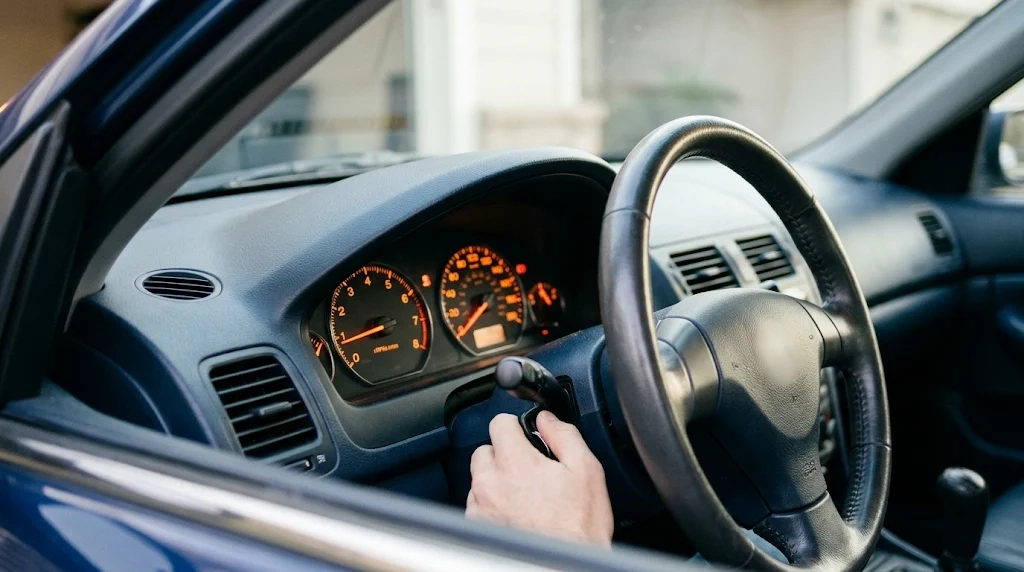
The stall pattern is the fastest clue, because each cause kills the engine in its own way. Note how long the engine runs, how it sounds as it dies, and which dash lights stay on.
The table below matches common stall patterns to their most likely causes.
| Stall pattern | What you notice | Most likely cause |
|---|---|---|
| 1 to 2 seconds | Clean cut, security light flashing | Anti-theft immobilizer fault |
| 2 to 4 seconds | Strong start, then sputter and fade | Low fuel pressure or weak pump |
| Dies on throttle | Dies when you press the gas | Dirty MAF sensor or vacuum leak |
| 5 to 10 seconds | Idle hunts, then stalls | Dirty throttle body or idle air fault |
| Stays alive on gas | Runs only while you hold the pedal | Idle air or throttle control fault |
Match your stall to one row first, then test that system before you replace parts.
A flashing security light is the clearest single clue. If the light flashes during the stall, test the spare key before you touch the engine. If no light flashes, move to fuel and air checks.
Why does low fuel pressure kill the engine after starting?
Low fuel pressure kills the engine because the pump primes the lines for a short burst, then cannot hold pressure. The engine burns the fuel left in the rail and stalls once that fuel runs out.
Turn the key to On without cranking and listen near the rear seat. A healthy pump hums for about 2 to 3 seconds as it primes the rail. Silence can mean a dead pump, a blown fuse, or a bad relay.
Tip
Swap the fuel pump relay with an identical relay from the same fuse box, such as the horn relay, and try to start the car. If the engine stays running, buy a new relay.
A clogged fuel filter can cause the same stall by choking flow under load. The engine starts on the fuel past the filter, then starves as demand rises. A weak pump, a bad relay, and a clogged filter all produce the same fade, so test pressure before you buy parts.
Fuel trouble often shows up first as hard starting. A car that starts after multiple attempts may have a pump that is losing its prime between drives.
How do idle air and throttle faults stall the engine?
Idle air faults stall the engine because a closed throttle leaves only a narrow path for air at idle. Carbon around the throttle plate or a stuck idle valve can close that path and choke the engine.
The mass airflow sensor, called the MAF sensor, measures the air that enters the engine. The engine computer uses that reading to set the fuel dose. A dirty MAF sensor sends a wrong reading, so the mix runs too rich or too lean and the engine dies at idle.
AutoZone lists stalling shortly after starting among the symptoms of a bad mass airflow sensor.
A vacuum leak lets in air that the MAF sensor never measures. A split intake hose or a loose vacuum line leans the mix past the point where idle can hold. Listen for a hiss under the hood while a helper cranks the engine.
A throttle body caked with carbon causes a rough, hunting idle before the stall. The engine may stay alive if you hold the gas pedal down a little, because the open plate lets in the air idle control cannot.
What sensors can shut the engine down after startup?
The crankshaft position sensor and the camshaft position sensor give the computer its timing reference. If either signal drops out after startup, the computer cuts spark and fuel at once.
A failing crankshaft sensor often works when cold and fails as heat builds. The stall feels sudden, like the key was switched off, and the tachometer may drop to zero first. Code P0335 points to a crankshaft sensor circuit fault, while codes P0340 to P0344 point to the camshaft sensor.
A faulty coolant temperature sensor can also stall a cold engine. The sensor tells the computer how cold the engine is, and a wrong reading sets the wrong fuel dose.
Sensor faults are often intermittent, which makes them hard to catch. A car that starts only sometimes may have a sensor that fails only when hot or only on damp mornings. Scan for stored and pending codes even when the check engine light stays off.
Can the anti-theft system stop a car right after it starts?
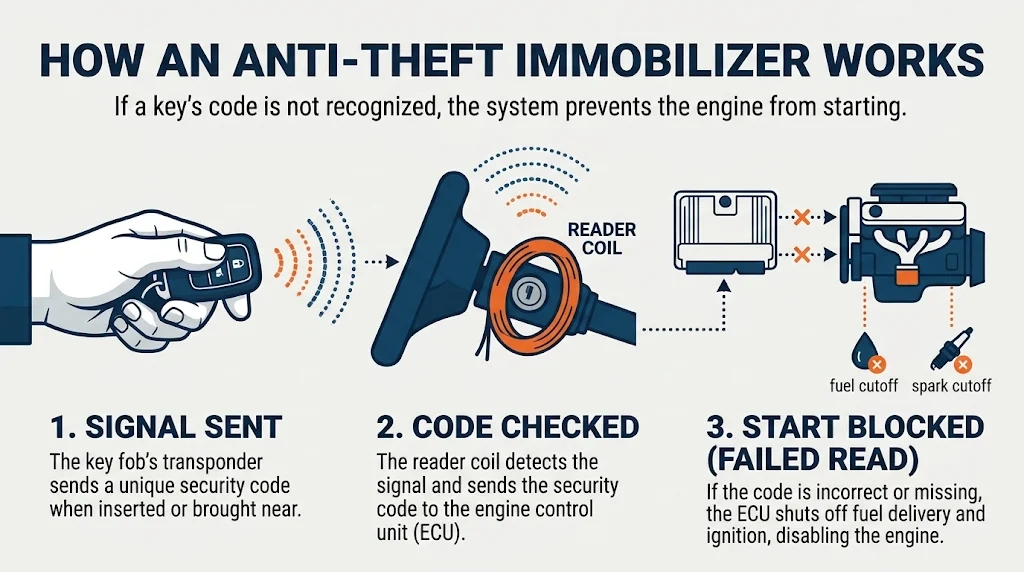
The anti-theft system can stop a car right after it starts by cutting fuel or spark when it fails to read the key. The engine fires, runs for about 1 to 2 seconds, and then cuts out cleanly.
The key holds a small chip that the car reads at startup. If the chip signal is weak or the reader coil is dirty, the computer treats the key as wrong and shuts the engine down. A flashing key or security light on the dash is the telltale sign.
Try the spare key first, since a dropped fob can lose its signal. For a push-button car, press the fob against the start button while you press the brake. If the spare key works, the first key needs a new battery or a reprogram at a dealer or locksmith.
A security relearn can help on some models, and it costs nothing to try. Turn the key to On and wait about 10 to 15 minutes until the security light stops flashing. Then turn the key off, wait a few seconds, and try to start the engine.
Could a weak battery or failing alternator cause it?
A weak battery rarely causes a start-then-die stall, because the battery already did its job by cranking the engine. A failing alternator is the more likely charging fault, since it powers the car once the engine runs.
Once the engine runs, the alternator feeds the coils, the injectors, and the computer. If the alternator stops charging, the car drains the battery until the voltage falls too low to run the engine.
AAA lists engine stalling among the signs of a failing alternator, often with the battery light on.
Loose or corroded battery cables can mimic the same fault by cutting power under load. Twist each cable end by hand and look for a white or blue crust on the posts.
If the car dies again even with a jump, the fault sits past the battery in the charging circuit or the fuel system.
How do you diagnose a car that starts then dies?
A short test sequence narrows the fault before you spend money on parts. Run the checks in order, since each one rules out a whole system.
Park on level ground, set the brake, and keep your hands clear of belts and fans. Work with the engine off unless a step says otherwise.
Step 1
Watch the dash lights
Turn the key to On and note the security light. A flashing key icon means the anti-theft system is the first suspect.
Step 2
Listen for the fuel pump
Turn the key to On and listen for a hum from the rear seat. A short hum means the pump primes, while silence points to the pump, fuse, or relay.
Step 3
Try the throttle test
Start the engine and hold the gas pedal down a little. An engine that stays alive on light throttle has an idle air fault.
Step 4
Scan for trouble codes
Plug an OBD2 scanner into the port under the dash and read stored and pending codes. Codes for the MAF sensor, crankshaft sensor, or fuel pressure narrow the search fast.
Step 5
Inspect the intake path
Check the intake hose, vacuum lines, and throttle body for splits, loose clamps, and carbon buildup. A hiss or a cracked hose explains a lean stall.
Stop after any step that finds the fault and fix that fault first. Replacing parts without a test wastes money and can hide the real cause.
What should you do if the engine dies in traffic?
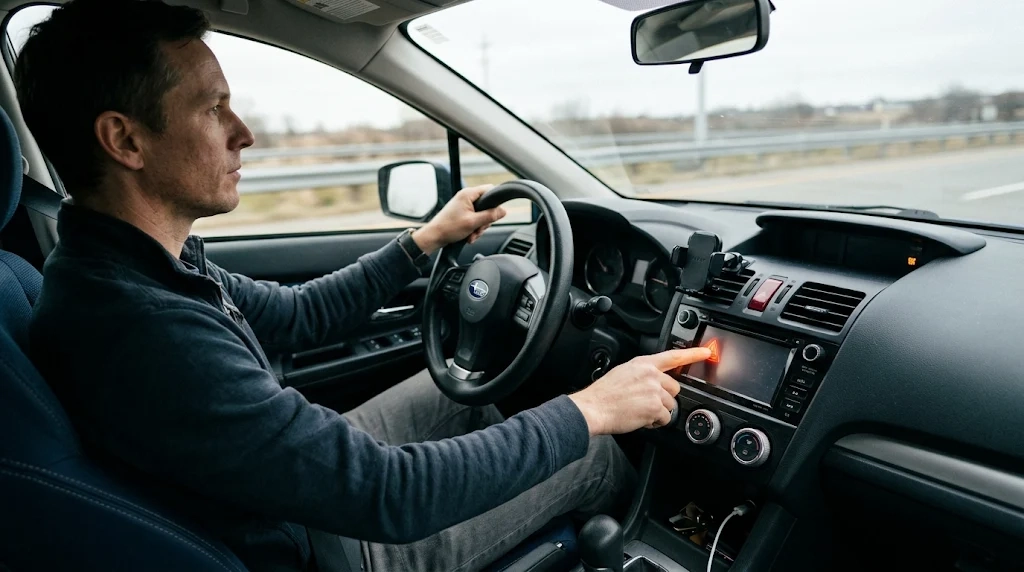
An engine that dies in traffic is a safety problem first and a repair problem second. Steer to the side of the road, switch on the hazard lights, and stop the car clear of traffic.
Shift to Neutral and coast to the shoulder if you can do so safely. Try a restart only once you are clear of traffic, with the car in Park or Neutral. If the engine catches, let it run for a few minutes before you drive on.
Consumer Reports advises drivers on what to do when your car stalls, starting with hazard lights and a move out of traffic.
Warning
If you smell fuel or see smoke, switch the engine off, leave the car, and call for help from a safe distance. Do not crank the engine again until the leak is found.
Do not keep driving a car that stalls at each stop, since a stall can leave you without power steering and brakes. Call a tow truck instead of risking the drive to a shop.
When should you stop trying and call for help?
Stop trying when the stall repeats the same way after the basic checks, or when any warning light flashes. A shop with a scan tool and a fuel pressure gauge can find faults that home checks cannot.
Some faults need dealer tools, such as immobilizer reprogramming and computer faults. Fuel work also needs care, since fuel lines hold pressure.
Do
- Test the spare key first
- Listen for the fuel pump hum
- Scan for codes before buying parts
Avoid
- Cranking the engine over and over
- Spraying starter fluid into the intake
- Replacing the fuel pump on a guess
If the car will not stay running, have it towed to the shop.
OBD2 Scanner
An OBD2 scanner reads the trouble codes that point to the sensor or system behind the stall.
Frequently Asked Questions
Can low fuel cause a car to stall after starting?
Low fuel can stall a car after starting when the pump sucks air instead of fuel on a near-empty tank. A faulty gauge can read a quarter tank while the tank sits empty. Add a few gallons and try again before you test parts.
Why does my car die only on cold starts?
A car that dies only on cold starts often gets the wrong fuel dose for a cold engine. A faulty coolant temperature sensor can tell the computer the engine is warm. A scan tool that shows the coolant reading will confirm the fault.
Can a clogged air filter stall a car after starting?
A clogged air filter can stall a car after starting by choking the air the engine needs at idle. The engine fires, then dies as the blocked filter starves the mix. Check the filter first, since it takes minutes to inspect.
Why does my car start then die after a battery change?
A car can start then die after a battery change because the computer lost its learned idle settings. The engine needs a short relearn drive to set the idle air values again. If the stall clears after a few drives, the relearn fixed it.
Can bad spark plugs cause a car to start then die?
Bad spark plugs rarely cause a clean start-then-die stall, since weak spark shows up first as misfires and rough running. Fouled plugs can stall an engine that already idles poorly, but seldom kill a healthy idle. Check fuel, air, and sensors before the plugs.
Can a loose gas cap cause a car to stall?
A loose gas cap seldom stalls a car, since it sets a check engine light long before it affects idle. A stuck-open purge valve in the same vapor system can flood the intake with fuel vapor and stall the engine. If the cap is tight and the stall stays, test the purge valve.
Conclusion
A car that starts and then immediately dies usually loses fuel pressure, idle air, or the key signal a few seconds after startup. Match the stall pattern to the cause, run the five checks, and scan for codes before you buy parts. If the engine will not stay running, have it towed to a shop.

Alex Carter is an automotive content writer at VastAutoParts, focusing on car parts, vehicle troubleshooting, automotive tools, product research, and practical car care guides.