
What Are Signs of a Bad Starter Relay? How to Test
Quick Answer
The main signs of a bad starter relay are an engine that will not crank, intermittent starting, clicking without engine movement, or a starter that keeps running after you release the key. Electrical burning smells can also signal trouble. However, a weak battery, damaged wiring, or faulty starter can produce similar symptoms.
- No crank or starter response when starting the car.
- A click without the engine turning over.
- Starting works sometimes but fails unexpectedly.
- The starter continues running after the start command ends.
- Heat damage or a burning smell near the relay.
You turn the key or press the start button, but your engine does not respond. A faulty starter relay might be stopping the electrical signal that activates your starter.
Knowing what are signs of a bad starter relay can help you avoid replacing the wrong component. This guide explains the symptoms, their possible causes, and safe ways to narrow down the fault.
You will also learn how to distinguish relay failure from battery problems, starter motor faults, and wiring issues.
In this article
- How a Starter Relay Works
- Common Symptoms
- Understanding Starter Sounds
- Problems That Mimic Relay Failure
- Safe Diagnostic Checks
- Multimeter Testing
- Causes of Relay Failure
- Repair and Replacement Decisions
- Preventing Starting Problems
- Frequently Asked Questions
How Does a Starter Relay Work?
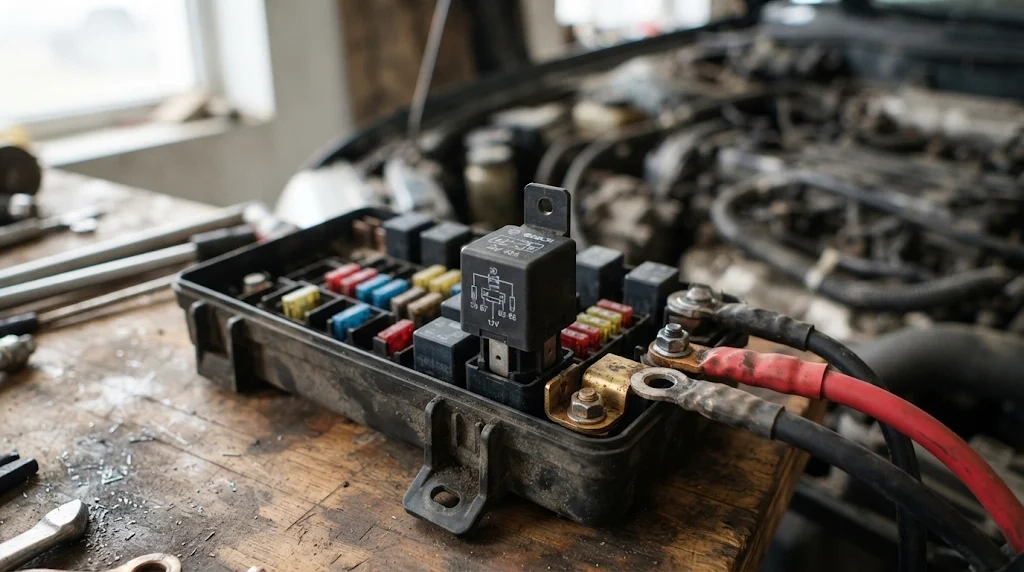
A starter relay is an electrically controlled switch that helps activate your vehicle’s starting system. It allows a control signal to operate another part of the starting circuit.
When you turn the ignition key or request a start, the vehicle checks the required starting conditions. Depending on the vehicle, the ignition switch or an electronic control module then activates the starter relay.
The relay closes its electrical contacts and supplies power to the starter solenoid or its control circuit. The solenoid engages the starter motor, allowing it to rotate the engine.
Why Does the Starting System Need a Relay?
A starter relay allows a relatively small electrical control signal to switch a separate circuit. This helps keep the control system separate from the electrical load it operates.
The starter motor draws much more current than the relay’s control coil. A separate starter solenoid usually handles the motor’s high-current connection.
Not every vehicle uses the same arrangement. Some vehicles incorporate starter control functions into an electronic power distribution module.
Is a Starter Relay the Same as a Starter Solenoid?
A starter relay and starter solenoid perform different functions, although both use electromagnetic switching.
The relay typically controls the solenoid’s activation circuit. The solenoid usually moves the starter drive into engagement and connects battery power to the starter motor.
Some vehicle designs use different wiring arrangements. Always identify the exact components using your vehicle’s service information.
What Are the Signs of a Failing Starter Relay?
A failing starter relay usually causes problems when the vehicle tries to crank its engine. The symptoms depend on whether the relay has failed open, developed poor contacts, or become stuck closed.
1. The Engine Does Not Crank
A complete no-crank condition is a common sign of a failed starter relay. You request a start, but the engine does not turn over.
The dashboard may illuminate normally while the starter remains silent. This can happen when the relay fails to deliver the required electrical signal.
However, normal dashboard lights do not prove the battery is healthy. A weak battery may power small electrical loads but fail under the starter’s heavier demand.
A blown fuse, faulty ignition switch, or missing start authorization can also cause silence.
2. You Hear Clicking but the Engine Does Not Turn
A clicking sound without cranking may indicate a problem in the starting circuit. The sound can come from the starter relay or the starter solenoid.
A relay may click because its control coil works, even when its internal contacts cannot pass power properly.
A single strong click near the starter often points toward the solenoid or the motor circuit. Rapid clicking is commonly associated with insufficient battery voltage or poor electrical connections.
Because these sounds overlap, clicking alone cannot confirm that the starter relay is defective.
3. The Car Starts Sometimes but Not Others
Intermittent starting can indicate worn or unreliable relay contacts. Your car may start normally during one attempt and refuse to crank during another.
Electrical contacts can become worn, contaminated, or damaged. A poor connection inside the relay may work under certain conditions but fail under others.
Temperature changes and vibration may affect an existing electrical fault. However, the same behavior can occur with loose battery terminals, damaged wiring, or a failing starter motor.
Record whether the problem happens after parking, during hot restarts, or without a clear pattern. These observations can help a technician reproduce the failure.
4. The Starter Keeps Running After You Release the Key
A starter that continues operating after the start command ends may indicate stuck relay contacts. A faulty ignition switch or starter solenoid can cause a similar problem.
Normally, the starter disengages after the engine starts. Continued engagement can damage the starter drive, flywheel teeth, and other starting components.
According to HELLA’s starter troubleshooting guidance, continued starter operation can involve a faulty ignition switch or relay.
Warning
A starter that remains engaged can damage the engine’s starting components. Switch the engine off immediately and arrange professional inspection before driving again.
5. You Notice a Burning Smell Near the Fuse Box
A burning electrical smell may indicate an overheated relay, damaged connector, or another electrical fault. Excessive resistance or faulty contacts can generate heat.
Inspect accessible relay housings and fuse box areas for discoloration or melted plastic. Do not touch hot components or continue operating a circuit that shows heat damage.
A burning smell does not identify the starter relay by itself. Other electrical components can overheat in the same area.
What Do Different Starter Sounds Tell You?
Starter sounds can help you identify which part of the starting system needs attention. They provide clues, not a final diagnosis.
This table compares common sounds with possible electrical or mechanical problems.
| What You Notice | Possible Cause | What to Check |
|---|---|---|
| No click or crank | Starter relay, fuse, ignition switch, or start interlock | Battery condition and relay control circuit |
| Single strong click | Starter solenoid, motor, or high-resistance connection | Starter power supply and cable connections |
| Rapid repeated clicks | Weak battery or poor connections | Battery charge, condition, and terminals |
| Slow engine cranking | Weak battery, cable resistance, or starter motor trouble | Battery load and starting circuit |
| Starter runs too long | Stuck relay, solenoid, or ignition switch | Starter control and release circuits |
A silent starter makes the control circuit worth checking. A slow-cranking engine usually requires battery and cable checks before focusing on the relay.
What Problems Can Look Like a Bad Starter Relay?
Several starting system faults can produce symptoms that resemble relay failure. Identifying these alternatives prevents unnecessary replacement.
Weak or Discharged Battery
A weak battery may power dashboard lights without supplying enough current to crank the engine. Clicking or slow engine rotation often accompanies this problem.
Inspect the battery connections and check battery condition before removing electrical parts.
DENSO’s starter troubleshooting guidance recommends checking battery charge and clean electrical connections before diagnosing deeper starting faults.
Loose or Corroded Battery Cables
Loose battery cables can interrupt starting power even when the battery itself is healthy. Corrosion increases resistance and can prevent sufficient current from reaching the starter.
Look for damaged insulation, loose terminals, or visible corrosion. Internal cable damage may require electrical testing because it is not always visible.
Faulty Starter Motor or Solenoid
A failing starter motor may produce clicking, slow cranking, or no movement. A defective solenoid can prevent proper starter engagement.
These faults can look identical to a relay problem from the driver’s seat. Testing the power and control circuits helps identify the affected component.
Ignition Switch or Start Authorization Problems
A faulty ignition switch may fail to send the start request through the required circuit. Vehicles with electronic starting systems may also prevent cranking when authorization conditions are not met.
The transmission range switch, clutch switch, security system, and control module may all affect starter operation.
For automatic vehicles, check that the transmission is correctly in Park. If the manufacturer permits starting in Neutral, that position may help identify a faulty range switch.
Engine Cranks Normally but Will Not Start
An engine that cranks normally but does not start usually points away from the starter relay. The relay has already allowed the starting system to turn the engine.
Fuel delivery, ignition, engine management, or mechanical problems may prevent combustion. That situation requires a different diagnostic process.
How Can You Check a Starter Relay Safely?
Start by confirming the symptom and checking the battery before inspecting the relay. Simple observations can narrow the problem without exposing you to high-current wiring.
Keep the vehicle parked on level ground with the parking brake applied. Place an automatic transmission in Park or a manual transmission in Neutral, following the service instructions.
- Confirm the starting symptom. Note whether the engine cranks, clicks, turns slowly, or stays silent.
- Inspect the battery. Look for loose terminals, corrosion, or an obviously damaged battery case.
- Locate the relay. Consult the owner’s manual or fuse box diagram for the starter relay position.
- Inspect the relay housing. With the circuit safely de-energized, look for discoloration, cracked plastic, or damaged terminals.
- Check the related fuse. Follow the vehicle’s instructions for inspecting and replacing fuses.
- Determine whether further testing is needed. Use the wiring diagram to identify the correct circuit before performing electrical measurements.
Many starter relays are located in an engine compartment fuse or power distribution box. Other vehicles use a different location or a relay integrated into a module.
Never assume that two relays are interchangeable because their housings look alike. Their terminal arrangement, control electronics, and electrical ratings must match.
Can You Swap the Relay With Another One?
Swapping a relay can be a useful diagnostic check when the vehicle manufacturer permits it. The replacement must have the same electrical specifications and terminal arrangement.
Turn off the ignition and follow the service manual before removing either relay. Do not remove a safety-critical relay merely to perform a starting test.
If an approved matching relay restores starting, the original becomes a strong suspect. However, a damaged socket or intermittent wiring issue can still affect the result.
How Do You Test a Starter Relay With a Multimeter?
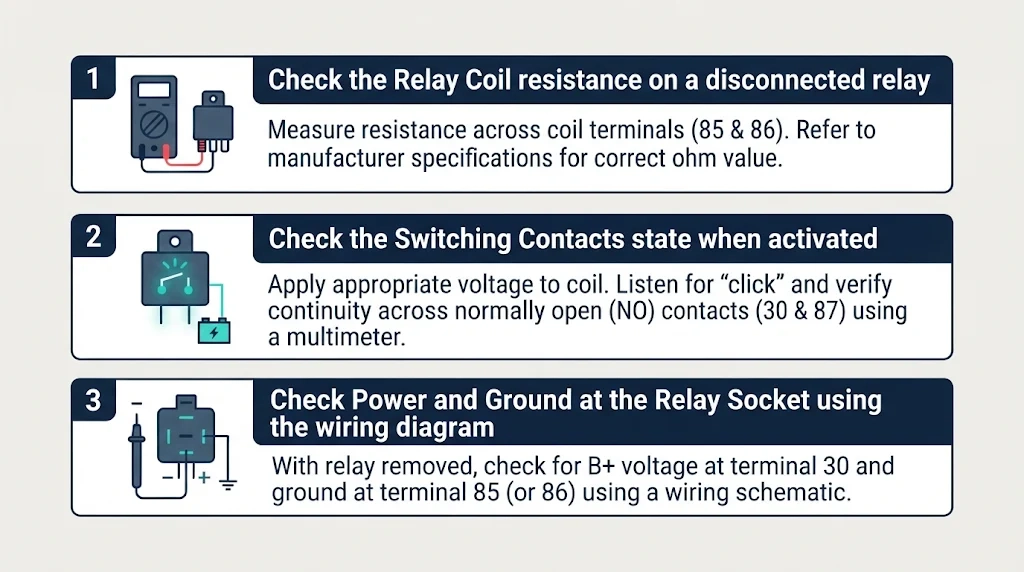
A digital multimeter can help test a starter relay’s coil and switching contacts. The correct procedure depends on the relay’s wiring diagram and internal design.
Some relays contain built-in diodes or other electronic components. Using the wrong polarity or applying power to unidentified terminals can damage them.
Check the Relay Coil
The relay coil creates a magnetic field when the correct control voltage is applied. An open or shorted coil can prevent normal switching.
For a removable conventional relay, consult the manufacturer’s diagram to identify the coil terminals. Use the meter’s resistance setting only on a disconnected, de-energized component.
Compare the measured resistance with the vehicle or relay manufacturer’s specifications. An open circuit or reading outside the specified range may indicate failure.
Check the Switching Contacts
The relay contacts should change electrical state when the coil is activated correctly. A faulty contact may remain open or closed when it should switch.
Identify the appropriate contact terminals from the relay diagram. Check their state using the test procedure specified for that relay.
Electrical resistance or continuity testing alone may not reveal contacts that fail under load. The relay can appear functional without providing reliable power during starting.
Check Power and Ground at the Relay Socket
Relay socket testing can reveal missing control power, poor grounding, or an interrupted output circuit. These faults can make a healthy relay appear defective.
Testing an energized socket requires the correct wiring diagram and safe access to the terminals. A technician may use voltage measurements and voltage drop testing to locate the fault.
Never bridge unidentified relay socket terminals. Doing so can cause unexpected cranking, electrical damage, or personal injury.
The AutoZone starter relay testing guide describes conventional relay checks and explains the need to identify the correct terminals.
What Causes a Starter Relay to Go Bad?
Starter relays can fail because of contact wear, moisture, heat, or electrical problems. The exact cause depends on the relay design and conditions inside its circuit.
Worn Electrical Contacts
Relay contacts repeatedly open and close during normal operation. Electrical arcing and mechanical wear can gradually damage their surfaces.
Damaged contacts may stop conducting reliably or become stuck together. These failures can create intermittent starting or unwanted starter operation.
Moisture and Corrosion
Moisture entering a relay or connector can damage metal contacts. Corrosion may increase electrical resistance or interrupt the control signal.
Water intrusion around a fuse box also deserves attention. Replacing the relay alone will not correct a leaking enclosure or corroded socket.
Overheating or Circuit Problems
Damaged connectors, poor contact pressure, and abnormal electrical loads may create excessive heat. Heat can damage relay components and nearby wiring.
A relay that repeatedly overheats should not simply be replaced without checking the surrounding circuit.
When Should You Replace a Starter Relay?
Replace a starter relay when testing confirms that it fails to operate within its specified conditions. Symptoms alone are not enough to justify replacement.
A relay that fails continuity, control, or loaded-output testing may need replacement. Burned contacts or visible heat damage also require investigation.
Before installing another relay, inspect its socket and connections. Persistent overheating or repeated failures may indicate a problem elsewhere in the electrical circuit.
Can You Repair a Faulty Starter Relay?
Most sealed automotive starter relays are replaced rather than repaired internally. Opening the housing may damage its protective seal or internal components.
Cleaning a corroded external connector may restore a poor connection, but it does not repair damaged internal contacts.
Use the correct replacement part and follow the vehicle manufacturer’s instructions. An incorrect relay can behave differently even when it fits the socket.
When Should You Call a Mechanic?
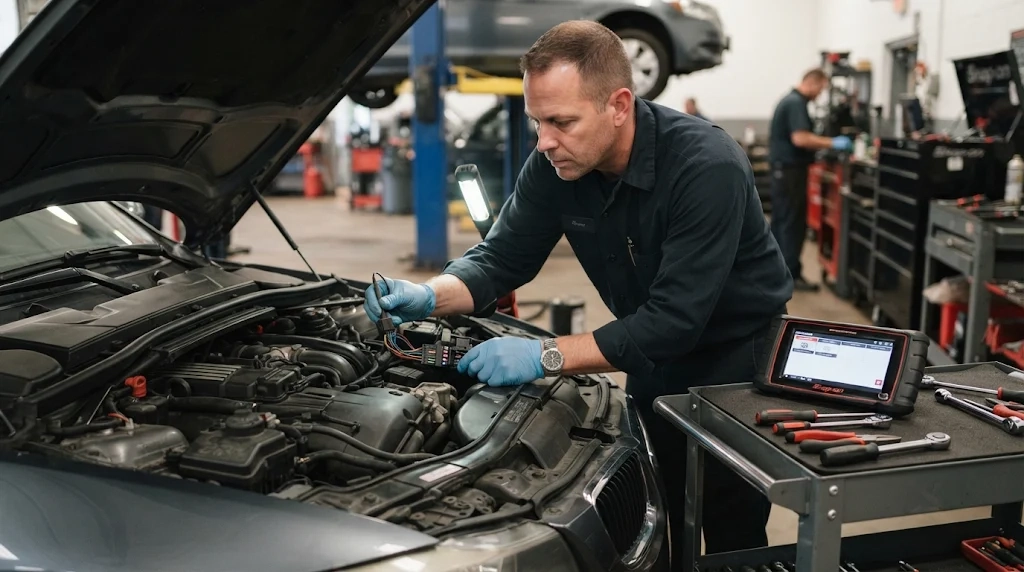
Professional diagnosis is appropriate when the relay tests normally but the engine still refuses to crank. The problem may involve wiring, security controls, or the starter itself.
Get professional assistance if the vehicle has a burning smell, melted connector, or starter that continues running. These conditions require more than routine relay replacement.
A technician can test the circuit under load and determine whether the fault comes from the relay, solenoid, cables, or electronic controls.
How Can You Reduce Future Starting Problems?
Good battery connections and prompt electrical inspections can reduce some causes of unreliable starting. They cannot prevent every relay failure.
- Keep battery terminals clean and secure.
- Repair damaged wiring and corroded connectors.
- Address water intrusion around electrical boxes.
- Investigate repeated clicking or no-crank symptoms.
- Use correctly specified replacement components.
- Have overheating or burning smells inspected promptly.
Electrical relays can still fail through normal wear. Diagnosing small changes in starting behavior can help prevent unnecessary parts replacement.
Digital Multimeter
A digital multimeter helps check electrical continuity, resistance, and voltage when diagnosing a starter relay circuit.
Frequently Asked Questions
Does every car have a removable starter relay?
Not every vehicle has a separate, removable starter relay because some designs integrate starter control into electronic power distribution modules. The layout depends on the vehicle’s electrical system. Check the owner’s manual or service wiring diagram before purchasing a replacement relay or attempting to remove one.
Can a bad starter relay drain the battery overnight?
A starter relay can contribute to battery drain if a fault keeps part of the starting circuit energized. An ordinary open-circuit relay failure usually does not create continuous electrical consumption. A parasitic drain test can help determine whether the relay or another circuit is responsible.
Will a bad starter relay turn on the check engine light?
A faulty starter relay does not necessarily activate the check engine light, even when the engine refuses to crank. Some vehicles may store starting-system fault codes or display related warnings. The absence of a warning light does not rule out an electrical starting problem.
Can a bad starter relay cause the engine to stall?
A conventional starter relay normally does not keep an engine running after it has started successfully. An engine that stalls while driving usually needs diagnosis beyond the starter relay. Shared electrical faults or unusual vehicle-specific circuit designs can create exceptions, so consult the wiring diagram.
Can rain or moisture damage a starter relay?
Water entering a relay housing or electrical connector can cause corrosion and unreliable starter circuit operation. Moisture damage may also affect nearby terminals and wiring. If the problem appears after rain, inspect the electrical enclosure for water intrusion and have damaged connections repaired.
Why does a replacement starter relay fail again?
Repeated starter relay failure can indicate an unresolved electrical problem, incorrect replacement part, or damaged relay socket. Excessive heat and poor connections can damage the replacement. Inspect the circuit against the manufacturer’s specifications before installing another relay or repeating the same repair.
Conclusion
The main answer to what are signs of a bad starter relay is no cranking, intermittent starting, unusual clicking, or unwanted starter operation. These symptoms can also come from other starting components.
If your car will not crank, check battery condition and connections first. Test the relay and its circuit before replacing parts.

Alex Carter is an automotive content writer at VastAutoParts, focusing on car parts, vehicle troubleshooting, automotive tools, product research, and practical car care guides.